Erling Haaland: How the striker is redefining modern football
Erling Haaland has spent much of the last two years redefining what it means to be a modern football striker. Since his move from Red Bull Salzburg to Borussia Dortmund in January 2020, and then to Manchester City the following summer, the Norwegian forward has not only collected goals but rewritten record books. His physical presence, clinical finishing, and relentless movement have made him the most feared striker in world football. Yet beyond the highlight-reel goals lies a deeper story: one of tactical evolution, psychological resilience, and an unshakable belief that he belongs among the greats.
From Bryne to the Premier League: A journey built on precision
Haaland’s rise wasn’t meteoric by accident. Born in Leeds in 2000 while his father Alf-Inge played for the club, he grew up immersed in English football before returning to Norway. His early development at Bryne FK, where he made his senior debut at 15, showcased a rare blend of strength and technique. By 16, he was already being monitored by top European clubs. His move to Molde in 2017 under Ole Gunnar Solskjær accelerated his growth, where he scored 20 goals in 50 appearances. But it was at Salzburg that his reputation as a goalscoring machine truly formed. In just 22 games for the Austrian club, he netted 29 times, including a stunning five-goal debut in the Champions League.
What sets Haaland apart is his ability to thrive under pressure. Whether it’s converting high-pressing situations or scoring late winners, he demonstrates ice-cold composure. His career strike rate—over 0.8 goals per game in all competitions—places him among the most efficient strikers in football history. That consistency has made him a cornerstone for both club and country, with Norway relying on him to carry the weight of expectations in Euro and World Cup qualifiers.
The tactical masterclass: How teams adapt to neutralize him
Defending against Haaland is no longer a theoretical challenge—it’s a tactical puzzle that top managers spend hours solving. His combination of height (1.94m), acceleration, and spatial awareness forces teams into unnatural shapes. Opponents often deploy a high backline to limit his space, yet this risks exposing midfield gaps that Manchester City exploit with quick transitions. Pep Guardiola’s system, in particular, has been refined to maximize Haaland’s strengths. By using inverted fullbacks and a false nine in some systems, City stretch play wide, drawing defenders away and creating one-on-one situations for the Norwegian.
Yet even the best-laid plans can falter. In the 2022–23 Champions League quarter-final against Real Madrid, Haaland was largely nullified by Antonio Rüdiger’s aggressive man-marking. Madrid’s compact 4-4-2 block forced him into deeper positions, where he struggled to receive the ball. That match highlighted a key tactical insight: Haaland’s greatest threat comes when he operates between the lines, not as a traditional target man. Teams that prioritize midfield control—such as Bayern Munich and Inter Milan—have had more success limiting his impact.
It’s a testament to Haaland’s intelligence that he adapts mid-game. Against weaker defensive structures, he often drifts to the right, using his left foot to cut inside and shoot. Against stronger sides, he drops deeper to link play, acting almost like a false nine. This versatility makes him not just a finisher, but a complete striker capable of dictating tempo.
The mental edge: Handling scrutiny and maintaining focus
For all his physical gifts, Haaland’s mental resilience has been crucial to his success. When he arrived at Dortmund, he was surrounded by whispers of “next big thing” fatigue—critics pointing to previous teenage sensations who burned out. Instead of crumbling, he used that doubt as fuel. His post-match interviews, often delivered in measured English with a quiet confidence, reveal a player who understands the weight of his role without being overwhelmed by it.
One of the most telling moments came during City’s 2022–23 title-winning campaign. After a rare miss against West Ham, he scored a hat-trick in the next game against Leeds. Rather than dwelling on the error, he treated it as a learning moment. That ability to compartmentalize distinguishes him from peers who let early mistakes define their trajectory. Haaland’s father, a former Premier League player, has also played a role in shaping his mindset. Their discussions about football are less about tactics and more about mental preparation—staying present, trusting the process, and believing in your own ability.
Even his social media presence reflects this discipline. Unlike many modern athletes, Haaland rarely engages in off-field drama. His Instagram feed is dominated by training clips, family moments, and minimalist captions. It’s a carefully curated image that reinforces his professionalism—a stark contrast to the tabloid culture that often surrounds football stars.
Beyond goals: The influence on Manchester City and English football
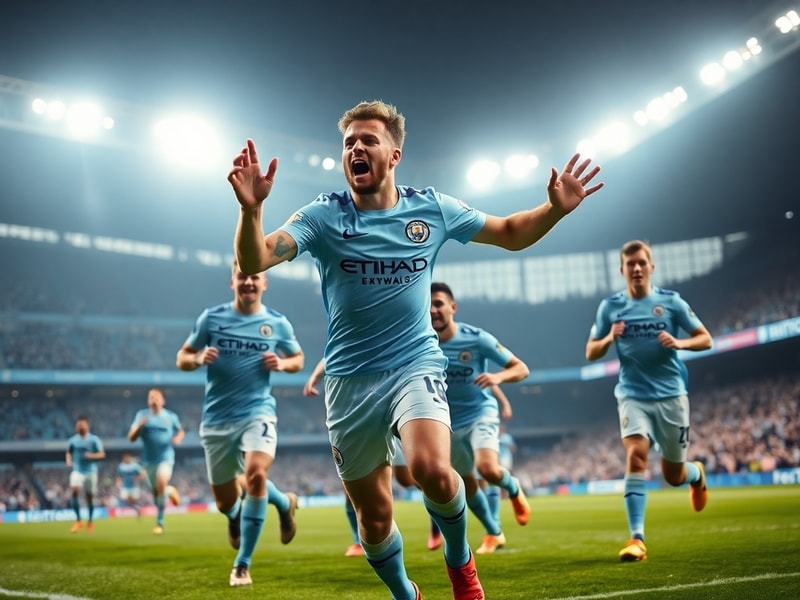
Haaland’s arrival at Manchester City in 2022 wasn’t just a transfer—it was a statement. City had never signed a pure striker of his profile before, and his integration into Guardiola’s system was closely watched. Within months, he became the focal point of their attack, forming a lethal partnership with Kevin De Bruyne and Phil Foden. His presence allowed City to play with more verticality, reducing reliance on wide players to create chances. The 2022–23 season saw City score 94 goals in the Premier League, with Haaland contributing 36 of them—a record-breaking tally that shattered the previous mark set by Mohamed Salah and Luis Suárez.
But his impact extends beyond statistics. Before Haaland, City’s attack often relied on intricate passing and positional interchange. While those elements remain, Haaland’s ability to stretch defenses vertically has added a new dimension. Teams now have to defend in two ways: compactly in midfield and aggressively high up the pitch. This dual threat has made City even more unpredictable and difficult to prepare for.
Haaland’s influence is also reshaping how young strikers are developed. Academy coaches across Europe now prioritize physical conditioning and aerial ability alongside technical skills. Clubs are scouting for “Haaland-type” players—tall, fast, and technically proficient—even if they don’t fit the traditional mould. This shift reflects a broader evolution in football tactics, where the striker is no longer just a target man but a multifaceted attacker.
His legacy, however, isn’t guaranteed. Football remains a results-driven industry, and injuries or form slumps could alter perceptions. Yet at 24, he’s already secured his place among the game’s elite. The next chapter—whether it’s a Ballon d’Or, a World Cup triumph, or sustained dominance in the Champions League—will define how history remembers him. For now, he’s writing his story one goal at a time.
One thing is certain: Erling Haaland isn’t just a phenomenon. He’s a blueprint.