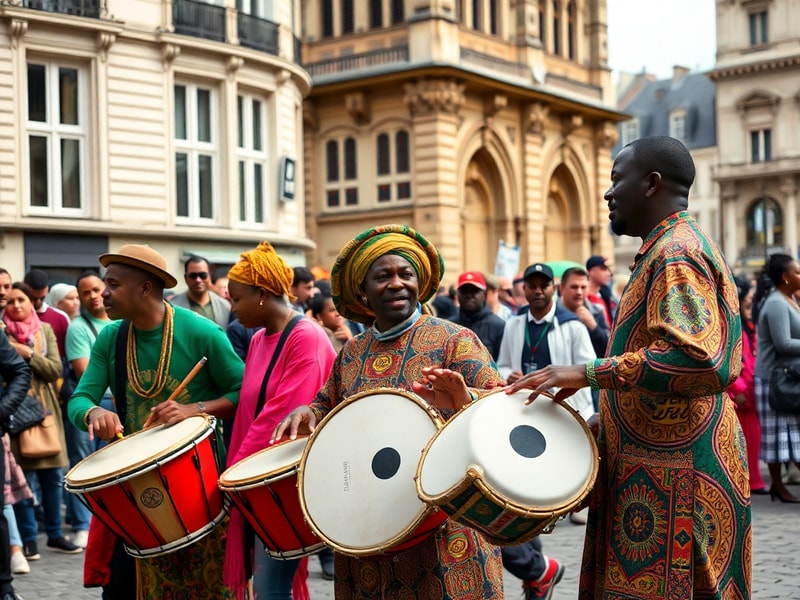
The clash between Belgium and Senegal on the football pitch is more than a match—it’s a collision of footballing philosophies, colonial legacies, and global migration narratives. These two nations, separated by geography and history, have found common ground on the pitch, creating moments that resonate far beyond the 90 minutes of play. Belgium, often dubbed the ‘Red Devils’ for their fiery spirit, brings a squad brimming with technically gifted players raised in Europe. Senegal, the ‘Lions of Teranga,’ embodies a collective will rooted in African resilience and tactical discipline. Their encounters, especially in major tournaments, have become symbolic of broader global exchanges—where identity, ambition, and skill collide.
The footballing DNA: contrasting styles on the pitch
Belgium’s football identity has been shaped by decades of investment in youth academies and the influence of foreign coaches. The Red Devils are known for their fluid, possession-based play, with players like Kevin De Bruyne and Romelu Lukaku operating as orchestrators of modern attacking football. Their system reflects European pragmatism: structure, pressing, and tactical flexibility. This approach has yielded consistent top-tier results, including a third-place finish at the 2018 FIFA World Cup.
Senegal, by contrast, plays with a soulful intensity. The Lions blend European tactical discipline with African flair—speed, creativity, and physicality. Players like Sadio Mané and Ismaila Sarr carry the weight of representing a nation where football is not just sport, but a source of national pride. Senegal’s style is often described as ‘Teranga football’—a term derived from the Wolof word for hospitality—emphasizing collective effort, resilience, and joy. Their 2002 World Cup quarterfinal run, where they stunned France in the opening match, remains one of the greatest underdog stories in tournament history.
When these two styles meet, the contrast becomes a narrative. Belgium’s methodical buildup against Senegal’s counterattacking prowess creates a dynamic tension. It’s not just about skill; it’s about cultural expression through sport. Football becomes a language, and every pass, tackle, and goal tells a story of where these players come from—and where they’re going.
A shared history, divergent paths
The relationship between Belgium and Senegal is deeply intertwined with colonial history. Senegal was a French colony until 1960, while Belgium ruled over what is now the Democratic Republic of the Congo (formerly Zaire) and maintained strong cultural and economic ties with Senegal through trade and education. This colonial legacy influenced migration patterns. Today, over 25,000 Senegalese people live in Belgium, making it one of the largest Senegalese diaspora communities in Europe. Many of these migrants arrived as students, workers, or refugees, bringing with them cultural traditions, cuisine, and football passion.
Football has become a bridge. Senegalese players born or raised in Belgium—such as Youri Tielemans, who has dual citizenship—often speak about their dual identity. Tielemans, who captained Belgium at the 2022 World Cup, once said, “I feel Belgian, but I also feel African. Football gave me the chance to connect both worlds.” This duality is visible on the pitch. Players like M’Baye Niang and Oumar Ngom have played for both national teams at youth level, highlighting the fluidity of identity in modern football.
The cultural exchange goes both ways. Belgian clubs like Anderlecht and Standard Liège have long scouted West Africa for talent. The Belgian football system’s openness to foreign-born players has made it a second home for many African footballers seeking opportunities in Europe. Senegal, in turn, benefits from the exposure and tactical education these players bring back to the national team.
World Cup moments: when the world watched
The most high-profile encounters between Belgium and Senegal have come in FIFA World Cup tournaments, where the stakes are global and the symbolism undeniable. Their first meeting was in the group stage of the 2002 World Cup in Japan and South Korea. Senegal stunned the world by defeating the defending champions France 1–0 in the tournament opener. The goal, scored by Papa Bouba Diop, sent shockwaves through international football. It wasn’t just a win—it was a declaration: African football had arrived.
Belgium, meanwhile, struggled in that tournament, finishing second in their group behind Senegal and Denmark. The contrast was stark: Belgium’s European machinery faltered against the Lions’ passion and directness. Twelve years later, at the 2014 World Cup in Brazil, the two teams met again in the group stage. This time, Belgium emerged victorious 2–1, with goals from Dries Mertens and Divock Origi. The result reaffirmed Belgium’s rise as a football powerhouse, but Senegal’s spirited performance reminded the world of their potential.
In the 2018 World Cup in Russia, the two teams were drawn in the same group. Belgium defeated Senegal 2–1, with Romelu Lukaku scoring twice. The match was tactical, tense, and marked by strategic fouls and heavy pressing. Senegal’s Youssouf Sabaly was sent off, and Belgium capitalized on set-pieces—another reflection of modern football’s emphasis on physicality and aerial dominance.
These encounters are more than results. They represent the evolution of global football, where African teams no longer play the role of underdogs, and European sides must adapt to new styles and rhythms. Each match is a chapter in a larger story of convergence—where borders blur, and football becomes a shared language of ambition and identity.
The diaspora effect: dual identities and national pride
The presence of players with dual heritage has added a new layer to the Belgium-Senegal narrative. Players like Romelu Lukaku (of Congolese descent), Meissa N’Diaye (born in Belgium to Senegalese parents), and Lamine Diaby-Fadiga (a Senegalese youth international who played in Belgium) embody this crossover. Their choices—whether to play for Belgium or Senegal—often spark debate in both countries.
In 2021, Senegalese midfielder Cheikhou Kouyaté, who had previously played for Belgium’s youth teams, switched allegiance and helped Senegal reach the Africa Cup of Nations final. His decision was met with pride in Senegal and respect in Belgium, illustrating how football can transcend national loyalties when identity is fluid.
This dual identity phenomenon is reshaping international football. More than ever, players are making choices based on heritage, opportunity, and personal connection. For many young African players in Europe, the dream isn’t just to play for their birth country—it’s to represent the land of their ancestors, or both. This shift is prompting football associations to rethink their recruitment strategies and cultural integration programs.
Belgium’s football federation has been particularly proactive in engaging with diaspora communities. Programs like “Red Devils Academy” and partnerships with African football academies aim to identify and develop talent from migrant backgrounds. This inclusive approach has paid off, contributing to Belgium’s consistent top-10 FIFA rankings over the past decade.
A future written in goals and dreams
The next chapter in the Belgium-Senegal rivalry may come as soon as the 2026 FIFA World Cup, where both teams are likely to qualify. Given their recent form—Belgium reaching the 2022 World Cup quarterfinals and Senegal winning the 2021 Africa Cup of Nations—their paths could easily cross again. When they meet, the world will watch not just for a result, but for a story: of two nations, two continents, and countless identities intersecting on a single pitch.
Football, in this context, is more than entertainment. It’s a mirror reflecting migration, colonial history, cultural pride, and global integration. Belgium and Senegal teach us that identity is not fixed—it’s fluid, contested, and constantly redefined. Their matches are not just games; they are dialogues between worlds.
As the Red Devils and the Lions of Teranga prepare for their next encounter, one thing is clear: this rivalry is about more than points or trophies. It’s about the future of football itself—a sport that belongs to everyone, no matter where they come from.