Nigerian Evacuations from South Africa: A Complex Rescue Operation Underway
Nigerian authorities have launched an emergency evacuation operation to bring home citizens stranded in South Africa amid rising tensions and safety concerns. The move follows a sharp increase in incidents targeting African migrants, including Nigerians, in several South African cities. Government sources confirm that airlifts and chartered flights are being coordinated through the Nigerian High Commission in Pretoria, with priority given to vulnerable individuals, students, and families.
This evacuation reflects a broader crisis unfolding across South Africa, where anti-foreign sentiment has escalated in recent weeks. Reports indicate that over 200 Nigerians have already registered for repatriation, with more expected as the situation develops. The Nigerian government has emphasized that the operation is voluntary and that no one will be forced to leave, but many are choosing to return due to fears for their safety.
The decision to evacuate comes after weeks of protests and violent clashes in Johannesburg and Cape Town, where foreign-owned businesses—particularly those operated by Nigerian entrepreneurs—have been targeted. In one incident last month, a Nigerian-owned shop in Johannesburg was looted and set ablaze, prompting condemnation from both governments and calls for calm.
Why Are Nigerians Leaving South Africa Now?
The current wave of departures is not isolated. It’s part of a recurring pattern of xenophobic violence in South Africa that has flared up periodically since the end of apartheid. While the South African government has repeatedly condemned these attacks, implementation of protective measures has often lagged behind the rhetoric. This time, however, the scale and coordination of the Nigerian response signal a more serious approach to citizen safety.
A key driver of the evacuations is the deteriorating security environment. Nigerian migrants, many of whom run small businesses or pursue education in South Africa, report growing hostility from local communities. Social media videos have surfaced showing crowds chanting xenophobic slogans and damaging property. In response, the Nigerian government has activated a 24-hour emergency hotline and set up temporary shelters in Johannesburg and Pretoria for those awaiting evacuation.
Economic hardship in South Africa, exacerbated by high unemployment and inflation, has fueled resentment toward foreigners perceived to be taking jobs or resources. While the majority of South Africans reject violence, the presence of criminal elements exploiting the chaos has made many migrants feel increasingly vulnerable. Nigerian officials have urged their South African counterparts to do more to protect foreign nationals, warning that inaction risks damaging bilateral relations.
Government Response: Coordination and Challenges
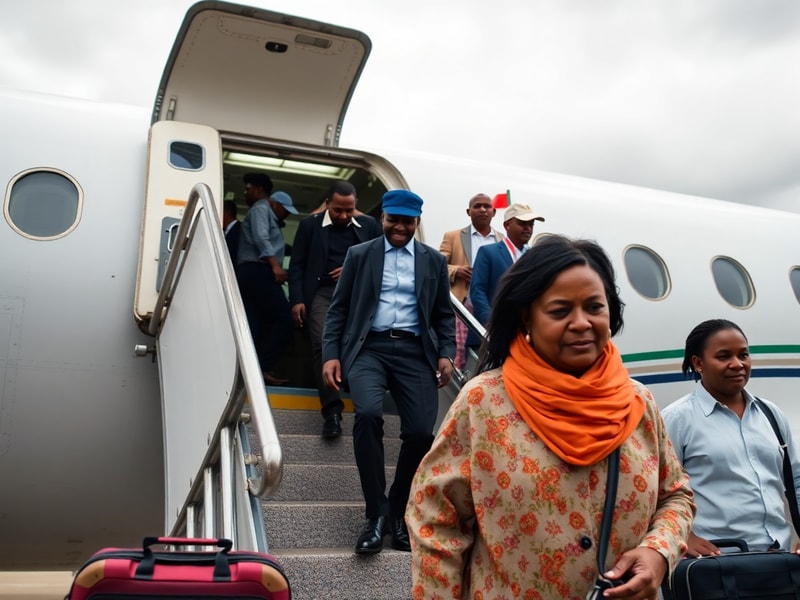
The Nigerian government, through the Ministry of Foreign Affairs, has outlined a multi-phase evacuation plan. Phase one involves airlifting citizens from high-risk areas to temporary holding centers in South Africa before flying them to Lagos and Abuja. The Nigerian Air Force and private carriers are assisting in the transport, with the first evacuation flight already departed from Johannesburg International Airport.
However, logistical hurdles remain significant. Thousands of Nigerians live in informal settlements across South Africa, making accurate headcounts difficult. Some have chosen to stay, either out of fear of losing their livelihoods or hope that the situation will improve. The government has assured those remaining that consular support will continue, including legal and medical assistance.
Key challenges in the evacuation process include:
- Limited flight availability due to high demand and operational constraints
- Language barriers and lack of centralized registration systems
- Psychological trauma among evacuees, many of whom have lost homes or businesses
- Coordination between Nigerian and South African immigration authorities
Despite these obstacles, diplomats express cautious optimism. “We are prioritizing safety, dignity, and transparency,” said a senior official at the Nigerian High Commission in Pretoria. “Every Nigerian who wants to return will be assisted.”
Impact on Bilateral Relations and the Nigerian Diaspora
The evacuations have placed strain on Nigeria-South Africa relations, which have historically been strong but occasionally turbulent. South Africa’s President Cyril Ramaphosa has expressed regret over the violence and pledged to hold perpetrators accountable. Yet, many Nigerians remain skeptical, pointing to past unfulfilled promises following similar crises in 2008, 2015, and 2019.
For the Nigerian diaspora in South Africa, the situation is deeply personal. Many have built lives over years—running spaza shops, studying at universities, or working in tech and healthcare. One medical student from Lagos, who asked not to be named, said she felt “abandoned” by both governments. “I came here to study, not to face mobs,” she told reporters. “Now, I don’t know where to go.”
The Nigerian government has announced a relief package for returnees, including cash grants, temporary housing, and vocational training. The goal is to help them reintegrate without falling into poverty or desperation. Meanwhile, South African officials have called for dialogue, emphasizing that most citizens welcome foreigners and that the violence is perpetrated by a small minority.
Still, the optics of a mass evacuation risk reinforcing negative stereotypes about South Africa’s stability and its treatment of African neighbors. Analysts warn that without sustained action, bilateral trust could erode further, affecting trade, education exchanges, and cultural ties.
Looking Ahead: Can the Cycle of Violence Be Broken?
The current evacuations are a short-term solution to a long-standing problem. To prevent future crises, both governments must address root causes: economic inequality, weak law enforcement, and inflammatory rhetoric from political figures. Civil society groups in both countries have called for joint peace campaigns and stricter penalties for hate speech and violence.
For Nigerians considering a return to South Africa in the future, the decision will depend on tangible improvements in safety and policy. In the meantime, the evacuation offers a lifeline—albeit a temporary one—for those who no longer feel safe.
As one returnee, a 42-year-old trader from Durban, put it: “I didn’t want to leave. But I had to choose between my life and my shop. That’s not a choice anyone should have to make.”
The Nigerian government has vowed to continue monitoring the situation and provide support to those who remain. Whether this evacuation will serve as a turning point or just another chapter in a recurring crisis remains to be seen. What is clear is that the human cost of inaction has become too high to ignore.