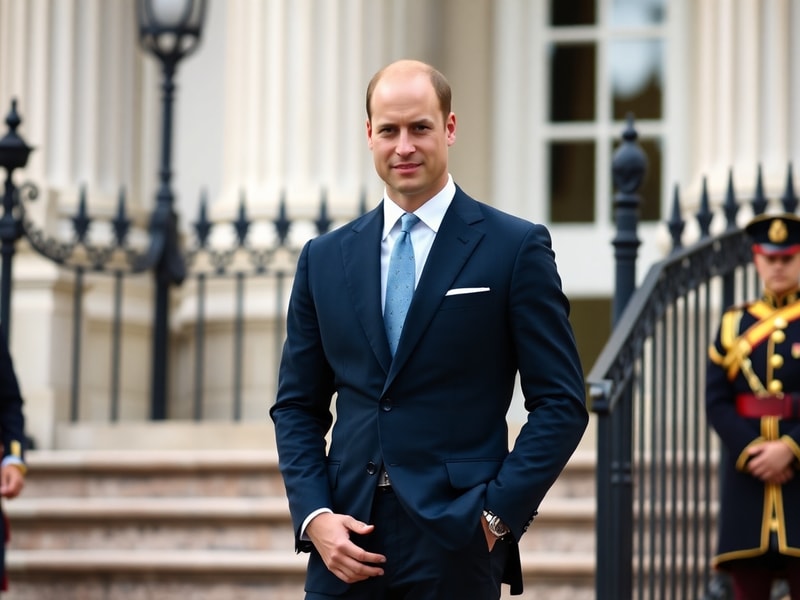
William, Prince of Wales: The Modern Heir Preparing for the Crown
From Prince to Heir: The Path to the Throne
William, Prince of Wales, stands at the precipice of a historic transition. Born on June 21, 1982, to King Charles III and the late Princess Diana, he was second in line to the British throne for decades. His journey from a young royal navigating grief to a seasoned figure in the monarchy reflects both personal evolution and institutional adaptation. As the eldest son of the monarch, William’s role has expanded from ceremonial duties to shaping the future of the Crown. His ascension isn’t just a generational shift; it’s a testament to the monarchy’s ability to evolve while preserving tradition.
The Prince’s early years were marked by the intense scrutiny of a global media that both adored and exploited his family. Diana’s tragic death in 1997 thrust William and his younger brother, Harry, into the public eye at a tender age. Their mother’s legacy of compassion and accessibility became a yardstick against which their own public roles would be measured. William, in particular, has worked diligently to honor that legacy while carving out an identity that feels authentic to his generation. His marriage to Catherine Middleton in 2011 symbolized a bridge between old-world royalty and modern expectations, introducing a relatable figurehead to a global audience.
The Modernizing Force
William has emerged as a pivotal figure in redefining the monarchy’s role in the 21st century. His approach to public service reflects a blend of duty and pragmatism, particularly in areas like mental health and environmental conservation. As president of The Royal Foundation, he has championed initiatives that tackle pressing social issues, from homelessness to early childhood development. His Earthshot Prize, inspired by John F. Kennedy’s Moonshot challenge, underscores his commitment to environmental innovation, offering £50 million annually to solutions addressing climate change.
The Prince’s leadership style contrasts with the more reserved approach of previous generations. He and Catherine have embraced social media, using platforms like Instagram and TikTok to connect with younger audiences. Their documentary series, An Earthshot Prize: Repairing Our Planet, aired in 2021, showcased their global travels and highlighted grassroots solutions to environmental degradation. This digital engagement isn’t merely about visibility; it’s a strategic effort to make the monarchy feel relevant to a generation raised on instant communication. By doing so, William has positioned the Crown as an institution that can adapt without losing its core values.
Balancing Duty and Personal Life
Behind the palace walls, William has worked to shield his family from the same intrusive media attention that shaped his childhood. His marriage to Catherine has been a cornerstone of stability, characterized by mutual support and shared purpose. The couple’s three children—George, Charlotte, and Louis—have become symbols of a monarchy that values family life. William’s commitment to being present for his children, despite the demands of his role, reflects a deliberate choice to prioritize their well-being over rigid tradition.
However, the pressures of royal life have not been without their challenges. The Prince has spoken openly about the mental health struggles he faced after his mother’s death, a rare admission for a figure of his stature. His 2022 interview with ITV News, where he discussed therapy and the importance of seeking help, was groundbreaking. It signaled a shift in how the royal family addresses mental health, normalizing conversations that might otherwise remain taboo. This openness aligns with his broader efforts to destigmatize issues like addiction and homelessness, areas where he has lent his platform to amplify marginalized voices.
The Weight of Legacy
As William prepares to assume the throne, he inherits a monarchy facing both opportunity and scrutiny. The institution’s popularity has fluctuated in recent years, with debates about its relevance and cost to taxpayers intensifying. Yet, the Prince’s personal approval ratings remain high, buoyed by his perceived authenticity and dedication to public service. His leadership could be the key to revitalizing the Crown’s image, particularly among younger demographics who might otherwise dismiss it as an outdated relic.
The transition from heir to monarch will require William to navigate complex political and social landscapes. Unlike his father, who ascended during a period of relative stability, William’s reign will begin amid global uncertainty—climate crises, geopolitical tensions, and economic instability. His experience in diplomacy, honed through overseas tours and engagements with world leaders, will be tested in new ways. The Prince’s 2023 visit to Jordan, where he met with refugees and discussed water security, offered a glimpse into the kind of crisis management he may face as king. Such moments underscore the importance of his role not just as a symbolic figure, but as a practical leader in an unpredictable world.
A Family United, Yet Fractured
The relationship between William and his uncle, Prince Harry, has been one of the most closely watched dynamics in modern royalty. Their estrangement, which became public in 2020, highlighted the fractures within the royal family and the challenges of balancing personal autonomy with institutional expectations. William’s decision to step back from senior royal duties in 2020, alongside Harry and Meghan, marked a turning point. While the move was framed as a desire to achieve financial independence, it also exposed the tensions between duty and personal freedom that have long defined royal life.
Since then, William has maintained a steady focus on his responsibilities, while Harry and Meghan have pursued independent ventures in the U.S. The contrast between their paths has sparked debate about the expectations placed on royal figures. For William, the choice to remain within the institution reflects his belief in its enduring value. His 2021 speech at the funeral of his grandfather, Prince Philip, emphasized the importance of service and legacy—a message that resonated deeply with the public. Yet, the rift with Harry remains a poignant reminder of the personal sacrifices demanded by royal life.
Catherine’s role in mediating this dynamic has been subtle but significant. Her grounded presence and collaborative approach have helped William navigate the complexities of family and duty. Together, they have redefined what it means to be a royal couple in an era where transparency and relatability are prized. Their decision to share moments of their family life, such as the 2022 Christmas photo shoot featuring their children, was a deliberate effort to humanize the monarchy. It was a rare glimpse into their private world, one that countered the often sterile image of royal life.
The Road Ahead
William’s journey to the throne is more than a transfer of power; it’s a transformation of an institution. His leadership will be defined by his ability to reconcile tradition with innovation, duty with personal authenticity. The monarchy’s survival in the 21st century depends on its ability to remain relevant, and William’s approach suggests he understands this implicitly. Whether through his environmental advocacy, mental health initiatives, or efforts to modernize royal communications, he has laid the groundwork for a reign that could redefine the Crown’s role in society.
Yet, the challenges ahead are formidable. The monarchy’s future is not guaranteed, and William’s reign will be scrutinized through the lens of 24-hour news cycles and social media. His success may hinge on his ability to inspire trust and loyalty, not just as a figurehead, but as a leader who can address the pressing issues of the day. The Prince’s own words, spoken during a 2020 speech at the London Palladium, offer a clue to his mindset: “I’ve tried to learn from the past, live in the present, and look to the future.” It’s a philosophy that could guide his reign, ensuring that the monarchy remains a force for stability and progress in an ever-changing world.