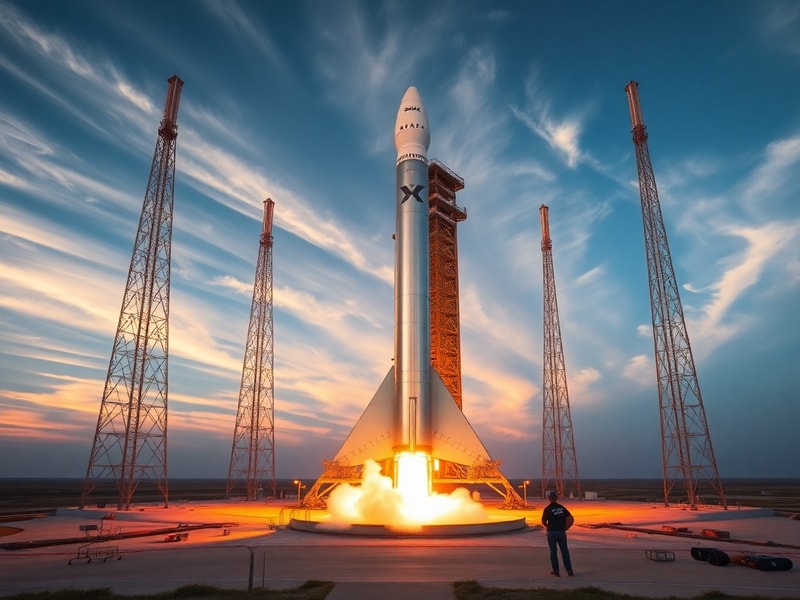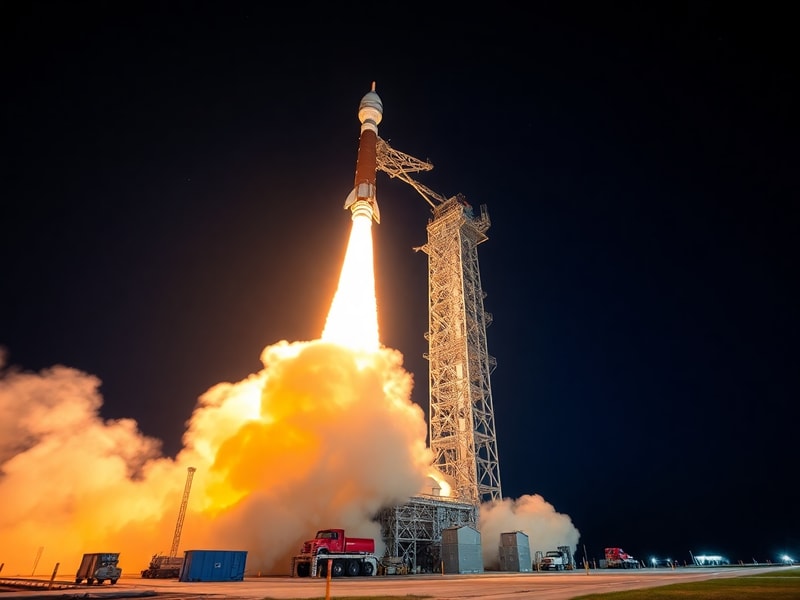
United Launch Alliance (ULA) successfully carried out its latest Atlas V rocket launch on June 8, 2024, from Space Launch Complex-41 at Cape Canaveral Space Force Station in Florida. The mission, designated USSF-51, marked the culmination of months of preparation by teams from ULA, the U.S. Space Force, and multiple payload partners. Liftoff occurred precisely at 6:19 a.m. EDT, following a smooth countdown that included fueling and system checks. The Atlas V’s dual-engine Centaur upper stage delivered a classified payload into geosynchronous orbit, fulfilling a critical national security objective.
The USSF-51 mission underscored the enduring reliability of the Atlas V, a workhorse rocket with more than 90 successful flights since its debut in 2002. This particular variant, the Atlas V 551, featured five solid rocket boosters and a 5-meter payload fairing—capabilities that allow it to carry heavy national security payloads and interplanetary spacecraft. The rocket’s performance during ascent was nominal, with real-time telemetry confirming stage separations and engine cutoff events. ULA confirmed payload deployment approximately 6 hours and 30 minutes after liftoff, a timeline consistent with mission planning documents released prior to the launch.
Mission Objectives and Payload Details
The primary objective of USSF-51 was to place a classified satellite into geosynchronous orbit for the U.S. Space Force. While specific mission parameters remain undisclosed due to national security protocols, public filings and industry analyses suggest the payload is likely part of the Continuous Broadcast Augmenting SATCOM (CBAS) program or a related communications satellite constellation. These systems enhance secure data relay for military operations and early warning systems. ULA and the Space Force have not disclosed the satellite’s mass, orbital parameters, or operational lifespan, maintaining standard confidentiality for such missions.
In addition to the primary payload, the Atlas V carried four CubeSats as secondary payloads under NASA’s CubeSat Launch Initiative. These miniature satellites, developed by universities and research institutions, are designed for technology demonstrations and scientific research. Among them is a space weather monitoring CubeSat from the University of Colorado Boulder and a communications testbed from the Air Force Institute of Technology. These smaller payloads highlight the Atlas V’s versatility as a launch platform capable of accommodating diverse mission profiles within a single launch window.
Technical Highlights of the Atlas V 551 Configuration
The Atlas V 551 used for USSF-51 is one of the most powerful variants in the rocket family. It combines a first stage powered by the Russian-built RD-180 engine with an upper stage featuring the RL10C-1 engine. The five Aerojet Rocketdyne AJ-60A solid rocket boosters provide approximately 2.4 million pounds of additional thrust at liftoff, enabling the rocket to carry payloads exceeding 8,900 kilograms to geosynchronous transfer orbit. The 5-meter payload fairing, manufactured by RUAG Space, offers ample volume for large satellites.
Notably, this launch was the 10th and final flight of the Atlas V in the 551 configuration. ULA has transitioned production to the Vulcan Centaur rocket, which will eventually replace the Atlas V and Delta IV families. The Vulcan, powered by Blue Origin’s BE-4 engines and Northrop Grumman’s GEM 63XL solid boosters, is designed to be more cost-effective and fully domestic in propulsion. The transition reflects ULA’s commitment to reducing reliance on foreign components and modernizing its launch fleet.
Challenges and Contingencies in Launch Operations
Pre-launch operations faced several technical and logistical hurdles. Weather conditions at Cape Canaveral included elevated upper-level winds and potential cloud cover, prompting ULA to delay the launch by 24 hours from its original June 7 target. The revised launch window on June 8 provided favorable conditions, with a 90% chance of acceptable weather at T-0. The team also conducted additional systems checks on the Centaur upper stage after a minor helium leak was detected during pre-launch pressurization tests. Engineers isolated the issue and confirmed no impact on mission success.
Another challenge involved coordination with airspace and maritime restrictions. The launch trajectory required a hazard area over the Atlantic Ocean, prompting the Federal Aviation Administration (FAA) to issue a Notice to Airmen (NOTAM) and a Notice to Mariners (NOTMAR). SpaceX’s autonomous drone ship, stationed downrange for potential booster recovery, was repositioned to avoid the hazard zone. These coordination efforts highlight the complexity of modern orbital launches, which must balance technical precision with safety and regulatory compliance.
Looking Ahead: The Future of U.S. Launch Capabilities
The USSF-51 mission represents more than just a successful satellite deployment—it signals a pivotal moment in U.S. space operations. The Atlas V’s final 551 configuration flight underscores the end of an era for a rocket that has been instrumental in launching critical national security, scientific, and exploration missions. From the New Horizons probe to Pluto to the Mars Reconnaissance Orbiter, the Atlas V has played a foundational role in expanding humanity’s reach into the solar system.
ULA’s shift to the Vulcan Centaur rocket is already underway. The first Vulcan launch, which occurred in January 2024, successfully delivered Astrobotic’s Peregrine lunar lander to space (though the mission ultimately ended in failure due to a propellant leak). Despite this setback, ULA and its partners remain confident in Vulcan’s capabilities. The rocket is slated to support multiple upcoming missions, including NASA’s Commercial Lunar Payload Services (CLPS) initiatives and crewed lunar missions under the Artemis program.
For space enthusiasts and industry observers, the transition from Atlas V to Vulcan offers both continuity and innovation. While the Atlas V boasts an enviable track record, Vulcan introduces new technologies such as advanced composite structures, 3D-printed components, and a fully domestic propulsion system. These advancements aim to reduce launch costs by up to 50%, making space more accessible for government and commercial customers alike.
The successful USSF-51 mission also reaffirms the United States’ commitment to maintaining a robust and independent space launch capability. In an era marked by increased competition from China, Russia, and private companies like SpaceX and Rocket Lab, reliable access to space remains a strategic imperative. The Atlas V’s legacy will endure, but the future belongs to next-generation rockets like Vulcan, which are designed to meet the demands of 21st-century exploration and defense.
As ULA continues to refine Vulcan’s systems and expand its launch cadence, the lessons learned from Atlas V operations will inform the next generation of spaceflight. Whether deploying satellites, supporting lunar missions, or enabling deep-space exploration, the U.S. launch industry is entering a new chapter—one defined by innovation, resilience, and a relentless pursuit of the stars.
For those interested in following upcoming launches, the Technology section on Dave’s Locker offers real-time updates and analysis on aerospace developments. The News category provides broader coverage of space policy, industry trends, and mission milestones.