Prince Harry’s relationship with British security arrangements has become one of the most scrutinized transitions in modern monarchy. Since stepping back as a senior working royal in early 2020, the Duke of Sussex has publicly challenged the UK government’s approach to his personal protection, sparking debates about privilege, protocol, and public funding. These discussions extend far beyond Buckingham Palace, touching on global security norms, cross-border legal frameworks, and the evolving expectations of public figures in the digital age.
From Royal Protection to Private Arrangements
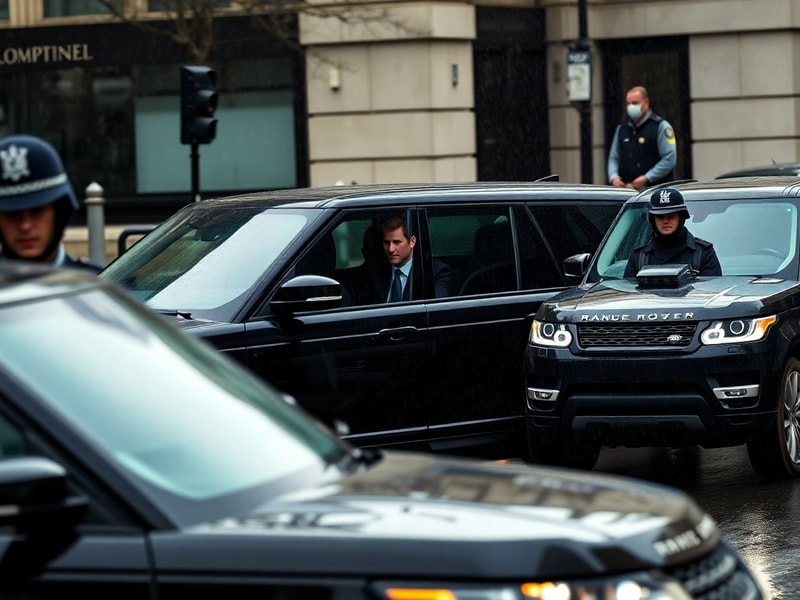
For decades, the British monarch and senior royals have benefited from publicly funded armed protection provided by the Metropolitan Police’s Royalty Protection Command. This unit, often abbreviated as SO14, operates under strict protocols designed to mitigate threats ranging from lone individuals to organized terrorism. Prince Harry, as the sixth in line to the throne and a former officer in the British Army, was entitled to this protection throughout his time as a working royal.
But after the Sussexes relocated to North America in 2020, their security needs shifted dramatically. Los Angeles, where they now reside, presents a different threat landscape compared to London. While the Royal Protection Command can deploy officers overseas for short-term visits, ongoing private security falls outside the scope of UK taxpayer funding. This legal distinction has led to a prolonged dispute over who should bear the cost of protecting the Duke and Duchess—especially during their high-profile public appearances.
The Legal Battle Over Taxpayer-Funded Protection
The heart of the conflict lies in the UK government’s refusal to fund private security for Prince Harry outside official royal duties. In 2021, the Home Office confirmed that royal protection is only provided when a senior royal is in the UK “carrying out official engagements.” Since Harry stepped back from these duties, his entitlement to continuous armed protection under the Sovereign Grant has been revoked. This decision reflects a long-standing principle: public funds should not be used to protect individuals who are not performing official state functions.
Harry’s legal team has argued that the level of threat he faces—amplified by media scrutiny and online harassment—justifies continued protection. In 2022, he testified in a US court case involving paparazzi intrusion that he and Meghan had received death threats and faced significant personal risk. While acknowledging the validity of these concerns, UK officials maintain that the responsibility now lies with the individual or host nation. The Metropolitan Police have also stated that their resources are finite and must be prioritized based on assessed threat levels to national security, not personal safety.
This impasse has led to creative solutions. During official visits to the UK, Harry has relied on the Royal Protection Command for short-term security. For private travel and events, the Sussexes have hired private security firms, reportedly at an estimated cost of £3–5 million annually. These arrangements have drawn criticism from some quarters, with opponents questioning whether a public figure who voluntarily stepped away from royal duties should still expect state support.
The Global Context: How Other Countries Handle Royal Security
The UK is not alone in grappling with the security needs of high-profile individuals who transition out of official roles. In Spain, former King Juan Carlos I faced scrutiny over his security arrangements after abdicating in 2014. While he retained some state protection due to his continued status as a former head of state, public opinion turned against the arrangement amid allegations of corruption. Spain ultimately revised its royal protection laws, limiting lifelong security to immediate family members and reducing costs.
In contrast, Japan maintains a highly centralized security apparatus for the imperial family, even for those not performing official duties. The Imperial Household Agency provides round-the-clock protection regardless of public role, reflecting Japan’s cultural emphasis on continuity and collective responsibility. This approach underscores a key difference: some nations prioritize institutional stability over fiscal restraint when it comes to royal safety.
In the United States, where the Sussexes now live, the Secret Service is tasked with protecting former presidents and their families, but not with the same legal authority for other high-profile individuals. This means Harry and Meghan must rely on private security or local law enforcement, depending on the event. The contrast between UK, Japanese, and US models highlights how security is not just a matter of threat assessment but also of national identity and values.
The Digital Dimension: Threats in the Age of Social Media
The rise of social media has transformed the nature of threats faced by public figures. Prince Harry and Meghan have been at the center of a global media ecosystem that amplifies both admiration and hostility. A 2023 report by the UK-based Centre for Countering Digital Hate found that Meghan was the subject of over 11,000 abusive tweets in just three months, with many containing misogynistic and racist language. Such online vitriol often escalates into real-world threats, forcing security teams to adapt.
Private security firms now employ advanced digital monitoring tools to track online threats in real time. These include AI-driven sentiment analysis, geolocation monitoring, and coordination with law enforcement across borders. The Sussexes’ security detail reportedly uses encrypted communication channels and threat intelligence platforms shared with international partners. While this technology enhances safety, it also raises privacy concerns—especially when data is collected from public social media profiles.
This digital threat landscape has led to calls for updated legislation. In the UK, the Online Safety Act of 2023 introduced new duties for social media platforms to remove harmful content, but critics argue it does not go far enough to protect individuals from coordinated harassment. Meanwhile, in the US, Section 230 of the Communications Decency Act continues to shield platforms from liability, complicating efforts to hold them accountable for enabling abuse.
Public Opinion: A Divided Nation on Royal Security
Britons are deeply divided over whether Prince Harry should receive taxpayer-funded protection. A 2023 YouGov poll found that 45% of respondents believed the government should continue providing security for Harry during official visits, while 42% opposed it. The split reflects broader tensions about the monarchy itself—some view it as a vital national institution deserving of protection, while others see it as an outdated relic that should not burden taxpayers.
Public sentiment is further complicated by Harry’s activism. His interviews with Oprah Winfrey and appearances on platforms like Entertainment Tonight have framed him as a whistleblower within the royal family, challenging its traditions. This role has made him both a symbol of reform and a target for those who defend the monarchy’s sanctity. Security decisions are no longer purely operational—they carry symbolic weight, reflecting how nations reconcile tradition with modernity.
Meanwhile, the Sussexes’ decision to step back from royal duties has inspired a wave of public interest in self-determined living among elites. Their story resonates globally, from Hollywood to Tokyo, where audiences debate the balance between duty and personal freedom. This cultural ripple effect shows how royal issues are no longer confined to palace corridors but are part of a broader conversation about power, privilege, and identity in the 21st century.
What’s Next for Harry’s Security and the Monarchy?
The future of Prince Harry’s security arrangements remains uncertain. Legal challenges continue, with Harry’s legal team exploring avenues to compel the UK government to cover protection costs during official engagements. Meanwhile, the Metropolitan Police have repeatedly stated that their resources are stretched thin, and protecting individuals who are not performing state duties could set a precedent that stretches their mandate.
One possible resolution lies in a negotiated compromise. The UK government could agree to fund security for Harry during high-profile official visits—such as attending the funeral of Queen Elizabeth II or a state banquet—while requiring him to cover private security costs. This middle ground would acknowledge his status as a former senior royal without extending unlimited public support.
Another factor is the Sussexes’ evolving public profile. As they build their media company, Archewell, and expand their philanthropic work, their security needs may shift again. High-profile events like the Invictus Games, which Harry founded, present unique challenges—requiring coordination between private security, local law enforcement, and international partners.
Regardless of the outcome, the debate over Prince Harry’s security has exposed deeper questions about the role of monarchy in contemporary society. Should taxpayers fund the protection of individuals who choose to step away? How do nations balance security with fiscal responsibility? And in an era where global media amplifies both support and hostility, what does safety even look like for a public figure?
The answers will shape not only Harry’s future but also the evolving expectations of royalty worldwide. One thing is certain: the security of a prince is no longer just a matter for palace guards—it is a global conversation about power, privacy, and the cost of living in the public eye.