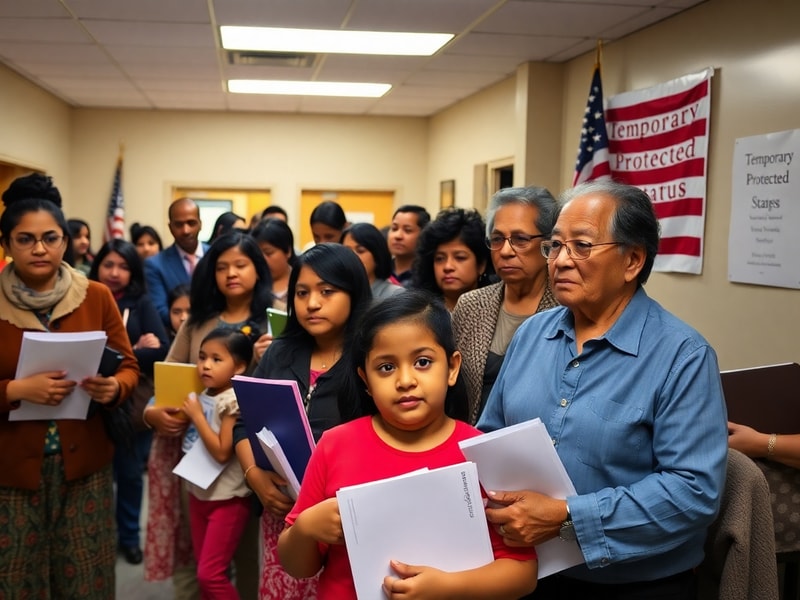
What Is Temporary Protected Status? How It Works and Why It Matters
The Roots of Temporary Protected Status: Why It Exists and Who It Serves
Temporary Protected Status, or TPS, is a humanitarian immigration program created by the U.S. government in 1990. It allows people from certain countries to live and work legally in the United States when their homelands are facing armed conflict, natural disasters, or other extraordinary circumstances. The program reflects a recognition that forced migration doesn’t always follow predictable patterns—sometimes people can’t safely return home even after the immediate crisis passes.
Congress designed TPS to balance compassion with practicality. It’s not a path to permanent residency in itself, but it provides breathing room for individuals and families to avoid deportation during unstable times. Countries like El Salvador, Haiti, and Honduras have had their designations renewed multiple times, stretching TPS from months into years. This longevity highlights a tension: while TPS was meant to be temporary, real-world conditions often make return unsafe long after the original crisis fades.
How TPS Works: The Process and Its Limitations
To qualify for TPS, applicants must prove continuous physical presence in the U.S. since a designated date and meet strict registration deadlines. Approval grants work authorization and protection from deportation, but it does not confer citizenship or permanent status. The Department of Homeland Security periodically reviews conditions in each country and decides whether to extend, redesignate, or terminate TPS for that nation.
One of TPS’s most controversial features is its reliance on temporary designations that keep getting extended. Critics argue this creates a limbo for hundreds of thousands of people who build lives in the U.S. while unable to plan for the future. For example, Salvadorans with TPS have lived in the U.S. for over two decades, raising families and contributing to local economies. Yet their legal status remains precarious, tied to political decisions rather than durable solutions.
The program also faces legal challenges. Courts have sometimes blocked termination attempts, leaving recipients in prolonged uncertainty. These legal battles underscore how TPS operates at the intersection of immigration policy and human rights, where temporary measures often outlast their intended timelines.
Countries Currently Under TPS Designation (as of 2024)
- El Salvador
- Haiti
- Honduras
- Nepal
- Nicaragua
- Somalia
- Sudan
- South Sudan
- Syria
- Ukraine
- Venezuela
- Yemen
TPS and the Global Refugee Crisis: A Wider Lens
TPS is part of a larger global pattern where temporary protection becomes semi-permanent. The European Union’s Temporary Protection Directive, created in response to the 2022 Ukraine war, offers a parallel example. It granted Ukrainians fleeing Russia’s invasion immediate protection across EU nations, with renewable one-year terms. Like TPS, this program prioritizes safety over permanence, but it also reveals how displacement can become a long-term reality in geopolitical crises.
In the Middle East, Syrian refugees have lived in neighboring countries for over a decade under temporary arrangements. Jordan and Lebanon, though not offering formal TPS-like programs, have absorbed millions with limited legal status. These situations illustrate a global challenge: when crises persist, temporary solutions harden into de facto residency. The U.S. TPS program is just one expression of this broader dilemma.
Culturally, TPS recipients contribute richly to their adopted communities. Haitian TPS holders in Miami have shaped local music, food, and business scenes for generations. Salvadoran communities in Los Angeles and Houston anchor cultural festivals like Día del Niño and patron saint celebrations. Their presence redefines American cities while keeping global traditions alive. Yet this cultural integration happens against a backdrop of legal uncertainty, creating emotional and social strains on families.
The Human Cost: Stories Behind the Status
Behind every TPS designation is a person with a name, a story, and a life put on hold. Take Maria, a Salvadoran TPS holder who arrived in the U.S. in 2001 after two earthquakes devastated her country. She built a career in healthcare, raised two U.S.-born children, and yet faced deportation threats when TPS was nearly terminated in 2018. Her case reflects thousands like hers—people who arrived as children, grew up American in every sense, but lack legal recognition.
Haitian TPS recipients face a different set of challenges. Many fled after the 2010 earthquake, only to confront hurricanes, political instability, and a cholera outbreak. For them, TPS isn’t just about work permits—it’s about survival. The program has allowed them to support families back home through remittances, which account for nearly a third of Haiti’s GDP. Without TPS, these lifelines would vanish overnight.
In 2023, the Biden administration redesignated TPS for Venezuela, offering protection to hundreds of thousands fleeing economic collapse and authoritarian rule. This decision acknowledged that Venezuela’s crisis isn’t temporary—it’s a systemic failure that demands sustained humanitarian response. It also highlighted how TPS adapts (or fails to adapt) to evolving global conflicts.
What’s Next for TPS? Policy, Politics, and Human Lives
The future of TPS hinges on political will and judicial rulings. Advocacy groups argue for legislative solutions, such as the proposed Dream and Promise Act, which would offer a pathway to permanent residency for TPS holders and Dreamers. Meanwhile, courts continue to weigh in on termination decisions, creating a patchwork of legal protections across different nationalities.
From a global perspective, TPS reflects a broader tension in immigration policy: how to respond to crises without creating permanent underclasses. Some nations are experimenting with hybrid models—like Canada’s humanitarian pathways—that combine temporary protection with clear routes to permanent status. These alternatives suggest TPS doesn’t have to be a dead end, but they require political courage and sustained investment.
For recipients, the stakes couldn’t be higher. Losing TPS means losing jobs, homes, and communities. It means children born in the U.S. facing deportation to countries they’ve never known. It means the slow unraveling of lives built over decades. As debates rage in Washington and courtrooms, one truth remains: behind every policy decision are real people who deserve dignity, stability, and the chance to thrive.
Ultimately, TPS is more than a legal mechanism—it’s a mirror held up to society’s values. It asks whether we see displaced people as temporary inconveniences or as neighbors deserving of hope. The answer will shape not just the futures of hundreds of thousands, but the character of the communities they call home.