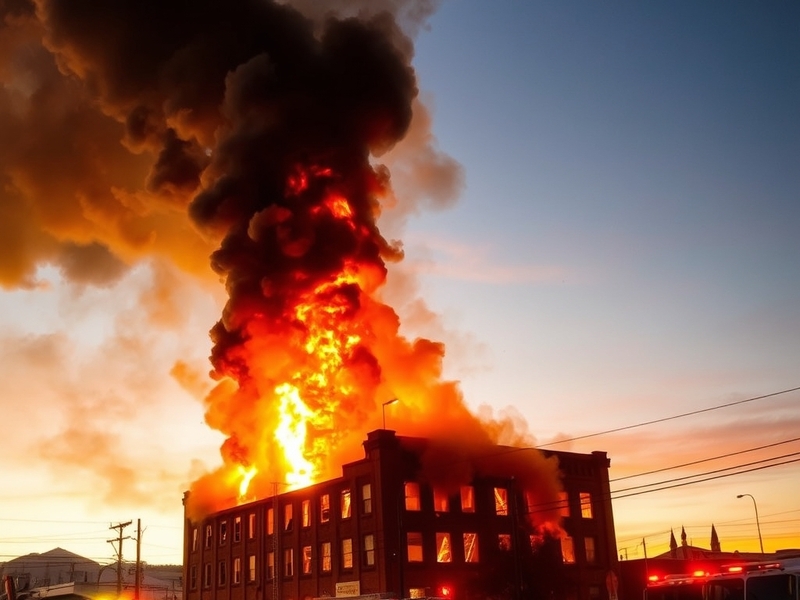
The Reno Fire Department has responded to one of its most challenging incidents in recent history following a multi-alarm blaze that tore through a historic warehouse district in downtown Reno early Monday morning. The fire, which began around 2:47 a.m. near the intersection of Commercial Row and Sierra Street, quickly spread to three adjacent buildings, including a century-old brick warehouse and a mixed-use commercial space housing several small businesses. Firefighters from Reno, Sparks, and Washoe County agencies battled the flames for over six hours, bringing the blaze under control just after 9 a.m.
At its peak, more than 120 firefighters and 20 fire engines were on scene, supported by aerial units from the Nevada Air National Guard’s 152nd Airlift Wing. The intensity of the fire forced evacuations across a two-block radius, temporarily displacing residents and shuttering several downtown businesses for the day. Authorities reported no serious injuries, though three firefighters were treated for minor smoke inhalation and released the same morning.
What started the fire?
Investigators from the Reno Fire Marshal’s Office are still working to determine the exact cause of the fire, but preliminary findings suggest it may have originated in the electrical system of the oldest warehouse. Built in 1912, the structure had undergone several renovations over the years, though records show no recent electrical upgrades. Officials have not ruled out accidental causes such as faulty wiring or overloaded circuits, but they have also not dismissed the possibility of arson.
“This area has seen a surge in renovation activity as developers target older buildings for adaptive reuse,” said Reno Fire Chief Michael Hernandez. “While that’s positive for the city’s growth, it can also pose risks if proper safety protocols aren’t followed during construction.” He emphasized that the department is reviewing recent permit applications and renovation plans in the vicinity as part of the investigation.
The fire’s rapid spread was exacerbated by strong, dry winds common in the high desert climate, which carried embers across rooftops and into adjacent structures. The warehouse district, though largely vacant in recent years, had seen a resurgence of interest from tech startups and co-working spaces seeking affordable, character-rich office environments.
What was lost—and what survives
The fire destroyed three buildings totaling over 12,000 square feet of space. Among the hardest-hit was the historic brick warehouse at 202 Commercial Row, which housed a vintage record store and a small art gallery. Both businesses had operated there for more than a decade, drawing loyal local followings. Nearby, a two-story mixed-use building containing a café and a boutique fitness studio was also heavily damaged. While the café’s owner confirmed the space would be “a total loss,” the fitness studio reported only smoke and water damage to equipment.
On a more positive note, a neighboring art collective housed in a converted loft space managed to save most of its inventory after firefighters used tarps and salvage teams to cover artwork and sculptures. The collective’s director called the quick response “a small miracle” and praised the coordination between artists and first responders.
“We were able to move about 80% of our inventory to a storage unit within two hours,” she said. “That kind of partnership is what makes our creative community resilient.”
Broader implications for downtown Reno
The fire raises important questions about the future of Reno’s historic downtown and its ongoing transformation into a hub for technology, arts, and urban living. The city has seen a 15% increase in building permits over the past two years, with many targeting older, underutilized structures. While adaptive reuse supports economic growth, it also increases pressure on aging infrastructure—especially electrical systems that may not meet modern safety standards.
City officials have already scheduled an emergency meeting with the Reno Fire Department, building inspectors, and local developers to review safety protocols for renovation projects. Key concerns include:
- Mandatory electrical inspections for buildings over 50 years old undergoing major renovations
- Enhanced fire suppression systems in mixed-use structures with high occupancy
- Clear reporting requirements for contractors performing electrical or mechanical work
- Public awareness campaigns on fire safety in historic districts
“This isn’t just about one fire,” said Mayor Hillary Schieve. “It’s about ensuring that as Reno grows, we do so safely and responsibly. Our historic character is part of what makes us special, but so is protecting the people who live and work in these spaces.”
The fire also highlights the growing role of mutual aid in regional emergency response. With Reno’s population approaching 300,000 and surrounding areas expanding, coordinated efforts between city, county, and state agencies have become essential. The Nevada Office of Emergency Management praised the multi-jurisdictional response as “a model for future incidents.”
Looking ahead: recovery and renewal
The path to recovery will be long for the business owners and residents affected by the fire. While insurance assessments are still underway, early estimates suggest property damage could exceed $8 million. The city has pledged to expedite permit reviews for temporary relocation sites and has set up a relief fund for small businesses. Local banks and nonprofits are offering low-interest loans and grants to help cover immediate costs.
For the art community, the loss of the record store and gallery was particularly painful. The record store, known for its curated vinyl collection and live performances, had been a cultural anchor for more than 15 years. Its owner, who requested anonymity, said she plans to reopen elsewhere in Reno but acknowledged the emotional toll. “This place wasn’t just a store—it was a gathering spot, a memory hub. We’re going to rebuild, but it won’t be the same without the bricks.”
As Reno continues to evolve, the fire stands as a sobering reminder of the balance between preservation and progress. The city’s ability to learn from this incident—and to act quickly—will shape its reputation as both a creative hub and a safe, sustainable community for years to come.