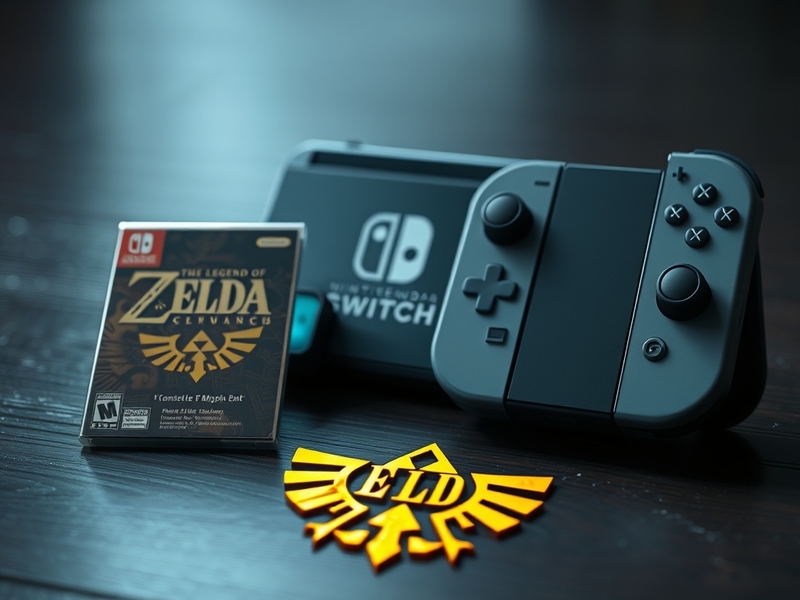
The Nintendo Switch 2 rumor mill has reached a fever pitch since whispers of a Legend of Zelda-branded upgrade first surfaced in early 2024. Japanese financial outlets and industry insiders have repeatedly pointed to a mid-2025 launch window, with production already reportedly underway at Foxconn’s Zhengzhou facility. What began as scattered speculation has crystallized into a global story: a console refresh tied directly to the franchise that redefined Hyrule—and portable gaming itself.
The Console That Could Finally Fix the Joy-Cons
Every Switch owner knows the pain points. Drifting Joy-Cons plague competitive multiplayer. Battery life dwindles after two years. The dock’s HDMI 1.4 port feels like a relic in 4K-capable living rooms. The Switch 2 appears positioned to solve these frustrations without abandoning the hybrid philosophy. Leaked schematics suggest an OLED display with 120Hz variable refresh rate, a custom NVIDIA Tegra successor, and detachable controllers redesigned around Hall-effect sensors to eliminate drift.
Nintendo’s track record with iterative upgrades is mixed. The Switch Lite proved a niche success, while the OLED model in 2021 merely polished an already mature system. This time, the stakes feel different. A Zelda-branded Switch 2 wouldn’t just refresh hardware—it would redefine the console’s identity for a new generation. Japanese consumers, who purchase 40% of all Switch units, have shown increasing appetite for premium models, with the Animal-Crossing edition selling out globally within hours of its 2021 reveal.
Analysts at Famitsu note that Nintendo’s first-party titles now account for 68% of Switch software sales. When The Legend of Zelda: Tears of the Kingdom launched in May 2023, it sold 1.2 million copies in Japan within three days—outpacing every previous first-party release. These numbers suggest consumers are ready to invest in a platform that can fully leverage such experiences.
A Global Race to Capture Hyrule’s Magic
The Switch 2’s potential launch window coincides with a watershed moment for gaming in emerging markets. In Brazil, console sales grew 15% year-over-year in 2023, driven by Nintendo’s aggressive localization efforts and financing programs. Mexico’s gaming market is projected to reach $1.8 billion by 2025, with Nintendo maintaining a 34% share. Meanwhile, India’s mobile gaming boom has finally spilled into consoles, with the Switch outselling Xbox and PlayStation combined in major urban centers.
Cultural context matters here. In Japan, where Nintendo originated, the Switch 2 is expected to launch alongside a new Zelda title—potentially a remake or sequel to A Link to the Past—capitalizing on the franchise’s 35th anniversary in 2026. South Korea’s gaming culture, heavily influenced by esports and streaming, has seen a 40% increase in Nintendo Switch livestreams since Tears of the Kingdom’s release. Even in Europe, where PlayStation traditionally dominates, Nintendo’s family-friendly branding has carved a loyal niche, particularly among younger players and families.
One analyst at Niko Partners observed that Nintendo’s ability to localize content has become a competitive advantage in regions where traditional retailers remain dominant. The Switch 2’s rumored dual retail and digital launch strategy could mirror the success of Pokémon Scarlet & Violet, which sold 24 million copies globally despite launch-day performance issues—players forgave imperfections because the experience was accessible in their language.
What a Zelda-Branded Switch 2 Could Look Like
While Nintendo has not confirmed any details, multiple supply-chain leaks paint a compelling picture. A recent report from The Nikkei outlined a phased rollout: a standard model in March 2025, followed by a premium Master Edition tied to a new Zelda release in September. The premium model is expected to include an 8-inch 120Hz OLED screen, a dock with 8K passthrough, and 1TB of internal storage—double the base model.
Here’s what enthusiasts are speculating:
- A redesigned chassis with angular, totem-inspired aesthetics reminiscent of the Master Sword
- Backward compatibility with all existing Switch games and accessories
- Enhanced amiibo functionality with NFC built into the controllers
- A dedicated “Zelda Mode” that optimizes performance for open-world exploration
Rumors also suggest a new Zelda title will launch day-and-date with the console, possibly a remastered version of Breath of the Wild enhanced for the new hardware. Such a strategy mirrors Nintendo’s 2017 launch of the Switch alongside Breath of the Wild, a move that redefined open-world design on consoles.
Industry watchers caution that Nintendo’s reliance on first-party software remains a double-edged sword. While franchises like Zelda drive hardware sales, delays in software development can stall console momentum. The Switch 2’s success may hinge on Nintendo’s ability to deliver a flagship experience that justifies the upgrade cycle—something it has struggled to do since the Wii U.
Beyond the Console: A Cultural Shift in Gaming
The Switch 2 isn’t just a piece of hardware; it’s a cultural artifact. In 2023, 62% of U.S. parents reported that their children played Nintendo games, according to the NPD Group. The console has become a social bridge, connecting generations through shared experiences like Mario Kart tournaments and Zelda co-op puzzles. In China, where console gaming was restricted for years, the Switch has become a symbol of cultural normalization, with Tencent now publishing Nintendo titles.
This global embrace comes at a cost. Nintendo’s environmental initiatives have lagged behind competitors. The Switch 2’s rumored shift to more sustainable materials and recyclable packaging could address criticism while appealing to eco-conscious consumers in Europe and Japan. Meanwhile, in Africa, where gaming infrastructure remains underdeveloped, the Switch 2’s potential for offline play and local storage could make it a lifeline for communities with limited internet access.
The console’s cultural footprint extends beyond play. Zelda has inspired art installations in London, orchestral concerts in Tokyo, and even academic symposia on game design. A new Switch generation could amplify these effects, turning gaming into a mainstream art form. Yet, with great influence comes great scrutiny. Nintendo’s handling of microtransactions in recent titles has drawn criticism, and the Switch 2’s business model—particularly around DLC and expansion packs—will be scrutinized closely.
As the 2025 launch window approaches, the anticipation isn’t just about specs or sales figures. It’s about whether Nintendo can recapture the magic that made the original Switch a global phenomenon. The console that brought Hyrule to living rooms, train rides, and dorm rooms is poised to evolve—but its soul remains tied to the adventures players carry with it.
The next chapter of Nintendo’s story begins not in a lab or a boardroom, but in the hands of millions of players worldwide, each holding a controller, a dream, and a golden key.