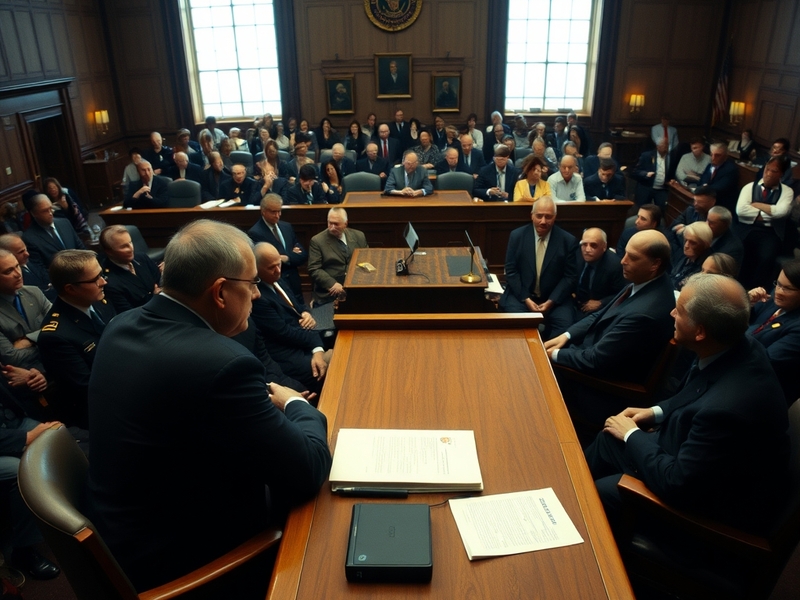
The Clancy trial reached its conclusion last week with a verdict that left many observers surprised. After weeks of testimony, legal arguments, and jury deliberations, the jury delivered a unanimous decision that surprised both prosecution and defense teams. The case centered on allegations of fraud and misconduct involving high-profile figures in the tech industry, with Clancy accused of orchestrating a scheme to defraud investors of millions.
Key moments from the trial
The trial began with opening statements that set the stage for a contentious legal battle. Prosecutors painted Clancy as a deliberate fraudster who exploited investor trust for personal gain. They highlighted emails and financial documents that they argued proved his intent to deceive. The defense, however, framed Clancy as a visionary entrepreneur whose ambitious projects were misunderstood and unfairly scrutinized.
One of the most dramatic moments came during the testimony of a former business partner who accused Clancy of pressuring him to falsify financial records. The partner’s credibility was immediately challenged by the defense, which pointed to inconsistencies in his statements. The jury appeared divided during this testimony, raising questions about its eventual impact on their deliberations.
Another pivotal moment was the introduction of internal company communications. Prosecutors argued that these messages revealed Clancy’s awareness of the fraudulent activities and his efforts to conceal them. The defense countered that the messages were taken out of context and that Clancy was merely attempting to salvage a failing business. The jury’s reaction to this evidence likely played a significant role in shaping their final decision.
Evidence presented by the prosecution
The prosecution built its case around a series of financial irregularities and misleading statements made to investors. Among the key pieces of evidence were:
- A spreadsheet detailing inflated revenue projections that were shared with potential investors.
- Recordings of phone calls where Clancy allegedly admitted to manipulating financial data.
- Emails between Clancy and his team discussing the need to “cook the books” to meet quarterly targets.
- Witness testimony from former employees who claimed they were instructed to alter documents.
The prosecution argued that these pieces of evidence collectively demonstrated a pattern of deceit. They emphasized that Clancy’s actions were not isolated incidents but part of a coordinated effort to mislead investors. The defense, however, dismissed much of this evidence as circumstantial and argued that Clancy’s intent was never proven.
Defense strategies and counterarguments
The defense team employed several strategies to undermine the prosecution’s case. First, they challenged the credibility of key witnesses, arguing that their testimony was motivated by personal grievances or financial incentives. They also pointed to the lack of direct evidence linking Clancy to the alleged fraud, noting that no single document explicitly incriminated him.
Another strategy involved rebranding Clancy as a flawed but well-intentioned entrepreneur. The defense argued that his ambitious projects were ahead of their time and that investors simply failed to understand the risks involved. They also highlighted the economic climate at the time, suggesting that external factors contributed to the company’s downfall rather than any intentional wrongdoing by Clancy.
The defense also focused on the company’s financial records, arguing that the prosecution’s interpretation of the data was overly simplistic. They contended that the financial challenges faced by the company were the result of market conditions and poor management by others, not Clancy himself. This narrative aimed to shift the blame away from their client and onto a broader set of circumstances.
Reactions to the verdict
The verdict was met with mixed reactions from the public and legal experts alike. Supporters of Clancy expressed relief, arguing that the prosecution failed to prove its case beyond a reasonable doubt. They pointed to the lack of direct evidence and the circumstantial nature of the prosecution’s arguments as reasons to question the jury’s decision. Social media erupted with debates, with some calling the verdict a miscarriage of justice and others applauding the jury for seeing through the prosecution’s case.
Legal analysts offered more measured reactions. Some suggested that the verdict highlighted the challenges of prosecuting white-collar crime, particularly when intent is a key element of the charges. Others noted that the case could set a precedent for future prosecutions involving complex financial schemes. The judge overseeing the case emphasized the importance of the jury’s role in weighing the evidence and delivering a fair verdict.
Clancy himself remained composed after the verdict, thanking his legal team and supporters. His statement emphasized his commitment to moving forward and clearing his name. Meanwhile, prosecutors indicated they would not pursue further legal action, though they reserved the right to appeal if new evidence emerges. The case has left a lasting impact on the tech industry, raising questions about accountability and the responsibilities of entrepreneurs.
The Clancy trial serves as a reminder of the complexities involved in prosecuting financial fraud. While the verdict brings a sense of closure to this particular case, it also underscores the need for clearer regulations and stronger oversight in the tech industry. As the dust settles, the legal and business communities will continue to analyze the implications of this trial for years to come.
For those interested in similar high-profile legal battles, our Analysis section offers in-depth coverage of other notable cases shaping today’s legal landscape.