Ermias Joseph Asghedom, known to the world as Nipsey Hussle, transcended the boundaries of rap to become a symbol of community empowerment and cultural resilience. Emerging from the Crenshaw district of Los Angeles, he transformed his lived experience into a blueprint for change, blending lyrical storytelling with grassroots activism. His murder in 2019 at the age of 33 shocked a global audience and left a void that extended far beyond music. More than a decade after his first major mixtape, Bullets Ain’t Got No Name, Hussle’s legacy endures as a testament to the power of self-determination and the importance of investing in the places that shape us.
The Crenshaw Blueprint: From Corner to CEO
Hussle’s rise began not in a recording studio, but on the streets of South Central Los Angeles. He grew up amid economic hardship, gang culture, and limited opportunities, yet he refused to let his environment dictate his future. By the early 2000s, he was selling mixtapes out of his car, a practice that earned him a cult following long before he signed with a major label. His business acumen became as legendary as his music, rooted in an understanding of value and scarcity.
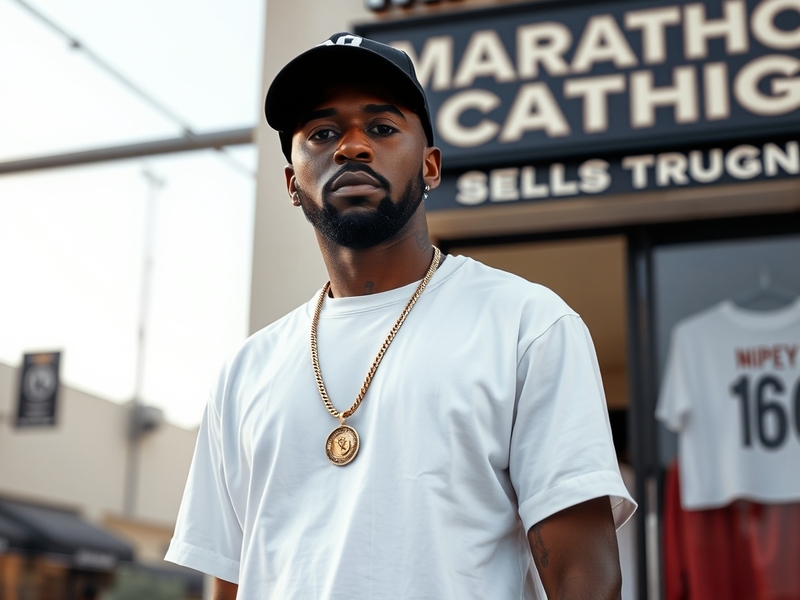
In 2013, Hussle famously spent 100 hours in a Foot Locker to promote his mixtape Crenshaw, priced at $100 per copy. The strategy wasn’t just marketing—it was a statement about artistry, ownership, and the exploitation of Black creativity. He later explained that he wanted to show the value of his work, challenging listeners to reconsider how they support artists. This philosophy extended beyond music. In 2017, he opened the Marathon Clothing store on Slauson Avenue, a retail space that doubled as a community hub, complete with a barbershop and coworking area. The store became a physical manifestation of his belief in vertical integration: control every aspect of your ecosystem.
His approach resonated globally, particularly in marginalized communities where systemic barriers have historically stifled economic mobility. Hussle didn’t just rap about struggle—he modeled solutions. He invested in real estate, launched a co-working space, and partnered with brands like Puma to create job opportunities. His vision aligned with a broader movement toward economic justice, echoing the work of figures like Marcus Garvey and Booker T. Washington, who emphasized self-reliance as a path to liberation.
Global Echoes: Music as a Tool for Social Change
Nipsey Hussle’s influence extended far beyond Los Angeles, reaching cities like London, Johannesburg, and Toronto, where hip-hop has long served as a voice for the voiceless. His 2018 album Victory Lap—his first major-label release—catapulted him to international acclaim, debuting at No. 4 on the Billboard 200. Tracks like “Dedication” and “Racks in the Middle” showcased his ability to blend street narratives with motivational anthems, a formula that translated across cultures.
In South Africa, artists like Cassper Nyovest and AKA cited Hussle as an inspiration, admiring his balance of hustle and principle. In the UK, grime and drill artists drew parallels between Hussle’s storytelling and their own narratives of survival. Even in France, where hip-hop has deep roots in social commentary, rappers like Niro and Vald found kinship in Hussle’s unapologetic authenticity.
His music wasn’t just consumed—it was studied. Fans and scholars alike analyzed his lyrics for themes of resilience, self-investment, and communal uplift. The 2019 documentary Nipsey Hussle: The Marathon Continues highlighted how his message of perseverance resonated with young people worldwide, from the townships of Cape Town to the housing projects of Brooklyn. Hussle’s global appeal lay in his universality: struggle is universal, but so is the will to overcome it.
Love, Legacy, and Loss: The Human Behind the Myth
Beneath the entrepreneur and the rapper was a devoted partner and father. His relationship with Lauren London became a cultural touchstone, offering a rare glimpse of stability and devotion in the often-tumultuous world of hip-hop. Their son, Kross, became a symbol of hope, and Hussle often spoke about wanting to build a legacy that extended beyond himself. In interviews, he described fatherhood as his greatest motivation, a responsibility that grounded his ambitions.
His murder on March 31, 2019, sent shockwaves through the music industry and beyond. Fans gathered outside Marathon Clothing, leaving flowers and candles. Protests erupted in Los Angeles, with calls for justice and an end to gun violence. The outpouring of grief revealed Hussle’s role not just as an artist, but as a unifier—a figure who had brought together people across racial, economic, and generational lines.
The investigation into his death led to multiple arrests, including that of Eric Holder Jr., a man with a long-standing feud with Hussle. The trial brought renewed attention to the cycle of violence in Los Angeles, particularly in neighborhoods like Hyde Park, where Hussle grew up. It also sparked conversations about mental health, trauma, and the pressures of fame. In the wake of his death, Hussle’s family established the Nipsey Hussle Foundation, dedicated to providing resources for underserved youth, including STEM education and job training.
Lessons from the Marathon: What Nipsey’s Legacy Teaches Us
Nipsey Hussle’s life and death offer more than a cautionary tale—they provide a roadmap for how to build generational wealth and community power. His philosophy can be distilled into a few key principles:
- Ownership: Hussle believed in controlling the means of production, whether through his music, real estate, or business ventures. He famously said, “The game is rigged, but you can’t win the game if you don’t play.”
- Education: He emphasized financial literacy, encouraging fans to invest in themselves and their communities. His partnership with education initiatives reflected this commitment.
- Unity: Hussle worked to bridge divides, collaborating with artists across genres and backgrounds. His music often featured messages of solidarity, from “Perfect Day” with J. Cole to “Relentless” with YG.
- Resilience: He turned setbacks into comebacks, whether recovering from injuries or navigating the music industry’s challenges. His marathon metaphor wasn’t just about endurance—it was about progress.
These principles are now taught in business schools, community centers, and even prisons, where his story is used to inspire rehabilitation and entrepreneurship. His influence can be seen in the rise of Black-owned businesses, from barbershops to tech startups, all operating under the banner of self-determination.
Yet, Hussle’s legacy is not without its contradictions. Some critics argue that his embrace of capitalism within a system designed to exclude Black communities was naive. Others point to the commercialization of his image post-mortem, with brands and corporations co-opting his “hustle” ethos for profit. Still, his core message remains intact: real change begins with self-investment and collective action.
In the years since his death, his family has continued to honor his vision. The Marathon Clothing store remains a thriving business, and the foundation has expanded its reach. His brother, Sam Asghedom, has taken up the mantle of preserving his legacy, while Lauren London has used her platform to advocate for criminal justice reform and mental health awareness.
Nipsey Hussle’s life reminds us that legacy isn’t just about what you leave behind—it’s about what you build while you’re here. His story is a call to action, not just for artists, but for anyone who has ever felt constrained by their circumstances. The marathon continues, and his footsteps echo in the work of those who dare to dream beyond the limits set by others.