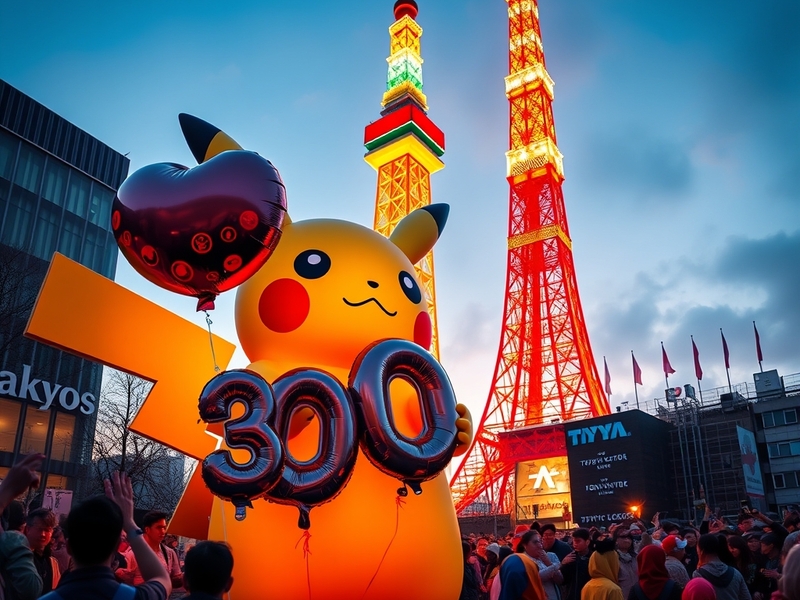
Three decades after its debut in Japan on February 27, 1996, the Pokémon franchise remains one of the most enduring and lucrative entertainment properties in history. Created by Satoshi Tajiri and developed by Game Freak and Nintendo, Pokémon has grown from a pair of Game Boy titles into a multimedia empire encompassing video games, trading cards, animated series, movies, merchandise, and even a live-action film. As the franchise celebrates its 30th anniversary, it stands not just as a nostalgic touchstone for millennials but as a continuously evolving cultural and commercial force that adapts to new generations without losing its core identity.
The Journey from Humble Beginnings to Global Domination
The original Pokémon Red and Green versions launched in Japan as a pair of interconnected games designed to be played together. Players acted as Pokémon Trainers, capturing creatures, training them, and battling friends via link cables—a novelty at the time. The games’ addictive loop of exploration, collection, and competition, coupled with a vibrant world filled with 151 quirky creatures, captured the imagination of a generation. Though Green was exclusive to Japan, Red and Blue versions were localized for the West, where they became instant hits upon release in 1998.
By the end of the 1990s, Pokémon had already become a social phenomenon. The animated series, which debuted in Japan in 1997 and in the U.S. in 1999, introduced Ash Ketchum and Pikachu to living rooms worldwide. The phrase “Gotta Catch ‘Em All!” entered the global lexicon, and the trading card game—launched in 1996 alongside the video games—became a classroom staple, leading to schoolyard trades and, in some cases, heated disputes over rare cards. Nintendo’s foresight in licensing the brand for diverse merchandise ensured that Pokémon was everywhere: from backpacks and lunchboxes to bedsheets and video game consoles.
By the time the franchise turned 10 in 2006, it had already sold over 150 million game units and generated more than $1 billion in annual revenue. Today, those numbers have ballooned to over 440 million game copies sold, with the franchise generating over $100 billion in total revenue across all platforms. That makes Pokémon one of the highest-grossing media franchises of all time, surpassing even Star Wars and Marvel in long-term profitability.
How Pokémon Continues to Reinvent Itself While Staying True to Its Roots
What sets Pokémon apart from other long-running franchises is its remarkable consistency in core appeal combined with a willingness to innovate. Every generation introduces new Pokémon, regions, and mechanics, but the fundamental loop—explore, catch, train, battle—remains intact. This balance of familiarity and novelty has allowed the franchise to appeal to both lifelong fans and newcomers.
Recent entries like Pokémon Scarlet and Violet (2022) pushed the boundaries of open-world design in the series, offering a seamless, sprawling region to explore for the first time. While the game faced criticism for technical performance issues upon launch, its ambitious scope signaled a clear intent to evolve. Meanwhile, spin-offs like Pokémon GO, released in 2016, leveraged augmented reality to bring Pokémon into the real world, sparking a global craze and redefining mobile gaming. The game has since amassed over 1 billion downloads and remains a cultural touchstone nearly a decade later.
The trading card game has also experienced a renaissance, driven by a new wave of collectors and investors. High-profile sales, such as a Pikachu Illustrator card selling for over $5 million in 2022, have turned the hobby into a mainstream investment opportunity. Organized play has grown, with the Pokémon TCG Championship Series drawing thousands of competitors annually. This dual role—as both a nostalgic pastime and a serious competitive endeavor—has kept the franchise relevant across multiple demographics.
The animated series has also evolved. After 25 seasons and over 1,200 episodes, Ash Ketchum finally “won” the Pokémon League in the 2019 series finale, a decision that sparked both celebration and nostalgia. The franchise then pivoted to Pokémon Journeys, introducing a new protagonist, Goh, and expanding the lore with appearances from every Pokémon species. This shift reflects a broader strategy: honoring the past while making room for the future.
Cultural Impact: Why Pokémon Endures Beyond Generational Shifts
Pokémon’s longevity can be attributed to several key factors. First, it taps into universal childhood desires: exploration, mastery, friendship, and a sense of accomplishment. The act of catching a rare Pokémon or completing a Pokédex offers a tangible reward that resonates deeply with players of all ages. Second, the franchise’s adaptability has allowed it to thrive in new mediums. Pokémon GO bridged the gap between digital and physical play, while the mobile game Pokémon Sleep, launched in 2023, gamifies rest and wellness—an unexpected but fitting evolution for a brand rooted in balance and harmony.
Moreover, Pokémon has become a social connector. Whether through local multiplayer battles, online trading communities, or the shared experience of watching the animated series, Pokémon fosters connection. Parents who grew up with the franchise now introduce it to their children, creating multigenerational fans. This cycle of transmission ensures that Pokémon remains relevant not just as a product, but as a cultural touchstone.
The franchise’s influence extends beyond entertainment. Academic studies have explored Pokémon’s role in teaching children about strategy, probability, and even language learning. The Pokémon TCG has been used in educational settings to teach math, reading, and social skills. Meanwhile, the brand’s commitment to sustainability—such as reducing plastic in card packaging and promoting eco-friendly initiatives—reflects a growing corporate responsibility that resonates with modern audiences.
Looking Ahead: What’s Next for the Pokémon Universe?
As Pokémon celebrates its 30th anniversary, the franchise shows no signs of slowing down. Rumors of a new mainline game, possibly set in a new region inspired by real-world locations like Italy or Spain, have fueled speculation. The animated series is also undergoing a soft reboot with Pokémon Horizons, which introduces a new cast of trainers and a fresh narrative direction while maintaining the familiar tone. These changes suggest a deliberate effort to refresh the brand without alienating its core audience.
The Pokémon Company has also been expanding into new markets, particularly in Asia and Latin America, where the franchise’s popularity continues to rise. Localization efforts have improved, with more languages supported in games and media. The annual Pokémon Presents showcase, a digital event where new games, merchandise, and collaborations are revealed, has become a staple in the gaming calendar, drawing millions of viewers online.
Looking forward, the biggest challenge may be balancing innovation with nostalgia. As technology advances, so do expectations for graphics, gameplay depth, and online features. Yet the franchise’s greatest strength—its ability to evoke wonder and curiosity—must remain intact. Whether through a new region, a revived TCG set, or another mobile surprise, Pokémon’s future will likely continue to surprise and delight fans old and new.
For collectors, players, and observers alike, Pokémon at 30 is more than just a celebration of the past. It’s a reminder that great stories, when told with heart and imagination, can transcend time. And as long as there are trainers out there ready to say “Let’s go!” the adventure is far from over.
As the franchise grows, its ability to adapt—while staying true to its core values of friendship, adventure, and perseverance—will determine whether it can celebrate another 30 years. But if the past three decades are any indication, Pokémon is just getting started.