From Tokyo to Tokyo: How Kingdom Hearts Became a Global Phenomenon
Few franchises have bridged the gap between Eastern and Western pop culture as seamlessly as Kingdom Hearts. Born from the unlikely partnership between Square Enix and Disney, the action RPG series has evolved from a niche experiment into a beloved staple for millions of players worldwide. Its blend of Final Fantasy’s narrative depth and Disney’s whimsical charm created something entirely new—a gaming experience that resonates across generations and continents.
The series’ success isn’t just about its gameplay or storylines; it’s about how it managed to tap into universal emotions. Whether it’s the nostalgia of Disney classics or the epic scale of Square Enix’s world-building, Kingdom Hearts has cultivated a fanbase that spans decades. Its journey from a single game in 2002 to a multimedia empire is a testament to the power of collaboration and cultural fusion.
The Birth of a Cross-Cultural Collaboration
The idea for Kingdom Hearts emerged from a conversation between Square’s Tetsuya Nomura and Disney’s Shinji Hashimoto. Both companies were looking to expand their reach, but neither expected the game to become the cultural touchstone it did. Nomura, who had just finished directing Final Fantasy VII, was tasked with merging Disney’s iconic characters with Square’s signature storytelling. The result was a game that felt both familiar and fresh—a delicate balance that few franchises have matched.
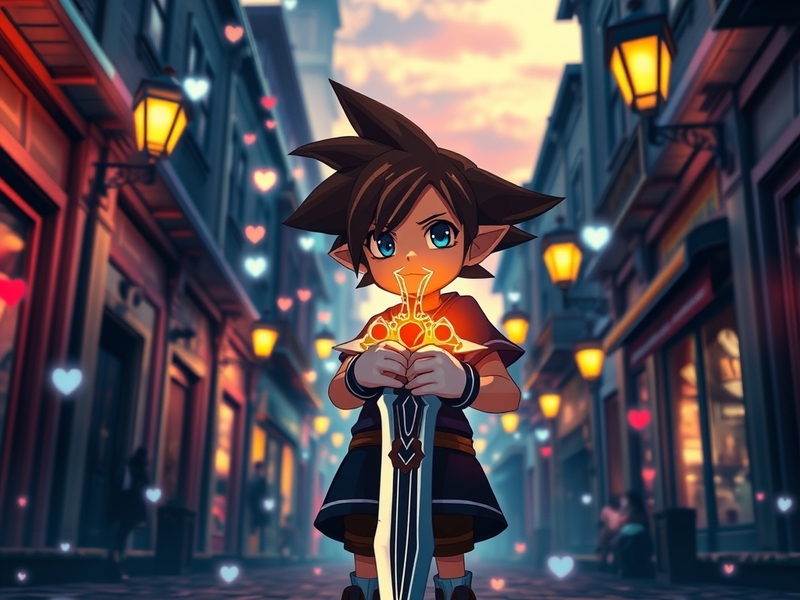
Development wasn’t without challenges. Disney’s strict brand guidelines meant that characters like Mickey Mouse and Donald Duck had to remain recognizable while fitting into a darker, more mature narrative. Nomura’s team also had to ensure that the game’s combat system, rooted in action RPG mechanics, didn’t alienate fans of traditional Disney adventures. The solution? A real-time combat system inspired by Kingdom Hearts’ signature Keyblade—a weapon that blends seamlessly with Disney’s magic-infused universe.
The first game’s release in 2002 was met with cautious optimism. Critics praised its innovative approach, but sales were modest at first. It wasn’t until the sequel, Kingdom Hearts II, that the franchise truly took off. By then, word of mouth had spread, and players were eager to explore the next chapter in Sora’s journey. The series quickly became a global sensation, with localized versions released in multiple languages to accommodate its growing international fanbase.
A Story That Transcends Borders
At its core, Kingdom Hearts is a story about friendship, loss, and the struggle between light and darkness. These themes resonate universally, which explains why the franchise has found such a devoted following in regions like Europe, Latin America, and beyond. The series’ ability to blend Western and Japanese storytelling traditions has made it a rare example of a game that feels both exotic and familiar to players around the world.
One of the franchise’s most striking aspects is its use of Disney and Pixar worlds. From the neon-lit streets of Twilight Town to the icy landscapes of Arendelle, each world is meticulously crafted to reflect its source material while contributing to the overarching narrative. This attention to detail has earned the series praise from both Disney purists and gaming enthusiasts alike. It’s a level of craftsmanship that few other cross-media franchises can match.
The emotional depth of Kingdom Hearts is another key to its success. Characters like Riku, Kairi, and Roxas are defined by their struggles, making their arcs compelling even to players who aren’t familiar with Square Enix’s other works. The franchise’s villains, from Maleficent to Master Xehanort, are equally complex, often blurring the line between hero and antagonist. This moral ambiguity adds layers to the storytelling that keep players invested across multiple titles.
Culturally, the series has also made an impact by introducing younger audiences to classic Disney stories while offering older fans a new perspective on familiar characters. For example, the character of Hercules in Kingdom Hearts Birth by Sleep is reimagined with a depth that wasn’t present in the original 1997 film. This kind of reinterpretation has helped the franchise appeal to a broad demographic, from children to adults in their 40s.
The Global Fanbase: Why Kingdom Hearts Endures
Kingdom Hearts’s fanbase is as diverse as its storytelling. In Japan, the series is celebrated for its ties to Final Fantasy and its intricate lore, while in the West, fans often cite the Disney integration as their entry point. Online communities, fan art, and cosplay have further cemented the franchise’s place in global pop culture. Events like the annual D23 Expo in the U.S. and Jump Festa in Japan regularly feature Kingdom Hearts panels, drawing thousands of attendees eager to catch a glimpse of upcoming titles.
The franchise’s influence extends beyond gaming. Merchandise, manga adaptations, and even a limited-edition Kingdom Hearts themed airplane by ANA (All Nippon Airways) have showcased the series’ cultural reach. The recent success of titles like Kingdom Hearts III Re Mind and Melody of Memory has proven that the demand for new content remains strong, even two decades after the first game’s release.
One of the most fascinating aspects of Kingdom Hearts’s global appeal is how it adapts to different markets. For instance, the games released in Europe often include additional content tailored to Western audiences, such as voice acting in multiple languages. This localization effort has helped the franchise avoid the pitfalls of cultural missteps that have plagued other cross-media properties. By respecting regional preferences while maintaining its core identity, Kingdom Hearts has managed to stay relevant in an ever-changing industry.
Another factor in its longevity is the series’ willingness to experiment. Spin-offs like Kingdom Hearts χ and Union χ introduced mobile gamers to the franchise, while Kingdom Hearts III brought the story full circle with a cinematic presentation that rivaled Hollywood blockbusters. These innovations have kept the series fresh while satisfying longtime fans who crave both nostalgia and novelty.
Looking Ahead: The Future of Kingdom Hearts
With the conclusion of the Dark Seeker Saga in Kingdom Hearts III, the franchise has entered a new era. Square Enix has hinted at fresh projects, including a potential Kingdom Hearts IV and more spin-offs. The upcoming Kingdom Hearts Missing-Link, a mobile game set between Birth by Sleep and Kingdom Hearts, is already generating buzz among fans eager for more content.
The challenge for the franchise now is balancing innovation with tradition. Players have come to expect a certain level of storytelling and gameplay from Kingdom Hearts, and straying too far from its roots could alienate its core audience. However, if the past is any indication, Square Enix will continue to find ways to surprise and delight its global fanbase. Whether through new worlds to explore, deeper character arcs, or unexpected collaborations, the future of Kingdom Hearts looks as bright as ever.
For now, fans can revisit classic titles on modern platforms like the PlayStation 4 and Nintendo Switch, ensuring that new generations can experience the magic of Kingdom Hearts. The franchise’s ability to evolve while staying true to its identity is a rare feat in gaming, and it’s one that will likely keep Kingdom Hearts thriving for years to come.