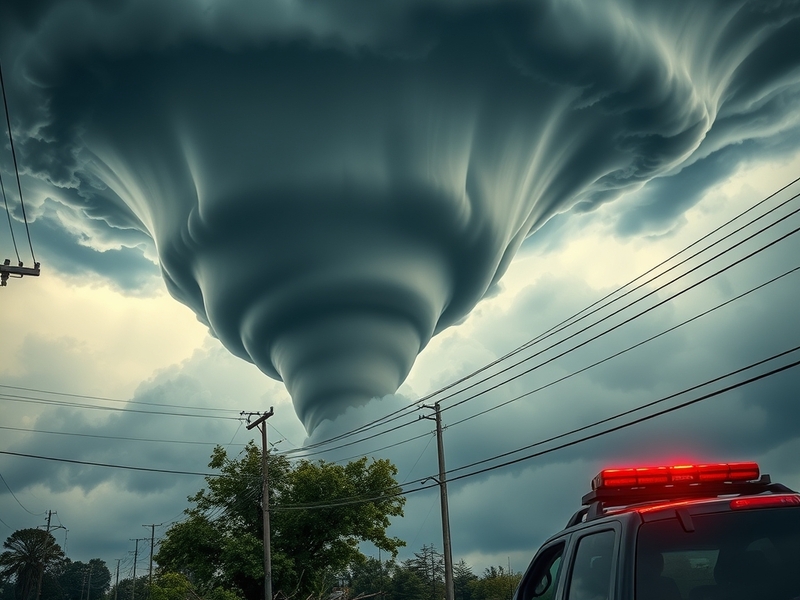
Central Ohio residents woke to blaring sirens early Tuesday morning as the National Weather Service issued a tornado warning for Columbus and surrounding counties. The alert, activated at 4:17 a.m., sent thousands scrambling for cover as severe thunderstorms moved through the region with winds exceeding 70 mph. Doppler radar confirmed a funnel cloud near Hilliard, prompting immediate action from local emergency services.
By 5:30 a.m., Franklin County Emergency Management reported downed trees and power lines across multiple townships, with at least three structures sustaining significant damage in Grove City. First responders described scenes of uprooted century-old oaks blocking major thoroughfares like I-71 and US-62. While no fatalities were reported, six people were treated for minor injuries at local hospitals.
How Columbus Responds to Extreme Weather
Columbus sits in a region known as “Dixie Alley,” a corridor stretching from Texas to the Ohio Valley that experiences some of the most violent tornado outbreaks in North America. Historical records show at least 18 significant tornadoes have struck Franklin County since 1875, with the deadliest occurring in 1974 during the Super Outbreak that killed 31 people across Ohio. Modern infrastructure has improved response times, but the city’s rapid expansion into former farmland creates new vulnerabilities.
Local meteorologists point to a combination of factors that make Columbus particularly susceptible:
- Urban heat island effect – Concrete and asphalt retain heat, creating temperature differentials that can intensify storm cells
- Flat topography – The absence of natural barriers allows storms to maintain intensity over long distances
- Development patterns – New subdivisions often replace wooded areas that historically absorbed wind energy
The city’s emergency alert system, CodeRED, sent 147,000 notifications within 15 minutes of the warning. Social media lit up with videos of rotating clouds over the Brewery District and shattered windows in Victorian Village. While some residents praised the swift response, others criticized the lack of designated tornado shelters in apartment complexes built before 2010.
A Global Perspective on Tornado Vulnerability
Columbus’ experience reflects broader patterns in how cities worldwide adapt—or fail to adapt—to increasing extreme weather events. In Bangladesh, where tornadoes kill an average of 200 people annually, early warning systems rely on bamboo drums and mosque loudspeakers rather than smartphones. Japan, despite its advanced technology, struggles with public complacency after years of near-misses, while South Africa’s informal settlements often lack any warning infrastructure whatsoever.
Research published in Nature Climate Change projects that by 2050, the frequency of strong tornadoes in the Midwest could increase by 40% due to shifting jet stream patterns. This aligns with observations from Europe, where historic tornadoes in Germany and France have become more common since 2010. The phenomenon isn’t isolated to traditional tornado alley—places like Beijing and São Paulo now face similar risks as urbanization alters local climates.
Cultural attitudes toward tornado preparedness vary dramatically. In the American South, storm cellars remain common in rural homes, a legacy of the 1930s Dust Bowl era. Conversely, in Tokyo, residents often prioritize earthquake drills over tornado response, despite the city experiencing several F2-F3 tornadoes since 2010. These differences highlight how historical trauma shapes collective memory and emergency planning.
Lessons from Recent Tornado Outbreaks
The Columbus warning comes just weeks after a devastating outbreak in Mississippi that killed 23 people and destroyed 90% of Rolling Fork’s downtown. That event exposed critical gaps in rural warning systems, where many residents rely on outdoor sirens that fail during power outages. In response, Mississippi’s emergency management agency has begun distributing NOAA weather radios to every household in high-risk counties.
Closer to home, the 2021 Mayfield, Kentucky tornado demonstrated how modern construction techniques can either mitigate or exacerbate damage. Homes built to 2015 International Residential Code standards suffered significantly less structural damage than older buildings, though the EF4 tornado’s 190-mph winds proved catastrophic regardless. Columbus building codes currently require hurricane ties and reinforced garage doors in new residential construction, but enforcement varies across municipalities.
Emergency planners recommend several immediate steps for Columbus residents:
- Identify your shelter zone – interior rooms on the lowest floor, away from windows
- Prepare a go-bag with medications, water, and important documents
- Sign up for local alert systems beyond the primary emergency channel
- Conduct a home tornado drill with all household members
The Federal Emergency Management Agency recently allocated $1.2 billion to tornado-prone states for infrastructure improvements, including underground communication cables to prevent siren failure during severe storms. Columbus has applied for a portion of these funds to upgrade its aging emergency alert system, which last received major upgrades in 2008.
Looking Ahead: Climate Change and Urban Planning
As climate models grow more sophisticated, meteorologists predict that tornadoes may become less frequent but more intense. This paradox occurs because warmer air holds more moisture, creating the fuel for supercell thunderstorms while simultaneously increasing wind shear—the difference in wind speed at different altitudes that gives tornadoes their rotational energy. Columbus’ location at the intersection of several microclimates makes it particularly vulnerable to these changes.
Urban planners are beginning to incorporate tornado-resistant design into new developments. The proposed Bridge Park project along the Scioto River includes underground parking structures designed to double as community storm shelters. Meanwhile, the city’s tree canopy initiative, which aims to cover 40% of the city in shade by 2030, may inadvertently reduce wind speeds during storms by breaking up air flow.
For now, Columbus residents remain on edge as meteorologists monitor a new system moving through Indiana. The National Weather Service has issued a severe thunderstorm watch until 8 p.m., with the possibility of additional tornado warnings developing as the afternoon progresses. The city’s experience serves as a reminder that even in an era of advanced forecasting, nature still dictates the terms of survival.