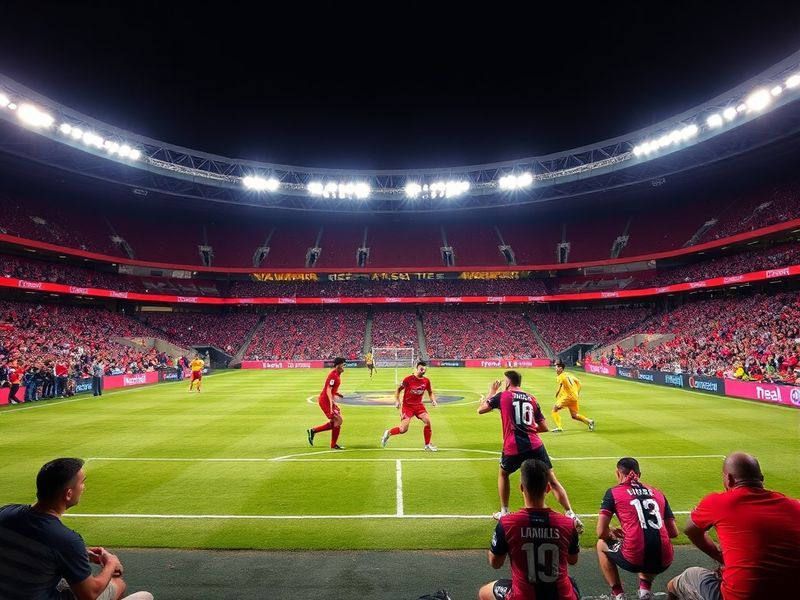
The clash between FC Cincinnati and Orlando City SC isn’t just another MLS fixture. It’s a collision of cultures, histories, and soccer philosophies that reflects broader trends in American sports. Both clubs, though geographically distant, share a common thread—they represent cities where soccer has struggled to find firm footing before exploding in recent years. FC Cincinnati, born from a USL powerhouse, and Orlando City, a club built on Brazilian samba and Southern charm, have become symbols of soccer’s evolving identity in the United States.
What began as nostalgic experiments in nostalgia—Cincinnati with its historic league pedigree and Orlando with its Latin flair—has grown into competitive rivalry that resonates far beyond their stadiums. Their encounters on the pitch have mirrored the rise of soccer in America: from underdog narratives to legitimate title contenders, from cult followings to mainstream acceptance. The story of these two clubs is not just about goals and points; it’s about how soccer found a home in cities shaped by tradition, migration, and ambition.
From USL to MLS: The Origins of Two Franchises
FC Cincinnati’s journey from USL to MLS is one of the most celebrated in modern American soccer. Founded in 2015, the club played its first season in the United Soccer League (USL) and quickly became a phenomenon. In 2017, the club averaged 26,000 fans per game—an attendance record for the USL and a clear signal that Cincinnati was ready for top-flight soccer. By 2019, FC Cincinnati joined MLS as an expansion team, joining a league still searching for its identity in the heartland of America.
Orlando City’s path was different but equally compelling. Established in 2010, the club began in the USL before moving to MLS in 2015. Unlike Cincinnati, Orlando brought a distinct cultural flavor from the start. The club’s early years were shaped by Brazilian influence—both in style of play and fan culture—reflecting the city’s growing Latino community. Orlando’s purple identity, inspired by its Brazilian roots, set it apart in a league dominated by European aesthetics. The club’s story is one of cultural fusion: a Southern city embracing global soccer traditions.
These origins reveal a broader pattern in American soccer. Cincinnati’s blue-collar rise and Orlando’s tropical, multicultural identity both show how clubs can grow by tapping into local identity while embracing global soccer culture. They are not just sports teams; they are civic symbols, representing how soccer can thrive in cities far from traditional hotbeds like Los Angeles or New York.
The Rivalry on the Pitch: Tactics, Drama, and Unpredictability
The matches between FC Cincinnati and Orlando City have become known for unpredictability. Neither club has established long-term dominance, and both bring distinct tactical identities to the pitch. Cincinnati, under coaches like Ron Jans and now Wilfried Nancy, has often relied on high-intensity pressing and direct attacking play. Orlando, under managers such as James O’Connor and Óscar Pareja, has favored possession-based soccer with a creative midfield core.
These tactical clashes create compelling drama. In a 2023 meeting at TQL Stadium, Orlando dominated possession but struggled to break down Cincinnati’s disciplined defense, while the home side capitalized on counterattacks to secure a 2-1 win. Such games highlight how soccer in America is evolving—not just in quality, but in style. Gone are the days when MLS was dismissed as a league of direct, long-ball soccer. Today, both clubs reflect the globalized nature of the sport, with European, South American, and homegrown influences shaping their approaches.
Key moments in this rivalry often come from individual brilliance. Players like Cincinnati’s Luciano Acosta, a creative midfielder with Argentine roots, and Orlando’s Facundo Torres, a Cuban-born winger with flair and vision, have become fan favorites. Their duels on the wing or in midfield symbolize the broader cultural exchanges happening in MLS—where South American creativity meets American ambition.
Beyond tactics, these matches are often defined by atmosphere. Cincinnati’s fan culture, rooted in European-style supporters’ groups, contrasts with Orlando’s vibrant, family-friendly tailgating scene. Yet both stadiums buzz with energy, showing that soccer fandom in America is diverse, loud, and deeply local.
Cultural Impact: How Soccer Found a Home in Ohio and Florida
The rise of FC Cincinnati and Orlando City reflects deeper cultural shifts in their respective regions. Cincinnati, a city with deep German and Catholic roots, had long been a hotbed for minor-league baseball and college sports. Soccer was an afterthought—until a fan-driven movement changed everything. The success of FC Cincinnati has helped redefine the city’s identity, positioning it as a modern, cosmopolitan hub where soccer is not just accepted but celebrated.
Orlando, meanwhile, has long been a crossroads of cultures. Its Latino community, particularly of Puerto Rican and Cuban descent, has shaped the city’s music, food, and festivals. Orlando City’s arrival in MLS gave that cultural energy a platform. The club’s purple branding, inspired by Brazilian clubs like Flamengo, resonates with fans who see themselves as part of a global soccer family. The club’s supporters’ groups, such as the Iron Lion Firm, have created a carnival-like atmosphere at Exploria Stadium, blending samba rhythms with American tailgating culture.
Both cities represent a new chapter in American soccer—one where clubs are not just franchises but cultural institutions. FC Cincinnati’s fan-owned roots and Orlando’s community-driven ethos show that soccer can grow organically in diverse American cities, far from the coastal soccer strongholds.
Looking Ahead: What’s Next for the Rivalry?
The future of the Cincinnati vs. Orlando City rivalry is bright. Both clubs are investing in their academies, aiming to develop next-generation talent. FC Cincinnati’s youth academy has already produced players like forward Yu Su, while Orlando City’s partnership with local schools and clubs is building a pipeline of talent from Central Florida’s diverse communities.
A key factor in the rivalry’s future will be leadership. Both clubs have recently changed coaches—Cincinnati with the appointment of Wilfried Nancy, a French tactician known for his attacking philosophy, and Orlando with the return of Óscar Pareja, a respected MLS veteran. Their strategic visions will shape how the rivalry evolves on the field.
Off the field, both clubs are expanding their global reach. FC Cincinnati has explored international partnerships, while Orlando City’s connection to Brazil remains a key part of its brand. These global ties not only enhance player development but also reinforce the clubs’ roles as cultural ambassadors in their cities.
The rivalry between FC Cincinnati and Orlando City is more than a series of soccer matches. It’s a reflection of how soccer is taking root in America’s heartland and Southern cities. It’s a story of cultural fusion, community pride, and the relentless pursuit of excellence. As both clubs continue to grow, their encounters will remain a barometer for the state of soccer in the United States—where tradition meets innovation, and where every match is a celebration of a game that has found a home in unexpected places.