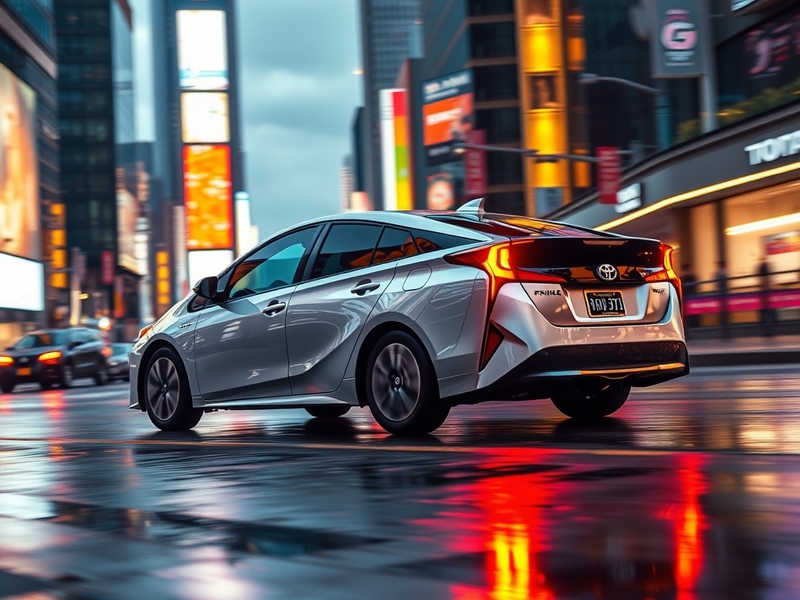
The Toyota Prius arrived in 1997 as the first mass-produced hybrid car, a machine that quietly redefined what an automobile could be. It didn’t scream performance or luxury; instead, it hummed, sipped fuel, and carried a promise—lower emissions, fewer fill-ups, and a lighter environmental footprint. Two and a half decades later, the Prius has evolved from an engineering curiosity into a global symbol, its silhouette recognized from Tokyo to Toronto. It has outlasted fads, survived oil crises, and even weathered the rise and fall of once-dominant automakers. What began as a bet on alternative energy became a cultural artifact, a rolling testament to how technology can shape habits, markets, and minds.
The Origins: A Quiet Revolution in a Gasoline World
The Prius story begins not in a boardroom but in a research lab. In the early 1990s, Toyota’s engineers in Japan were tasked with something radical: build a car that could reduce fuel consumption by half without sacrificing practicality. At the time, hybrids existed only in concept cars or as niche experiments. The internal combustion engine ruled the road, and electric vehicles were dismissed as impractical curiosities. Yet, Toyota’s team, led by engineers like Takeshi Uchiyamada, persisted. They combined a small gasoline engine with an electric motor, a battery pack, and a clever control system that switched seamlessly between power sources. The result was the Prius—short for “Practical Innovative Urban Solution.”
When it debuted in Japan in 1997, the Prius was compact, efficient, and unassuming. It didn’t look like a revolution. But its 55 miles per gallon in city driving sent tremors through the automotive world. American and European markets took notice. By 2000, the Prius arrived in the U.S., where early adopters—often tech workers, environmentalists, and celebrities—embraced it as a statement. The Prius wasn’t just a car; it was a lifestyle choice. Its fuel economy, combined with a tax credit in some states, made it not only practical but politically resonant. It became the unofficial ride of the eco-conscious elite, a rolling billboard for sustainability long before sustainability was a mainstream marketing term.
Global Impact: From City Streets to Cultural Icons
The Prius’s influence spread far beyond dealerships. In Japan, it became a symbol of forward-thinking engineering, a point of national pride. In Europe, where fuel prices were high and environmental regulations strict, the Prius found a receptive audience. By the mid-2000s, it was a common sight in cities like London, Berlin, and Paris, often parked beside bicycles and public transit signs. In the U.S., it transcended its niche. Celebrities like Leonardo DiCaprio and Cameron Diaz were photographed behind the wheel. It appeared in films, TV shows, and even music videos. The Prius wasn’t just a car—it was a cultural icon, a visual shorthand for environmental responsibility.
Its impact extended into policy. The Prius helped normalize hybrid technology, paving the way for stricter emissions standards in California and beyond. Automakers took notice. Honda launched the Insight, Ford the Escape Hybrid, and suddenly, hybrids weren’t a curiosity—they were a category. The Prius’s success also influenced consumer behavior. Studies showed that Prius owners were more likely to adopt other sustainable practices, from solar panels to organic shopping. The car didn’t just transport people; it transported ideas. It turned individual choice into collective action, one mile at a time.
In markets like China and India, where rapid motorization threatened air quality, the Prius became a benchmark. While it never dominated in sales due to price and infrastructure challenges, it set expectations. Consumers began demanding better fuel efficiency, and governments responded with incentives. The Prius didn’t just sell cars—it helped shift the conversation about what mobility should look like in the 21st century.
Evolution Through the Years: From Generation to Generation
The Prius has undergone multiple redesigns since 1997, each generation refining the formula while expanding its reach. The first generation (1997–2003) was boxy, utilitarian, and efficient—delivering on its promise but lacking refinement. The second generation (2003–2009) smoothed the edges, improved performance, and introduced a larger battery pack. It was during this era that the Prius truly entered the mainstream, outselling many conventional sedans. The third generation (2009–2015) brought sleeker styling, better handling, and a plug-in variant, the Prius Plug-in, which offered up to 11 miles of electric-only driving. By the fourth generation (2015–2023), the Prius had evolved into a more sophisticated hybrid, with sharper design, improved safety features, and better connectivity.
Each generation reflected the priorities of its time. The early models emphasized fuel savings above all. Later versions added tech, comfort, and even sporty variants like the Prius v and Prius c, which catered to different lifestyles. In 2023, Toyota introduced the fifth-generation Prius, a bold departure with a more aerodynamic shape, a digital cockpit, and a claimed combined fuel economy of over 50 mpg. This version signals a shift—not just in efficiency, but in identity. The Prius is no longer just a hybrid; it’s a tech-forward vehicle designed for a digital, connected world.
Through every generation, one thing remained constant: the Prius’s commitment to reducing environmental harm. Even as competitors introduced more powerful electric vehicles, the Prius held its ground by focusing on affordability, reliability, and real-world efficiency. It proved that hybrid technology could be both practical and profitable—a lesson many automakers are still learning.
Beyond the Car: The Prius Effect on Society
The Prius’s legacy isn’t measured only in sales or awards—it’s measured in behavior. The “Prius Effect,” a term coined by researchers, describes how the car’s visibility influenced public perception of hybrids. Studies found that drivers of hybrids were more likely to adopt other eco-friendly habits, from recycling to reducing energy use at home. The car became a social signal, a way to communicate values without saying a word. In some circles, owning a Prius became a form of social capital, a way to align oneself with progress.
It also sparked debate. Critics argued that the Prius’s environmental benefits were overstated, pointing to the energy used in battery production and the car’s relatively high price. Others questioned whether a hybrid could truly change the world when SUVs and trucks dominated the market. Yet, the Prius endured. It proved that even a modest shift—like improving fuel efficiency by 50%—could have ripple effects across industries and cultures. It showed that technology doesn’t need to be flashy to be transformative.
The Prius also played a role in the rise of corporate sustainability. Companies like Google and Apple adopted Prius fleets for employee shuttles, citing lower emissions and fuel costs. Cities like San Francisco and Vancouver offered carpool lane access to Prius drivers, incentivizing their use. The car became a tool for change, a way for institutions to demonstrate commitment to climate goals. In an era of greenwashing, the Prius stood out for its consistency. It didn’t promise perfection—it promised progress.
The Toyota Prius may never be the flashiest car on the road, but its impact is undeniable. It redefined what a car could do, not by chasing speed or luxury, but by quietly leading the charge toward efficiency. It turned the act of driving into an act of responsibility. Two and a half decades after its debut, the Prius remains more than a vehicle—it’s a reminder that innovation doesn’t always roar. Sometimes, it hums.