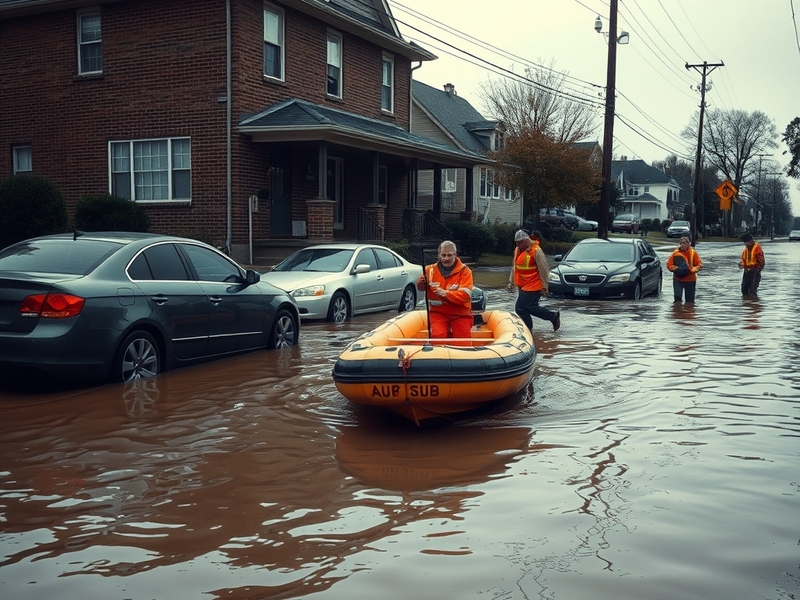
Indiana’s relationship with flooding stretches back decades, but the past few years have pushed the state’s aging infrastructure to a breaking point. From the Wabash River’s swollen banks to the sudden deluges that paralyze Indianapolis neighborhoods, Hoosiers know water can be both a resource and a relentless adversary. The consequences extend beyond soaked basements and closed roads—they ripple through the economy, strain public health systems, and force communities to rethink resilience in an era of more intense storms.
How Climate Change Is Redefining Flood Risk in Indiana
Indiana’s flood patterns have shifted noticeably in the last 20 years. The state now experiences a 30% increase in heavy rainfall events compared to the mid-20th century, according to data from the National Oceanic and Atmospheric Administration (NOAA). Warmer air holds more moisture, and when that moisture collides with cold fronts sweeping down from Canada, the result is often torrential downpours. Indianapolis, for example, has seen its annual rainfall rise by nearly four inches since 1990, intensifying flash flood risks in low-lying areas like the Near Eastside and southwest Marion County.
The impact isn’t limited to cities. Rural counties such as Vigo, Clay, and Sullivan face prolonged inundation that ruins crops, displaces livestock, and isolates residents for weeks. In 2021, the remnants of Hurricane Ida dumped over six inches of rain in less than 12 hours across central Indiana, submerging fields and cutting off access to nearly 200 homes. Farmers reported losses exceeding $12 million in just one county, highlighting how climate variability now shapes agricultural livelihoods.
Key Factors Worsening Flooding in Indiana
- Impervious surfaces: Urban sprawl in Greater Indianapolis has replaced permeable soil with concrete, reducing natural absorption and accelerating runoff.
- Aging drainage systems: Many sewer and stormwater systems in Indiana were built in the 1950s and 1960s, designed for less intense rainfall patterns.
- River basin saturation: The Wabash, White, and Ohio River basins are increasingly unable to absorb excess water, leading to backflow and widespread flooding.
- Soil degradation: Years of intensive farming have reduced soil organic matter, lowering its capacity to absorb heavy rainfall.
Economic and Social Costs of Repeated Flooding
The financial toll of flooding in Indiana is staggering. Between 2015 and 2023, the Federal Emergency Management Agency (FEMA) approved over $470 million in disaster assistance for flood-related events across the state. That figure doesn’t include the uninsured losses—home repairs, business closures, and displaced families—that often fall outside federal aid. In 2022 alone, the Indiana Department of Homeland Security estimated statewide flood damage at $185 million, with small businesses in Elkhart and Fort Wayne bearing the brunt of supply chain disruptions.
Beyond dollars and cents, flooding erodes community stability. Schools in flood-prone districts like Terre Haute and Richmond have faced repeated closures, disrupting education for thousands of students. Mental health professionals report a rise in anxiety and PTSD symptoms among residents in repeatedly flooded neighborhoods, particularly seniors and low-income families who lack resources to relocate or rebuild.
“We’re seeing a new kind of displacement,” said Dr. Elena Vasquez, a public health researcher at Indiana University. “It’s not just people moving away—it’s entire support networks unraveling. Grandparents raising grandchildren, neighbors helping neighbors—those bonds take years to rebuild, and when the water comes back, they’re tested again.”
Policy Responses and Gaps in Flood Mitigation
Indiana has taken steps to address flooding, but critics argue the response remains reactive rather than proactive. The state’s 2023 Flood Mitigation Plan allocates $50 million for buyouts, elevating homes, and improving drainage, but advocates say it’s insufficient given the scale of need. Local governments often lack the funding or authority to enforce stricter zoning laws in floodplains, leaving developers to build in high-risk areas without adequate safeguards.
One promising initiative is the Indiana Silver Jackets program, a federal-state partnership that coordinates flood risk reduction across agencies. Since its launch in 2012, the program has helped fund green infrastructure projects, such as rain gardens and permeable pavements in Gary and South Bend. But progress is slow in areas where political will and budget priorities don’t align.
“We need a cultural shift,” said Mark Reynolds, a floodplain manager in Tippecanoe County. “People still see floodplains as ‘undeveloped land’ rather than critical buffers. Until we change that mindset, we’ll keep treating the symptoms instead of preventing the disease.”
What’s Next for Indiana’s Flood Resilience
Looking ahead, Indiana faces a choice: double down on outdated systems or invest in forward-thinking solutions. Some experts advocate for widespread adoption of natural infrastructure—wetlands restoration, reforestation along riverbanks, and urban green spaces—that can absorb and slow floodwaters. Others push for stronger building codes and mandatory flood risk disclosures in real estate transactions, similar to those in Florida and Louisiana.
Community-led efforts are also gaining traction. In Evansville, residents have formed the “Ohio River Resilience Network,” a coalition pushing for better early warning systems and flood education programs. Their work highlights a growing recognition that resilience isn’t just about engineering—it’s about preparedness, education, and equity.
For Indiana to move forward, collaboration will be essential. State agencies, local governments, nonprofit organizations, and residents must align on priorities. Funding streams need to be both flexible and sustained, not just released in the wake of disaster. And perhaps most importantly, Indiana must acknowledge that flooding isn’t an anomaly—it’s the new normal.
The question isn’t whether another flood will come. It’s whether Hoosiers will be ready when it does.