Nestled in the highlands of central Mexico, the twin cities of Pachuca and Puebla form a dynamic duo where colonial grandeur meets industrial grit. Separated by just 90 kilometers, these two urban centers offer visitors a study in contrasts—one a former mining hub with a rebellious streak, the other a UNESCO-listed jewel of Baroque architecture and culinary tradition. Together, they paint a portrait of Mexico’s layered identity, where pre-Hispanic roots, Spanish conquest, and modern reinvention collide in vibrant public plazas, towering cathedrals, and sun-drenched markets.
The Birth of Two Cities: From Indigenous Roots to Colonial Foundations
Pachuca’s origins trace back to the Toltec civilization, long before the arrival of Spanish conquistadors. Known as Nünhu or “Place of the Gods” in Nahuatl, it was a ceremonial center rich in silver deposits that would later fuel an empire. By the 16th century, the Spanish recognized its mineral wealth and established Pachuca as a key mining town. The city’s name itself evolved from Pachuca (meaning “narrow place” or “place of silver”) to Real de Minas de Pachuca, reflecting its economic lifeblood.
Puebla, meanwhile, was born of a different vision. Founded in 1531 by Franciscan friars and Spanish settlers, it was designed as a planned city, complete with a grid layout centered around a grand main square. Unlike Pachuca’s organic growth, Puebla was built to serve as a cultural and religious stronghold in New Spain. Its streets were laid out with precision, its buildings adorned with intricate talavera tiles—a tradition that endures in the city’s pottery and architecture today.
A Tale of Two Economies: Mining vs. Manufacturing
The industrial narratives of Pachuca and Puebla diverged sharply in the 19th and 20th centuries. While Pachuca’s fortunes rose and fell with the silver market, Puebla carved out a niche in textiles, food production, and automotive manufacturing. Today, Puebla is home to Volkswagen’s largest factory outside Germany, producing over 500,000 vehicles annually and employing thousands. The city’s industrial corridor stretches from its historic core to the modern outskirts, where assembly plants hum with global supply chains.
Pachuca, though no longer the silver powerhouse it once was, has pivoted toward education and technology. The city hosts one of Mexico’s top engineering universities, the Universidad Autónoma de Hidalgo, which has helped transform its economy into one driven by innovation and services. The contrast is palpable: walk down Puebla’s Callejón de los Sapos and you’ll find boutique cafés and artisan workshops; stroll through Pachuca’s Plaza Juárez and you’ll sense the quiet ambition of a city reinventing itself beyond its mining past.
Architectural Splendor: Baroque, Gothic, and Modern Fusion
Puebla’s UNESCO-listed historic center is a masterclass in colonial architecture, where every facade tells a story. The Catedral de Puebla, begun in 1575 and completed in 1649, stands as one of the oldest cathedrals in the Americas. Its twin towers rise above the main square, flanked by ornate chapels and a museum housing rare religious art. Nearby, the Biblioteca Palafoxiana—founded in 1646—is the oldest public library in the Americas, its wooden shelves lined with ancient codices and leather-bound tomes.
Pachuca, though less celebrated for its architecture, boasts its own gems. The Templo y Ex-Convento de San Francisco, built in the 16th century, is a rare surviving example of early colonial religious architecture. Its massive stone walls and arched cloisters hint at the city’s missionary past. More modern landmarks include the Reloj Monumental, a 40-meter-tall clock tower gifted by French immigrants in 1911, which now serves as a symbol of Pachuca’s multicultural heritage.
For contemporary design, Puebla leads with bold modernist interventions. The Museo Internacional del Barroco, designed by Japanese architect Toyo Ito, is a futuristic glass-and-steel structure that houses rotating exhibitions on Baroque art and philosophy. Its undulating forms and light-filled galleries redefine how heritage and innovation can coexist.
Culinary Crossroads: Mole, Barbacoa, and Beyond
No visit to Puebla and Pachuca is complete without indulging in their culinary offerings. Puebla is Mexico’s gastronomic capital of mole—particularly mole poblano, a rich, complex sauce made with chocolate, chiles, and spices, traditionally served over turkey. The city’s Mercado de Sabores offers tastings of mole in all its variations, from the smoky mole negro to the fruity mole coloradito. Puebla is also the birthplace of chalupas, small fried masa boats topped with shredded meat, salsa, and cheese, a dish so beloved it’s practically a civic duty to try.
Pachuca’s food scene is more rustic, rooted in Hidalgo’s mining culture. Barbacoa de borrego is a local specialty, slow-cooked lamb wrapped in maguey leaves and steamed in an underground pit. The city’s Mercado Revolución is the best place to sample this dish, along with gorditas de Hidalgo, thick corn cakes stuffed with beans, cheese, or chorizo. For something sweet, try camotes, candied sweet potatoes flavored with cinnamon and piloncillo, a treat that dates back to colonial times.
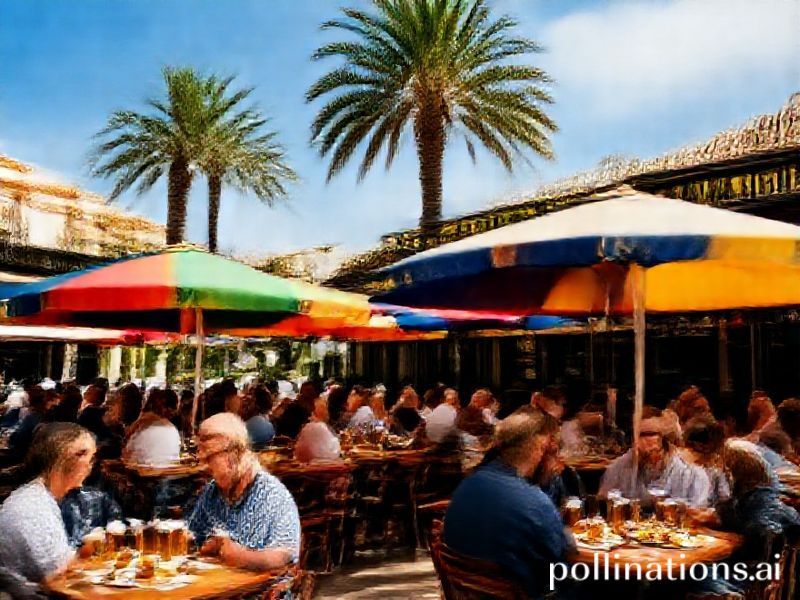
Both cities share a love for pulque, the ancient fermented drink made from agave. While Puebla’s pulquerías are often tucked into colonial courtyards, Pachuca’s are lively neighborhood spots where locals gather to sip the slightly viscous, tangy beverage. In both places, the drink is served with a side of history—pulque was once sacred to the Aztecs and remains a symbol of Mexican identity.
Sports, Culture, and the Pulse of Daily Life
Football is more than a sport in these cities—it’s a way of life. Puebla’s Club Puebla plays in Liga MX, the top tier of Mexican soccer, at the Estadio Cuauhtémoc, a venue that hosted matches during the 1986 FIFA World Cup. The team’s fanbase, known as La Franja, is one of the most passionate in the country, filling the stadium with chants and colorful banners. Pachuca’s Club de Fútbol Pachuca, though smaller in stature, has a fierce local following and a reputation for developing top talent.
Cultural life thrives in both cities. Puebla hosts the Feria de Puebla every spring, a month-long festival featuring concerts, bullfights, and amusement rides. The city’s Festival Barroco celebrates colonial-era music and dance with performances in historic plazas. Pachuca, meanwhile, has embraced contemporary art with initiatives like Pachuca Arte Contemporáneo, which transforms abandoned buildings into galleries and hosts street art festivals that draw international artists.
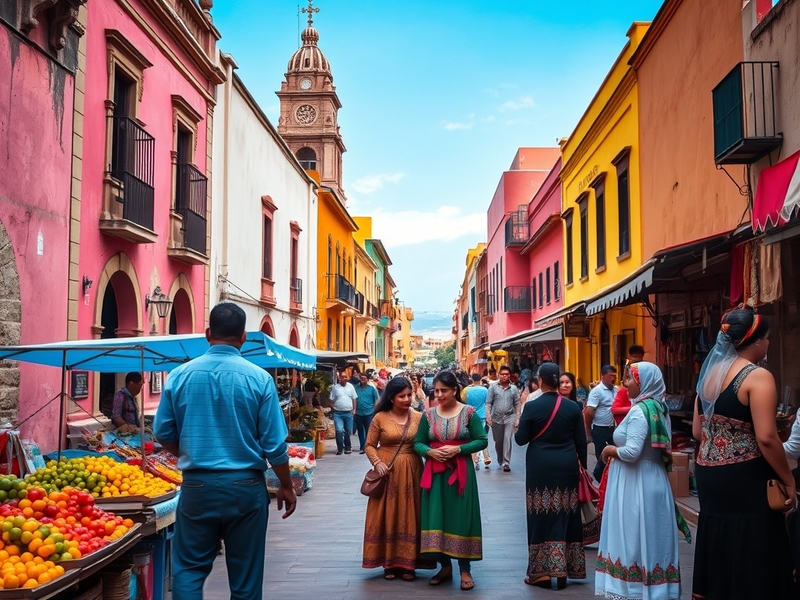
Daily life in both cities revolves around their markets and plazas. In Puebla, the Zócalo is the heart of the city, where families stroll past organ grinders and mariachi bands, while street vendors sell everything from tlayudas to handmade leather goods. In Pachuca, Plaza Juárez is the gathering spot, where students from the university mix with miners-turned-entrepreneurs sipping coffee at open-air cafés. The rhythm of life in both places is slow and deliberate, a counterpoint to the frenetic pace of Mexico City just two hours away.
Getting There and Getting Around
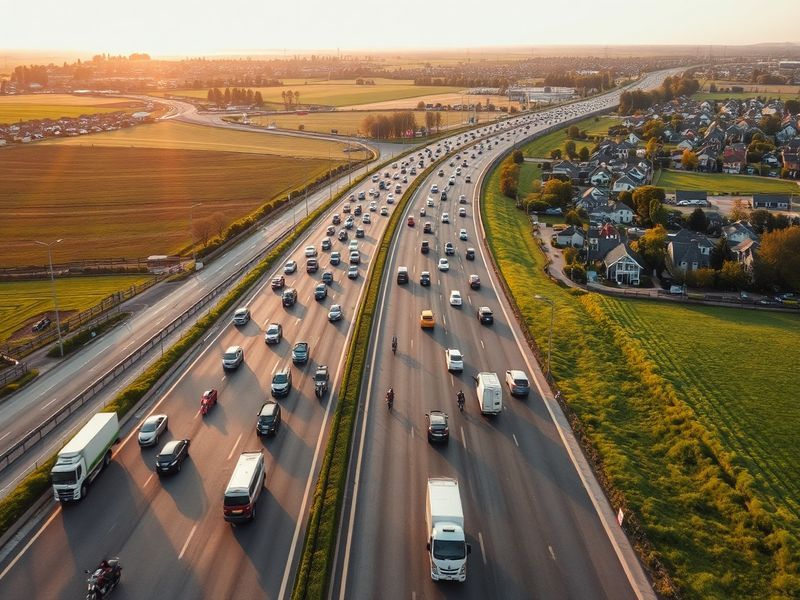
Puebla is easily accessible from Mexico City via the Autopista México-Puebla, a well-maintained highway that cuts the travel time to about two hours. The city also has its own international airport, Hermanos Serdán, which offers flights to the U.S. and Central America. Once there, the historic center is best explored on foot, though taxis and Uber are reliable for longer distances.
Pachuca is closer to Mexico City—just 90 minutes by car via the Autopista México-Pachuca. The city has a smaller airport, Pachuca Hidalgo, primarily serving domestic flights. Public transportation includes buses and colectivos (shared vans), but the most scenic way to arrive is via the Tren Hidalgo, a regional train that offers stunning views of the surrounding mountains.
While the cities are distinct, they complement each other beautifully. A weekend itinerary might include a morning in Puebla’s cathedral, an afternoon in Pachuca’s markets, and an evening in either city’s plaza, where the hum of conversation and the smell of street food linger long after the sun sets.
Together, Pachuca and Puebla embody the diversity of Mexico—not as a contradiction, but as a harmony. One city looks back with pride at its colonial past; the other gazes forward with the energy of reinvention. Yet both share a warmth, a resilience, and a love for the things that make life worth savoring: good food, bold architecture, and the simple joy of gathering with others under an open sky.