What a Flock Safety License Plate Lookup Reveals About Modern Policing
License plate readers have quietly reshaped how law enforcement tracks vehicles across the United States. Flock Safety, a company whose network now blankets more than 2,000 communities, has turned what was once a manual process into an automated surveillance grid. A Flock Safety license plate lookup doesn’t just identify a single car; it can trace a vehicle’s movements across multiple jurisdictions, revealing patterns that challenge traditional notions of privacy and public safety.
This technology emerged from a simple frustration. In 2016, two entrepreneurs in Atlanta lost their car to catalytic converter thefts within a week. They built a camera system that could read and share license plate data in real time. Within months, neighboring towns asked to join. Today, Flock Safety operates one of the largest private-public license plate networks in the world, with over 1 billion plate scans logged daily. The system doesn’t rely on government databases alone—it crowdsources data from neighborhoods, businesses, and homeowners who install the company’s cameras.
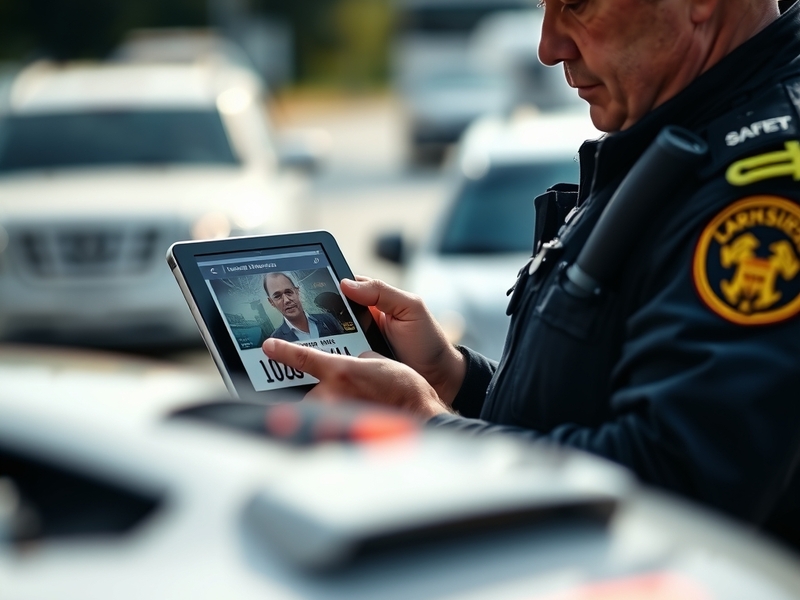
From suburban cul-de-sacs to downtown intersections, Flock’s cameras capture plates at 90% accuracy in daylight and 70% at night. Each scan is time-stamped and geotagged, creating a digital breadcrumb trail. But the real power comes when that data is searched. A Flock Safety license plate lookup can reveal whether a vehicle was near a crime scene, parked outside a suspect’s home, or involved in a pattern of break-ins across county lines.
How the License Plate Lookup System Works Across Borders
The global reach of Flock Safety is less about geography and more about data sharing. While the company’s cameras are mostly deployed in the U.S., its license plate lookup system connects to state and federal databases, including the FBI’s National Crime Information Center (NCIC) and Canadian systems through cross-border partnerships. A search initiated in Texas can flag a vehicle spotted hours earlier in Ontario, revealing a smuggling route or a fleeing suspect.
In Europe, where privacy laws are stricter, similar systems exist under tighter regulation. Germany’s Federal Police use automated number plate recognition (ANPR) primarily for counter-terrorism and major crime investigations. Flock’s model—crowdsourced, cloud-based, and privately managed—would face immediate legal challenges in the EU, where the General Data Protection Regulation (GDPR) restricts biometric data collection without explicit consent. Yet, even in restrictive jurisdictions, law enforcement agencies are adapting. In the UK, police forces have used ANPR to solve crimes ranging from burglary to human trafficking, with over 50 million plates scanned weekly.
Australia and New Zealand have also adopted ANPR, though with a focus on counter-terrorism and border protection. In New Zealand, police use the technology to combat ram-raiding—a crime wave where thieves use vehicles to smash into stores. A Flock-style license plate lookup could have prevented some of these incidents by identifying stolen vehicles in real time.
The Privacy Paradox: Security vs. Surveillance
Critics argue that Flock Safety’s license plate lookup system normalizes mass surveillance. In a country with over 300 million registered vehicles, every driver is potentially in the system, whether they’ve committed a crime or not. Civil liberties groups like the Electronic Frontier Foundation (EFF) have raised concerns that this data could be misused, sold, or hacked. In 2023, a data breach exposed 8 million license plate records from a third-party vendor using Flock’s technology. While Flock stated no personally identifiable information was compromised, the incident highlighted the risks of storing such vast datasets.
Proponents counter that the benefits outweigh the risks. According to Flock Safety’s own data, its cameras have helped recover over 1,500 stolen vehicles and assisted in solving more than 500 homicides since 2017. In one case, a license plate lookup linked a vehicle to a string of armed robberies across three states, leading to an arrest within 48 hours. For communities plagued by catalytic converter thefts or catalytic converter thefts—Automotive crime that surged 1,200% during the pandemic—the system offers a tangible deterrent.
Yet the ethical dilemma remains: Is it acceptable to surveil entire populations to catch a few criminals? In China, where ANPR is integrated with facial recognition and social credit systems, the answer leans heavily toward control. Western democracies are still grappling with this balance. Some U.S. cities, like San Francisco, have banned facial recognition but not license plate readers. Others, like Detroit, have used Flock’s system to monitor protests, raising alarms about chilling effects on free speech.
Cultural Shifts: How License Plate Lookups Are Changing Neighborhoods
The adoption of Flock Safety’s technology isn’t just a technological shift—it’s a cultural one. In affluent suburbs, homeowners associations now install Flock cameras not just for crime prevention, but as a status symbol. A neighborhood with visible Flock cameras signals safety and vigilance, much like a gated community or a private security patrol. In contrast, working-class neighborhoods often deploy the technology reactively, after a series of break-ins or car thefts.
This disparity reflects broader inequalities in public safety. A 2022 study by the Urban Institute found that wealthier areas are 30% more likely to adopt private surveillance systems, including license plate readers, than lower-income areas. Yet, crime doesn’t respect boundaries. A stolen car from a low-income neighborhood might end up in a high-income subdivision, only to be flagged by a Flock camera that the residents installed themselves.
Globally, the cultural embrace of surveillance varies widely. In Japan, where crime rates are low and social trust is high, ANPR is used sparingly, primarily for traffic management and toll collection. In South Africa, where carjackings are rampant, Flock-style systems are marketed as lifesavers. The company has partnered with insurance providers to offer discounts to drivers who install Flock cameras, turning surveillance into a financial incentive.
The psychological impact is also notable. Studies show that visible surveillance cameras reduce petty crime but can also foster a sense of paranoia. Residents in neighborhoods with high Flock camera density report feeling both safer and more watched. This duality is captured in a 2023 survey by the Pew Research Center, where 58% of Americans supported license plate readers for solving crimes, but 62% opposed their use for tracking individuals without suspicion.
What the Future Holds for License Plate Lookup Technology
The next frontier for Flock Safety’s license plate lookup system is integration with artificial intelligence. The company is testing AI that can predict criminal behavior based on vehicle movement patterns. For example, a car circling a block repeatedly at 3 a.m. could trigger an alert, even if no crime has occurred. This predictive policing approach is controversial, as it risks profiling based on behavior rather than evidence.
Another trend is the rise of open-source alternatives. Projects like OpenALPR allow communities to build their own license plate readers using off-the-shelf hardware and free software. While less sophisticated than Flock’s system, these tools democratize surveillance, putting power back into the hands of local activists and journalists. In 2024, a coalition of privacy advocates in Oakland used OpenALPR to document police use of unmarked vehicles during protests, challenging official narratives.
Regulation will likely shape the future of license plate lookups more than technology itself. States like California and New York are considering bills that would limit how long law enforcement can retain license plate data. Others, like Texas, are expanding their use, with police departments purchasing Flock cameras at record rates. Globally, the European Union is exploring a ban on real-time facial recognition, which could indirectly limit ANPR if courts rule that license plate data constitutes biometric information.
For now, Flock Safety’s license plate lookup remains a polarizing tool—hailed by some as a crime-fighting revolution and criticized by others as an overreach of surveillance capitalism. What’s clear is that the genie is out of the bottle. Whether through Flock, OpenALPR, or a yet-to-be-invented system, license plate data will continue to be collected, analyzed, and weaponized in the name of public safety.
The question isn’t whether we’ll have license plate lookups, but who controls them, how they’re used, and what safeguards we put in place to prevent abuse. In a world where every car is a potential data point, the real challenge is ensuring that technology serves justice without eroding freedom.