From Sanrio to the Drive-Thru: The Global Phenomenon of McDonald’s Hello Kitty Happy Meals
McDonald’s has long been a master of turning franchise partnerships into cultural currency, but few collaborations have generated the same level of sustained excitement as the fast-food giant’s Hello Kitty Happy Meal. Launched in select markets beginning in 2022 and expanding globally through 2023 and 2024, the promotion transformed a simple children’s meal into a coveted collectible, blending nostalgia, kawaii aesthetics, and strategic marketing with precision timing. What started as a regional initiative in Asia quickly rippled across continents, revealing how a 50-year-old brand and a 50-year-old icon can create magic when they share the same stage.
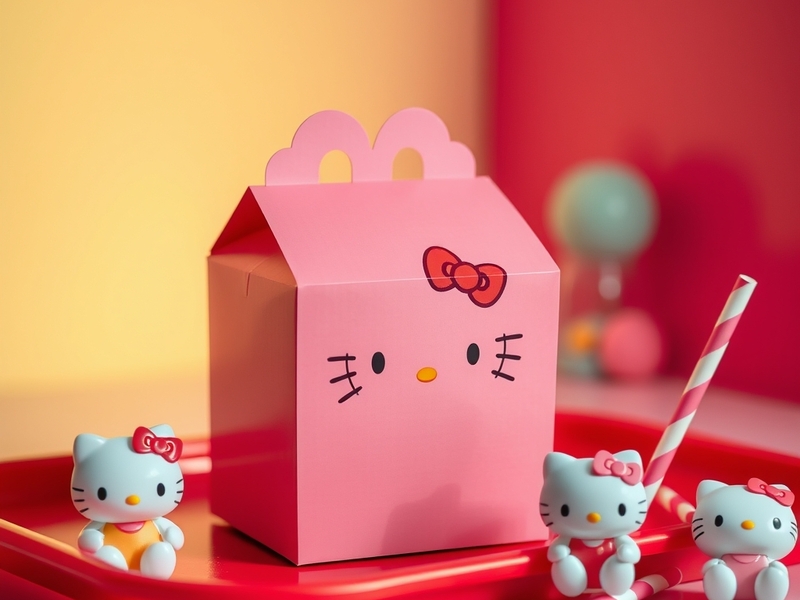
The Hello Kitty Happy Meal isn’t just about a burger and fries—it’s about the experience. Each meal comes with a themed toy, often featuring exclusive designs, and is packaged in vibrant, pastel-colored boxes adorned with the iconic white cat. In Japan, where the collaboration first debuted in collaboration with Sanrio, fans lined up for hours outside stores. In the United States, the rollout sparked viral TikTok content, with parents and kids alike racing to complete full sets. The campaign taps into something primal: the joy of collecting, the comfort of familiarity, and the power of a globally recognized brand mascot.
A Strategic Partnership Built on Decades of Brand Equity
Sanrio, the Japanese company behind Hello Kitty, has spent decades cultivating an empire around cuteness and emotional connection. Since her debut in 1974, Hello Kitty has transcended merchandise to become a lifestyle icon, appearing on everything from luxury handbags to high-end fashion. Her appeal lies in her ambiguity—she has no mouth, allowing fans to project their own emotions onto her, and her design is intentionally simple, making it universally adaptable across cultures.
McDonald’s, meanwhile, has leveraged partnerships for decades to refresh its image. From Disney-themed meals to Pokémon collaborations, the brand understands that childhood nostalgia is a powerful driver of repeat visits. The Hello Kitty partnership, however, elevated the strategy from nostalgic to aspirational. It positioned McDonald’s not just as a place for quick meals, but as a destination for cultural connection—especially among millennial parents who grew up with Hello Kitty and now want to share that joy with their own children.
According to industry analysts, the campaign helped McDonald’s boost family visits by up to 15% in certain markets during the promotion period. In Hong Kong, McDonald’s reported a 30% increase in Happy Meal sales during the first week of the rollout. The numbers aren’t just impressive—they’re a testament to how emotional branding can drive tangible business outcomes when executed with care.
The Global Rollout: A Careful Balance of Timing and Localization
The Hello Kitty Happy Meal wasn’t launched everywhere at once. McDonald’s and Sanrio took a phased approach, starting in Asia—where Hello Kitty’s popularity is strongest—before expanding to North America, Europe, and the Middle East. Each market received a tailored rollout, with local artists sometimes contributing to exclusive designs. In Australia, for example, the toys featured regional landmarks alongside Hello Kitty. In France, the packaging incorporated Art Nouveau-inspired flourishes to align with local aesthetics.
This localization strategy was critical. While Hello Kitty is globally recognized, her cultural resonance varies. In Japan, she’s a national treasure. In the U.S., she’s beloved but often seen as retro. In China, she’s associated with luxury collaborations. McDonald’s navigated these nuances by ensuring that each market felt seen—not just targeted.
Here’s how the rollout unfolded across key regions:
- Japan (2022): The inaugural market, where Hello Kitty fans camped outside stores overnight. Limited-edition “Sanrio Character” boxes sold out within days.
- United States (2023): Launched in phases, with exclusive glow-in-the-dark toys and a strong social media push. Influencers participated in unboxing videos, fueling FOMO.
- Europe (2023-2024): Focused on sustainability, using recyclable packaging and partnering with local artists for limited drops.
- Middle East (2024): Introduced halal-certified meals in select locations, blending cultural sensitivity with commercial appeal.
This careful orchestration ensured the campaign felt fresh and relevant, no matter where it appeared. It also allowed McDonald’s to gather real-time feedback and adjust messaging, a luxury in today’s fast-paced marketing landscape.
The Psychology Behind the Collectible: Why We Can’t Stop Chasing the Set
At its core, the Hello Kitty Happy Meal is a masterclass in behavioral psychology. The toys aren’t just cute—they’re designed to be collectible. With multiple characters in the Sanrio universe (My Melody, Kuromi, Cinnamoroll), McDonald’s created an incentive to return again and again. Each toy has a distinct design, color, and often a special feature like a magnetic closure or interactive element. This taps into the “endowed progress effect,” where people are more motivated to complete a task when they feel they’ve already made progress toward it.
Psychologists call this the “Zeigarnik effect”—unfinished tasks create mental tension, driving us to seek closure. For parents, that tension might mean one more trip to McDonald’s to complete the set for their child. For collectors, it’s about the thrill of the hunt. Social media amplified this effect, with parents posting “unboxing” videos and kids trading toys at school. The campaign turned a simple meal into a social currency, with families bonding over shared excitement and even bartering rare figures online.
There’s also a deeper cultural layer. In East Asia, where Hello Kitty’s popularity is strongest, collectible culture is deeply ingrained. From gachapon machines to limited-edition sneakers, the idea of chasing exclusives is not just accepted—it’s expected. McDonald’s didn’t invent this behavior, but it harnessed it with precision, turning a Western fast-food staple into a platform for Eastern fandom.
The Bigger Picture: What This Means for Fast Food and Brand Collaborations
The Hello Kitty Happy Meal isn’t an isolated success. It’s part of a broader trend where fast-food chains are leaning into experiential marketing, using limited-edition items to create urgency and emotional connection. Competitors like Burger King and Wendy’s have followed suit, launching their own collectible campaigns with brands ranging from Super Mario to Stranger Things. But Hello Kitty stands out because of the depth of Sanrio’s brand equity and the universal appeal of her design.
For McDonald’s, the campaign reinforced its role not just as a restaurant, but as a cultural curator. It showed that even a brand with nearly 100,000 locations worldwide can feel intimate and relevant when it taps into shared experiences. The Hello Kitty Happy Meal proved that in an age of digital overload, simplicity and nostalgia still sell.
But the story doesn’t end with sales figures. The campaign also sparked conversations about sustainability, especially as environmental groups critiqued the plastic content of the toys and packaging. In response, McDonald’s committed to using 100% recycled or certified materials in future collectible campaigns, signaling a shift toward more responsible practices. This balance—between commercial appeal and corporate responsibility—will define the next generation of brand partnerships.
Lessons for Marketers and Consumers Alike
For marketers, the Hello Kitty Happy Meal offers several key takeaways:
- Leverage existing emotional connections: Nostalgia and childhood memories are powerful motivators.
- Localize without diluting the core brand: Adapt packaging and messaging to resonate across cultures while keeping the central theme intact.
- Design for collectibility: Toys should feel special, rare, and desirable—encouraging repeat engagement.
- Monitor social sentiment: Real-time feedback can help refine campaigns and address concerns like sustainability.
For consumers, the campaign is a reminder of how deeply brands influence our daily lives. It shows that even a simple meal can become a ritual, a shared experience, and a collector’s item. It also highlights the power of collaboration—two iconic brands, each with its own legacy, coming together to create something greater than the sum of its parts.
As the Hello Kitty Happy Meal continues to evolve, with new designs and markets joining the wave, one thing is clear: the fusion of fast food and fandom is here to stay. And in a world where attention spans are shrinking, the ability to make a moment feel timeless? That’s priceless.