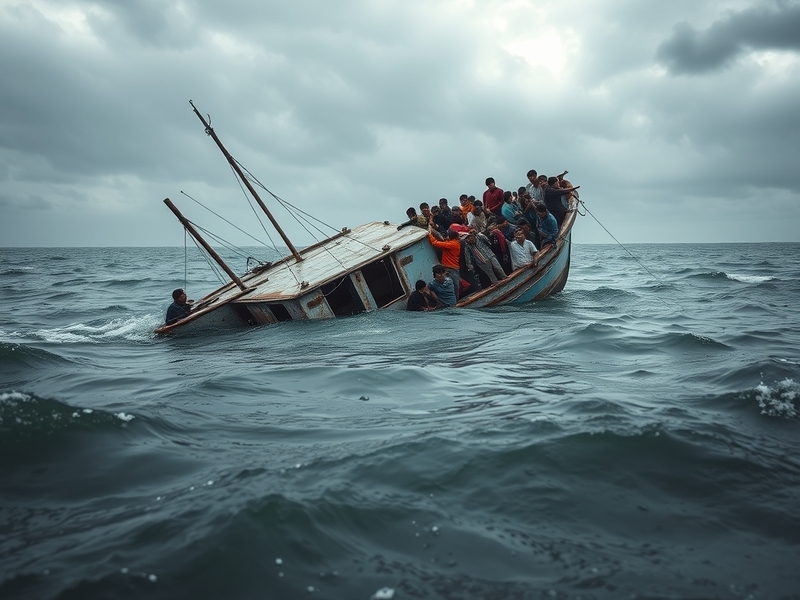
Capsizing is one of the most feared moments for anyone aboard a vessel. In a single, terrifying instant, stability disappears. The horizon tilts. Water rushes in. What was once a floating platform becomes a chaotic swirl of motion and sound. Across cultures and centuries, this violent overturning of boats has shaped maritime history, influenced survival strategies, and inspired both cautionary tales and technological innovation.
The Physics Behind a Capsize: Why Boats Flip
At its core, capsizing is a loss of stability. Every boat has a center of gravity—the point where its weight is concentrated—and a center of buoyancy, where the displaced water pushes upward. When these two points misalign, the boat becomes unstable. A sharp turn, sudden wind gust, or uneven weight distribution can shift the center of gravity beyond the boat’s metacentric height, the critical distance that keeps it upright.
Smaller vessels are particularly vulnerable. Kayaks, canoes, and dinghies have high centers of gravity and narrow hulls, making them prone to tipping even in moderate waves. Larger ships, though more stable, are not immune—especially in extreme weather or during cargo shifts. The sport of sailing offers a clear example: a sudden jibe or loss of wind pressure on one side can flip a keelboat in seconds.
Environmental factors amplify risk. Shallow waters create suction forces that can pull a boat down. Strong currents and crosswinds generate torque. Even the shape of the hull matters—flat-bottomed boats are stable in calm water but vulnerable to waves, while V-shaped hulls cut through chop more effectively but may roll more in beam seas.
A Global Tapestry of Capsize Disasters
From the icy fjords of Norway to the crowded river deltas of Bangladesh, capsizing has left deep scars on human communities. In 2021, the MV Nur Jahan, a passenger ferry in Bangladesh, capsized during a storm, killing over 40 people. The disaster highlighted the region’s reliance on aging vessels and overloaded routes, compounded by monsoon winds and poor safety enforcement.
In Europe, the 2014 Sewol ferry disaster off South Korea’s coast remains one of the most tragic modern examples. The ship capsized due to excessive cargo and poor stability management, killing 304 people, most of them high school students. Investigations revealed inadequate safety drills and structural vulnerabilities. The tragedy sparked national mourning and reforms in maritime oversight.
Not all capsizes are fatal. In 2018, a tourist boat capsized on Lake Victoria in Uganda, injuring dozens. Survivors described how panic spread as water rushed in, and many struggled to swim due to lack of life jackets. This incident underscored the importance of basic safety equipment, even on popular recreational routes.
Across these events, common threads emerge: overloading, poor weather forecasts, and insufficient training. Yet solutions vary by region. In Southeast Asia, community-based safety programs teach villagers to recognize unstable boats. In Scandinavia, advanced weather routing systems help ferries avoid dangerous conditions. The response to capsizing is as much about culture as it is about engineering.
The Human Factor: Panic, Training, and Survival
When a boat capsizes, instinct often takes over. Many people freeze. Others flail, wasting energy in chaotic strokes. Survival depends less on strength than on preparation. Coast guards and survival trainers emphasize the H.E.L.P. position—Heat Escape Lessening Posture—where victims draw knees to chest and wrap arms around them to conserve body heat in cold water.
Life jackets are the single most effective defense. According to the U.S. Coast Guard, 80% of boating fatalities involve drowning, and 83% of drowning victims were not wearing life jackets. Yet in many parts of the world, flotation devices are seen as optional or even uncomfortable. Cultural attitudes play a role here—some fishermen in the Philippines view life jackets as symbols of weakness, despite their proven lifesaving value.
Training programs around the world are adapting. In Canada, the Canadian Power & Sail Squadrons teach capsize recovery techniques for small boats. In Kenya, the Wildlife Clubs of Kenya integrate water safety into school curricula, reaching children in lakeside communities. These initiatives recognize that survival begins long before a boat hits the water.
Technology is also changing the odds. Inflatable life jackets, GPS-enabled emergency beacons, and smartphone apps that track weather in real time give modern mariners tools their ancestors lacked. Yet even with these advancements, human error remains the leading cause of capsizing—whether from misjudged speed, ignored warnings, or simple overconfidence.
From Tragedy to Innovation: Designing Safer Boats
In response to repeated disasters, naval architects have rethought hull design and stability systems. The introduction of self-righting boats—vessels that automatically flip back upright after capsizing—has saved lives in racing and rescue contexts. The RS Vareo, a high-performance sailing dinghy, uses a weighted keel that swings back into place, pulling the boat upright within seconds.
Commercial vessels are also evolving. The Stability Guidance System developed by the International Maritime Organization (IMO) now requires ships to undergo rigorous stability tests before entering service. These systems simulate worst-case scenarios—like sudden cargo shifts or rogue waves—and calculate a vessel’s resilience. Some modern ferries even include airbags that deploy automatically to right the ship if it tilts beyond a critical angle.
Yet innovation comes with trade-offs. Self-righting mechanisms add weight and complexity, increasing fuel costs. Advanced sensors and automation raise the price of smaller boats, pricing out many recreational users. As with many safety improvements, the challenge is balancing cost, functionality, and accessibility.
Grassroots movements are pushing for change too. In the Philippines, the Community-Based Disaster Risk Reduction and Management (CBDRRM) program trains local fishermen to inspect boats for structural flaws and stability risks. By combining traditional knowledge with modern safety protocols, these programs are reducing capsizing incidents in some of the world’s most vulnerable waterways.
Cultural Narratives: How Societies Remember Capsizes
Capsizing is more than a mechanical failure—it’s a cultural wound. In Japan, the Tōya Maru disaster of 1954, where a typhoon caused a ferry to capsize in Hakodate Bay, killing over 1,000 people, became a symbol of the nation’s vulnerability to natural forces. The tragedy was immortalized in literature and film, reinforcing Japan’s reverence for maritime safety and respect for the sea.
In the Caribbean, stories of capsized slave ships during the transatlantic trade haunt local memory. Oral histories and archaeological finds—like the 2008 discovery of the Henrietta Marie wreck off Florida—serve as painful reminders of exploitation and survival. These narratives shape modern attitudes toward water travel, especially among descendants of those who perished.
Art and ritual often emerge from such events. In Kerala, India, the annual Vallamkali boat races feature elaborately decorated canoes that trace back to ancient maritime traditions. Yet these races are also occasions for safety demonstrations and community drills, blending celebration with vigilance. Culture, in this case, becomes a vessel for survival itself.
Prevention Over Cure: A Global Call to Action
Preventing capsizing begins with education. Simple habits—checking weather forecasts, distributing weight evenly, and testing stability before departure—can avert disaster. Public awareness campaigns, especially in high-risk regions, must move beyond slogans to practical training. In Vietnam, the “Safe Boating” initiative has reduced drowning rates by 30% in pilot provinces by teaching children to swim and adults to recognize unstable boats.
Regulation plays a crucial role. In the European Union, the Safety of Life at Sea (SOLAS) convention mandates regular stability assessments for passenger vessels. Meanwhile, in parts of sub-Saharan Africa, weak enforcement allows unseaworthy boats to operate daily. International aid organizations are working to strengthen local maritime authorities, but progress is slow in regions with limited resources.
Technology offers hope, but it must be accessible. Low-cost sensors that monitor a boat’s tilt angle in real time could be distributed to fishing communities. Open-source apps that translate weather alerts into local languages could save lives. The key is ensuring these tools reach the people who need them most—not just those who can afford them.
Ultimately, capsizing is a shared human experience. It connects island nations and river communities, sailors and survivors, engineers and elders. The lessons learned from each disaster—whether in the North Sea, the Bay of Bengal, or the Great Lakes—belong to all of us. The sea demands respect, not just awe. And the best way to honor its power is not to fear it, but to prepare for it.