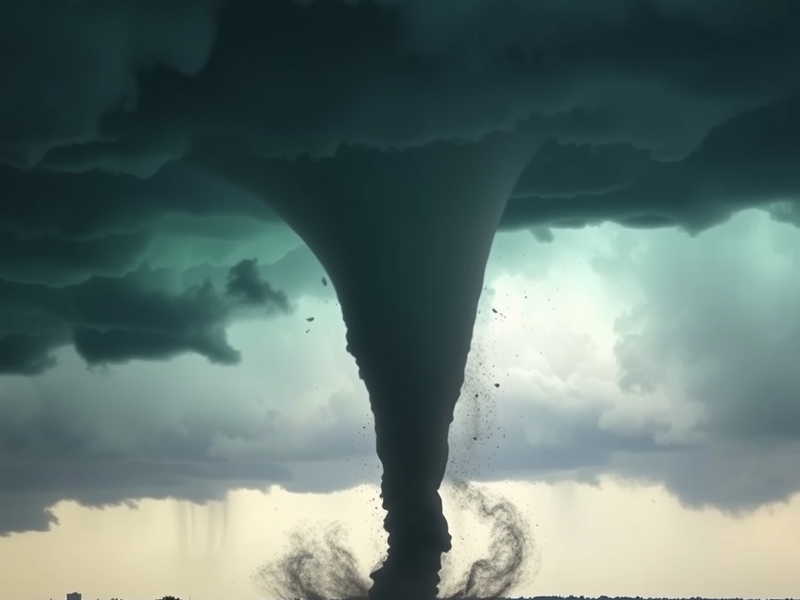
Cleveland residents faced a sudden jolt of adrenaline on a late spring afternoon as a tornado warning blared across their phones and sirens wailed through the streets. The National Weather Service had issued an urgent alert for Cuyahoga County and surrounding areas, urging immediate action. Within minutes, the sky darkened to an eerie greenish hue—a signature of intense storms—and radar confirmed the presence of a rotating supercell thunderstorm capable of producing a tornado. While the funnel never touched down in the city proper, several suburbs experienced high winds and hail, leaving downed trees, damaged roofs, and a lingering sense of unease in its wake.
Such events are not isolated to Cleveland. Tornado warnings are becoming more frequent across North America, with climate scientists pointing to warmer, more volatile atmospheric conditions. In 2023, the U.S. recorded over 1,300 tornadoes—the highest annual count in a decade—stretching from the Great Plains into the Midwest and even parts of the South. Cleveland, positioned on the southern shore of Lake Erie, sits in a historically active corridor known as “Dixie Alley,” where tornadoes can form rapidly due to colliding warm, moist air from the Gulf and cooler, dry air from Canada. This geographic vulnerability makes early warning systems—and public readiness—critical.
How Tornado Warnings Work and What They Really Mean
When the National Weather Service (NWS) issues a tornado warning for Cleveland, it’s not a drill. Unlike a tornado watch—which signals conditions are favorable for tornadoes—the warning means a tornado has been spotted or is imminent based on radar signatures like debris balls or rotational velocity. The NWS Cleveland office, based in North Ridgeville, is one of the most advanced in the region, using high-resolution dual-polarization radar that can detect the shape and size of precipitation particles. This technology helps forecasters distinguish between heavy rain and potential tornado debris, reducing false alarms.
Once a warning is issued, local emergency systems activate immediately. Sirens wail for three minutes in a steady tone, a signal recognized by generations of Clevelanders. Emergency alert systems push notifications to smartphones, TV crawls, and radio broadcasts. Schools and businesses follow severe weather protocols, moving students to interior rooms and securing outdoor equipment. In 2020, after a rare nocturnal tornado struck nearby Lorain County, killing one person and damaging hundreds of homes, the NWS Cleveland office enhanced its nighttime warning strategies, including more frequent social media updates and targeted robo-calls to at-risk neighborhoods.
Despite these advancements, public response remains inconsistent. A 2022 study by the University of Akron found that only 68% of Cleveland-area residents took protective action during tornado warnings, with younger adults and renters less likely to seek shelter. Cultural attitudes toward risk, trust in authorities, and even architectural differences between older brick homes and newer mobile housing play a role. Some residents, especially in urban neighborhoods, may not have basements or designated safe rooms, increasing vulnerability.
The Global Rise of Extreme Weather: Are Tornadoes Becoming More Common?
While Cleveland’s experience was brief, the broader trend is concerning. Across the globe, extreme weather events are intensifying. In Europe, tornadoes—once rare outside the Mediterranean—are now reported as far north as Germany and Poland. In 2021, a rare F3 tornado struck the Czech Republic, killing six people and injuring dozens. In Bangladesh, one of the most tornado-prone countries, nearly 1,500 people have died from tornadoes since 1996, with densely populated rural areas particularly at risk. Climate models suggest that shifting jet streams and warmer sea surface temperatures are fueling more frequent and intense storm systems worldwide.
In North America, the traditional “Tornado Alley” in the Great Plains is shifting eastward. A 2023 study published in Climate Dynamics found that tornado frequency has decreased in Oklahoma and Texas but increased in Illinois, Indiana, and Ohio. Researchers attribute this to changes in the jet stream, which is becoming wavier due to Arctic warming. This shift places more cities like Cleveland—once considered on the periphery—closer to the heart of tornado activity. The result is not just more warnings, but a cultural adaptation: communities that once viewed tornadoes as distant threats now treat them as recurring realities.
This global uptick in tornado activity has also reshaped emergency preparedness. In Japan, where tornadoes were historically uncommon, the Japan Meteorological Agency has tripled its tornado warning drills since 2012. In South Africa, rural farmers now use WhatsApp groups to share real-time weather alerts, a strategy borrowed from Indian agricultural communities that face monsoon-related cyclones. Even in Cleveland, local organizations like the Community Emergency Response Team (CERT) have expanded training programs, teaching residents how to identify safe rooms, secure windows, and assist neighbors during crises.
Lessons from Cleveland’s Recent Tornado Warning: What Residents Can Do
The recent warning in Cleveland serves as a reminder that preparation saves lives. Experts recommend a layered approach: know the signs of an approaching tornado, have multiple ways to receive alerts, and practice your shelter plan. The safest locations are underground basements or interior rooms on the lowest floor, away from windows. If you live in a high-rise apartment or mobile home, identify a nearby sturdy building where you can seek shelter quickly.
After the warning passed, many Clevelanders took to social media to share photos of uprooted trees and damaged fences, a mix of shock and dark humor. One viral tweet read, “Cleveland weather: today we’re in Alabama.” While the region dodged a direct hit, the event underscored the importance of community resilience. Local disaster relief organizations, including the Greater Cleveland Red Cross, reported a surge in volunteers offering to clear debris and assist elderly neighbors. This grassroots response highlights a cultural strength in the city: when faced with adversity, Clevelanders rally together.
Experts also emphasize the role of media literacy during severe weather. With the rise of social media misinformation, it’s crucial to verify sources before sharing urgent alerts. During the recent warning, a fake tornado sighting video circulated on TikTok, causing panic in some suburbs. The NWS Cleveland office quickly debunked it, but the incident revealed how quickly false information can spread in a crisis. Local meteorologists are now collaborating with platforms like Twitter and Facebook to prioritize official updates during warnings.
Looking Ahead: Will Cleveland See More Tornado Warnings in the Future?
As climate change continues to alter weather patterns, Cleveland may face more frequent and intense tornado warnings. The city’s location near Lake Erie creates unique dynamics: lake-breeze fronts can enhance storm development, while the urban heat island effect may intensify thunderstorms. A 2024 report by the Northeast Ohio Regional Sewer District projects that the region could see a 15% increase in severe storm days by 2050, with higher rainfall rates and stronger wind gusts.
To adapt, cities are investing in resilient infrastructure. Cleveland’s Division of Fire has expanded its severe weather response teams, while the Cleveland Metroparks installed storm shelters at popular recreation sites. Architects are also rethinking building codes, requiring reinforced roofs and impact-resistant windows in new constructions. These steps reflect a broader shift toward climate adaptation, where cities no longer just prepare for the worst—they plan for a future where severe weather is the norm.
For now, Cleveland’s resilience is tested not just by the storms themselves, but by the need to stay informed and connected. The recent tornado warning was a wake-up call, a reminder that nature’s unpredictability demands constant vigilance. Whether it’s a fleeting green sky or a full-blown funnel cloud, the message is clear: in Cleveland, the sky is not always friendly—and preparation is the only defense.