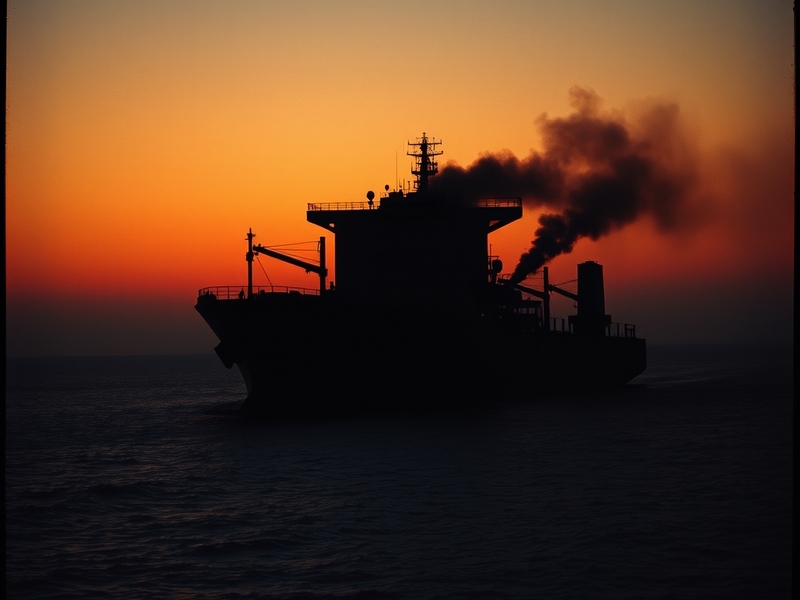
The Persian Gulf remains one of the world’s most critical chokepoints for global oil shipping, yet beneath the surface of legitimate trade flows, a shadow industry thrives. Dark shipping—where tankers operate outside regulatory oversight, often under flags of convenience or with disabled tracking systems—has surged in the region. These vessels move millions of barrels of oil monthly, evading sanctions, price controls, and international monitoring. From Iranian crude to Russian exports rerouted through Gulf waters, the practice has reshaped energy markets and geopolitical alliances.
The Rise of Dark Shipping in the Persian Gulf
Dark shipping refers to tankers that operate without proper transponder signals, falsify their identification, or switch off AIS (Automatic Identification System) transmitters mid-voyage. In the Persian Gulf, this practice has intensified due to sanctions on Iran and, more recently, Western price caps on Russian oil. Tankers load at Iranian ports like Kharg Island or Russian ports such as Novorossiysk, then disable tracking as they transit the Strait of Hormuz or skirt Oman’s coast before heading to Asia.
According to data from the U.S. Energy Information Administration, an estimated 1.5 million barrels per day of Iranian oil were shipped via dark tankers in 2023, with similar volumes suspected for Russian crude rerouted through the Gulf. The vessels involved are often older, single-hull tankers or aging VLCCs (Very Large Crude Carriers) repurposed for clandestine trade. Many are managed by obscure shipping firms registered in Panama, Liberia, or the Marshall Islands—jurisdictions known for lax oversight.
How Dark Tankers Evade Detection
Dark shipping relies on a combination of technological manipulation and jurisdictional arbitrage. A common tactic involves AIS spoofing, where tankers transmit false location data or “go dark” in high-risk zones. Others use “spoofed” IMO numbers—unique vessel identifiers that have been cloned from legitimate ships—to obscure their true identity. Some even repaint hulls mid-voyage or rename vessels to avoid detection.
Satellite tracking firms like Windward and Spire Maritime report that up to 30% of tankers passing through the Persian Gulf show signs of AIS manipulation during a given month. These irregularities often correlate with departures from sanctioned ports or vessels linked to designated entities. For example, in late 2022, a VLCC tracked by TankerTrackers.com disappeared from AIS near the UAE’s Fujairah anchorage before reappearing days later near China—loaded with Iranian crude.
The Geopolitical and Economic Impact
The proliferation of dark shipping has had profound consequences for global oil markets and regional stability. By enabling sanctioned regimes to export oil, it undermines Western sanctions regimes and distorts price signals. Iranian oil, sold at deep discounts, floods Asian markets—particularly China and India—displacing legitimate suppliers and depressing global crude prices. The International Energy Agency estimates that sanctioned oil exports from Iran and Venezuela added nearly 2 million barrels per day to the market in 2023, softening OPEC+ production cuts.
For Gulf states like the UAE and Oman, dark shipping presents a double-edged sword. While the practice boosts port activity and refinery utilization, it also risks entangling regional ports in sanctions violations. The UAE, in particular, has faced scrutiny from U.S. authorities over alleged facilitation of dark shipments. In 2023, the U.S. Treasury sanctioned several UAE-based firms for allegedly helping Iranian tankers disguise their cargoes.
Meanwhile, Russia has exploited the Gulf’s lax oversight to reroute oil to Asia via the “shadow fleet”—a network of aging tankers that operate outside Western insurance and shipping services. These vessels, often insured by Russian firms or opaque Middle Eastern insurers, transport Russian crude through the Persian Gulf to avoid price caps imposed by the G7.
Who Profits from the Shadow Trade?
The economic beneficiaries of dark shipping span multiple layers of the supply chain. At the top are the sanctioned regimes—Iran and Russia—whose oil revenues remain partially insulated from Western pressure. Iranian oil exports, for instance, now account for nearly 10% of China’s crude imports, with payments often routed through cryptocurrency or third-country banks.
In the middle are the shipowners and operators, many of whom operate through complex corporate structures in tax havens. These entities lease their vessels to trading firms that specialize in evading sanctions. For example, the “tramp trade”—where vessels are chartered on short-term, often cash-only terms—has seen a resurgence, with brokers in Dubai and Singapore brokering deals worth hundreds of millions of dollars annually.
At the bottom are the crews, who often work under precarious conditions. Many dark tankers are manned by low-wage labor from South Asia or Eastern Europe, unaware of the cargo they’re transporting. Reports from the International Transport Workers’ Federation highlight cases of crews stranded without pay after vessels are abandoned by owners seeking to avoid liability.
Regulatory Cracks and Emerging Enforcement
International efforts to combat dark shipping have intensified, but enforcement remains inconsistent. The U.S. has led the charge, imposing secondary sanctions on entities involved in transporting Iranian or Russian oil. The Treasury’s Office of Foreign Assets Control (OFAC) has blacklisted dozens of tankers and shipping firms, while the U.S. Coast Guard and Navy conduct patrols in the Persian Gulf to monitor suspicious activity.
Yet gaps persist. Many dark tankers reflag to jurisdictions with weak regulatory frameworks, such as Cambodia or Palau, making it difficult for authorities to trace ownership. Others exploit loopholes in the International Maritime Organization’s (IMO) safety regulations, which do not require real-time tracking for all vessels. The IMO’s recent push to mandate AIS for certain classes of tankers has been met with resistance from flag states that benefit from the status quo.
Technology offers some hope. AI-driven maritime analytics platforms, such as those offered by Dave’s Locker Analysis, now monitor AIS gaps and flag suspicious patterns in real time. These tools have helped expose dark shipments, including a 2023 case where a tanker loaded in Iran was tracked via satellite imagery to a Chinese port despite AIS blackouts.
The Future: Can the Shadow Fleet Be Stopped?
The long-term outlook for dark shipping in the Persian Gulf remains uncertain. On one hand, technological advancements in satellite monitoring and blockchain-based cargo tracking could make evasion harder. The EU’s recent ban on Russian oil imports via sea, combined with a price cap mechanism, has forced Moscow to rely more heavily on shadow tankers—but also increases the risk of detection.
On the other hand, the incentives for dark shipping are deeply entrenched. Sanctioned regimes continue to find willing buyers in Asia, while the cost of compliance for Western shipping firms has driven some toward the grey market. The result is a cat-and-mouse game, with dark tankers evolving faster than regulators can adapt.
For Gulf states, the challenge is balancing economic interests with international legal obligations. Ports like Fujairah and Sohar have invested in stricter due diligence processes, but the sheer volume of traffic makes 100% oversight nearly impossible. Meanwhile, the U.S. and its allies are exploring new tools, including expanded sanctions on insurers and port operators that facilitate dark shipments.
As the Persian Gulf’s role in global energy trade grows, so too does the shadow economy around it. Dark shipping is not merely a footnote in the region’s maritime history—it is a defining feature of the current era, reshaping power dynamics, market prices, and the very fabric of international law. Without coordinated action, the Gulf may remain the world’s largest unregulated oil superhighway for years to come.