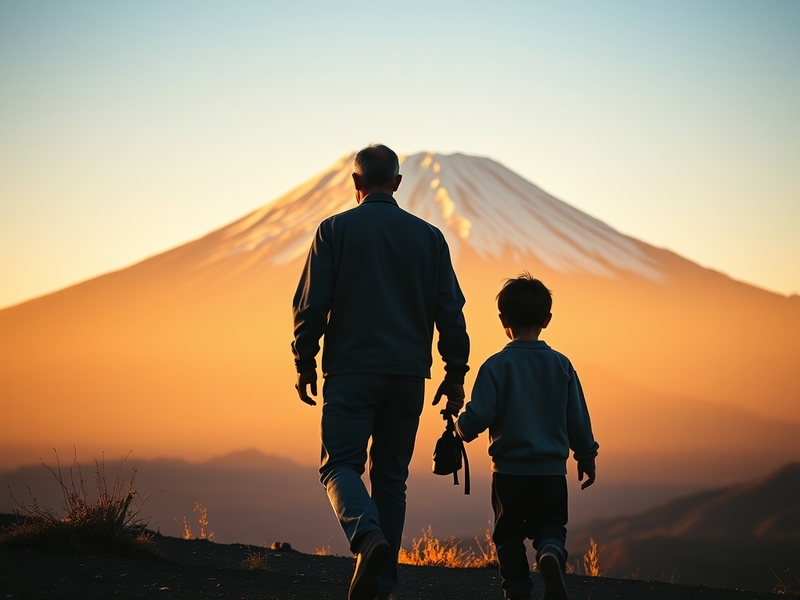
The viral video of a father leaving his young son atop Mount Fuji has sparked intense debate across social media platforms. The clip, filmed by a fellow hiker and shared on Instagram, shows the father climbing away from the boy, who is left standing alone on the rocky summit. The video quickly amassed millions of views, with reactions ranging from outrage to sympathy. But beyond the immediate shock, the incident raises deeper questions about parenting, cultural expectations, and the blurred lines between personal freedom and responsibility.
How the video went viral
The footage was first posted on an Instagram account dedicated to hiking experiences in Japan. Within hours, it spread to Twitter, TikTok, and Reddit, where users dissected every second of the video. Some accused the father of neglect, while others defended him as simply allowing his child to experience the moment. The clip’s rapid spread highlights how social media amplifies personal moments into public spectacles, often stripping context in the process.
The video’s caption read, “Teaching my son the value of perseverance,” adding fuel to the controversy. Critics argued that such an extreme example of “tough love” crossed ethical boundaries. Supporters, however, framed it as a cultural practice, citing traditions in Japan where children are encouraged to endure hardship from a young age. The debate soon evolved into a clash of parenting philosophies, with neither side willing to concede.
Platforms struggled to moderate the content. Instagram and Twitter initially flagged the video as “potentially harmful,” but later reversed their stance after public backlash. The incident underscored the challenges of enforcing community guidelines in an era where viral moments often dictate perception.
Cultural and psychological perspectives
In Japan, the video resonated with long-standing debates about child-rearing. Known as kodomo no tame ni (for the sake of the child), the philosophy emphasizes self-reliance and resilience. Some Japanese parents argue that exposing children to discomfort builds character, while critics call it an outdated and harmful tradition. The father’s actions, whether intentional or not, became a lightning rod for these tensions.
Psychologists weighed in, cautioning against extreme interpretations. Dr. Aya Tanaka, a child development expert, noted that while mild challenges can foster growth, leaving a child unattended on a mountain summit crosses into neglect. “There’s a difference between encouraging independence and abandoning a child,” she stated. The case also highlights the risks of social media validation, where parenting choices are judged in 15-second clips rather than in context.
Globally, reactions mirrored broader anxieties about modern parenting. Parents in Western countries often prioritize safety and supervision, while some Asian cultures lean toward self-sufficiency. The video forced a confrontation between these ideals, revealing how differently societies view childhood and risk.
The legal and ethical fallout
Japanese authorities received multiple reports regarding the incident, but no formal charges were filed. Under Japanese law, parental authority is broadly defined, making it difficult to intervene unless clear harm is evident. The case, however, prompted discussions among child welfare advocates about updating guidelines for “risky” parenting behaviors captured on camera.
Ethicists argued that the video blurred moral lines. Was the father’s decision an act of empowerment or exploitation? The lack of consent from the child further complicated the discussion. Some viewers sympathized with the son, imagining his confusion and fear, while others praised the father’s commitment to teaching resilience.
The incident also raised concerns about the ethics of sharing such content. Many questioned why the father filmed the moment instead of simply enjoying the experience with his child. The act of recording transformed a private parenting choice into public fodder, raising questions about boundaries in the digital age.
Broader implications for social media and parenting
The Mount Fuji incident is part of a larger trend where parenting choices become viral content. From “free-range parenting” debates to viral videos of children engaging in extreme activities, social media has turned child-rearing into a spectator sport. Parents now face pressure to perform parenting for online audiences, often prioritizing shareability over genuine connection.
Experts warn that this performative parenting can distort reality. Children may feel pressured to conform to viral expectations, while parents might make choices based on online validation rather than their child’s well-being. The Mount Fuji case serves as a cautionary tale about the unintended consequences of blending personal moments with public scrutiny.
Moving forward, the conversation must center on balance—how to foster independence without crossing into neglect, and how to share parenting experiences without exploiting children. The viral video may fade, but its lessons will linger in the ongoing debate about digital-age parenting.
For more on parenting trends and cultural shifts, visit our Parenting and Culture sections.
Key takeaways
- The video highlights the tension between cultural parenting norms and global perceptions.
- Social media’s role in amplifying personal moments complicates ethical discussions.
- Legal systems struggle to define boundaries in “risky” parenting cases.
- The incident reflects broader anxieties about performative parenting in the digital age.
- Psychologists emphasize the need for context over viral judgment.
The father leaving his son on Mount Fuji is more than a viral moment—it’s a mirror held up to society’s evolving values. As parenting continues to be dissected online, the real challenge will be preserving authenticity in an age of endless performance.