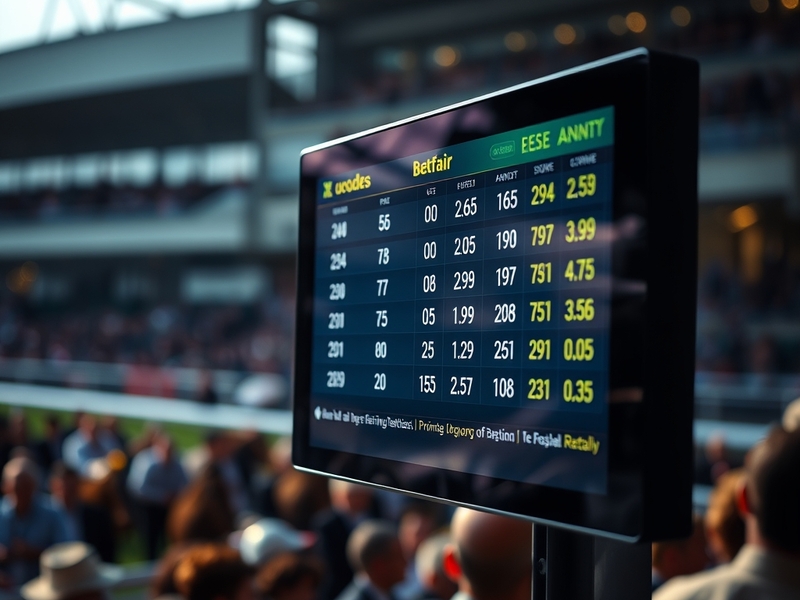
Betfair odds represent more than just numerical values on a screen. They reflect the collective intelligence of millions of global bettors, shaped by real-time data, psychological factors, and cultural trends. Unlike fixed-odds systems where bookmakers set prices, Betfair operates as a betting exchange, allowing users to back or lay outcomes based on dynamic market forces. This peer-to-peer model has transformed how people engage with sports, politics, and even entertainment, turning odds into a live barometer of public sentiment.
What began as a British innovation in 2000 has since spread across continents, adapting to local gambling regulations and cultural attitudes toward risk. In markets like the UK and Australia, Betfair’s influence is deeply embedded in sports wagering culture, while in regions with restrictive gambling laws, the platform has found ways to operate through offshore partnerships. The platform’s ability to adapt has made it a global standard, not just for betting but for understanding how odds function as a social and economic tool.
The Mechanics Behind Betfair Odds
At its core, Betfair odds are determined by supply and demand. When more people back a particular outcome, the odds shorten (become lower), reflecting increased confidence in that result. Conversely, if more people lay a bet—essentially betting against an outcome—the odds lengthen (become higher), signaling doubt or overvaluation. This system eliminates the traditional bookmaker margin, allowing bettors to set their own prices based on perceived value.
Several factors influence these odds beyond pure probability. For sports events, variables like team form, injuries, weather conditions, and even referee tendencies play a role. In political betting, odds shift with polling data, debate performances, and breaking news. The platform’s real-time updates mean that odds can change within seconds, creating a fluid environment where quick analysis often separates profitable bettors from the rest.
The use of algorithms and automated trading tools has further refined this process. Professional bettors, known as “traders,” exploit inefficiencies by monitoring odds fluctuations and placing bets in microseconds. This high-frequency approach has blurred the line between gambling and financial trading, with some viewing Betfair as a quasi-financial market rather than a traditional betting platform.
Cultural Variations in Betting Behavior
How people interpret and use Betfair odds varies significantly across cultures. In the UK, where sports betting is deeply tied to national identity—particularly in football and horse racing—odds are often discussed in pubs and workplaces as a form of social currency. The rise of in-play betting, where odds change during a match, has turned casual fans into active participants, even if they lack deep sporting knowledge.
In contrast, markets like the United States have historically been dominated by fixed-odds systems due to legal restrictions. However, the 2018 Supreme Court decision to strike down the federal ban on sports betting opened new opportunities for platforms like Betfair to enter the U.S. market through partnerships with licensed operators. American bettors, accustomed to point spreads and moneylines, are gradually adapting to the exchange model, where odds reflect real-time market consensus rather than bookmaker projections.
In Asia, where gambling laws are often restrictive, Betfair has found a foothold through cryptocurrency-based betting. Countries like the Philippines and Malta have become hubs for offshore betting exchanges, catering to bettors from China, India, and other regions where traditional sports wagering is prohibited. The use of digital currencies has added another layer of anonymity and speed, further accelerating the global spread of exchange-based betting.
Cultural attitudes toward risk also shape how odds are perceived. In some European countries, betting is viewed as a form of entertainment rather than a serious financial endeavor, while in others, it is treated with skepticism or moral disapproval. These differences influence everything from the types of events people bet on to the strategies they employ, creating a diverse tapestry of betting cultures worldwide.
The Psychology of Odds: Why People Bet
Understanding Betfair odds requires more than just analyzing numbers—it demands an understanding of human psychology. The thrill of predicting an outcome correctly triggers dopamine releases in the brain, creating a feedback loop that keeps bettors engaged. This neurological response explains why in-play betting, with its rapid odds fluctuations, is particularly addictive. The closer an event gets to its conclusion, the more volatile the odds become, heightening the emotional stakes.
Loss aversion also plays a critical role. Studies show that people feel the pain of a loss more intensely than the pleasure of an equivalent gain. This cognitive bias leads many bettors to chase losses by doubling down on bad bets, hoping to recoup their money. The availability of credit and betting promotions exacerbates this behavior, making it easier to place impulsive wagers based on fleeting odds movements rather than sound analysis.
Social factors further complicate the equation. In many cultures, betting is a communal activity, with odds discussed among friends, family, or even strangers online. The influence of peers can lead to herd behavior, where people follow the crowd rather than their own judgment. This phenomenon is particularly evident in political betting, where public sentiment can spiral based on media narratives and social media trends rather than objective data.
For professional bettors, the challenge lies in separating emotion from analysis. Successful traders treat betting like a business, focusing on value rather than outcome. They look for odds that are mispriced due to public overreaction or insufficient information, rather than placing bets based on personal bias. This disciplined approach is rare, however, as the vast majority of bettors fall into the trap of emotional decision-making.
The Future of Betfair Odds in a Changing World
The next decade will likely see Betfair odds evolve in response to technological and regulatory changes. Artificial intelligence is already being used to predict odds fluctuations with increasing accuracy, while blockchain technology offers the potential for fully transparent and decentralized betting markets. These innovations could reduce fraud and manipulation, making odds more reliable as indicators of true probability.
Regulation will also play a crucial role. As governments grapple with the social costs of gambling, platforms like Betfair may face stricter advertising rules, deposit limits, and responsible gambling measures. The European Union’s push for tighter controls on online betting could force the platform to adapt its business model, particularly in high-risk markets. Meanwhile, in the U.S., the patchwork of state-by-state regulations will continue to shape how Betfair operates, with some states embracing exchange betting while others maintain restrictive policies.
Cultural shifts will further influence the role of odds in society. As esports and virtual sports gain mainstream acceptance, new types of betting markets will emerge, each with its own set of odds dynamics. The rise of non-fungible tokens (NFTs) and digital collectibles has also opened speculative markets where odds reflect perceived value rather than traditional metrics. These developments blur the line between gambling and investment, raising questions about how society should regulate and conceptualize betting in the digital age.
One thing is certain: Betfair odds will remain a powerful tool for understanding not just sports outcomes, but broader societal trends. Whether used for entertainment, profit, or analysis, they provide a real-time snapshot of collective belief and behavior. As technology advances and cultural attitudes shift, the way we interpret these odds will continue to evolve, reflecting the ever-changing landscape of human decision-making.