The Weight of Sanctions: How Iran’s Economy Navigates Global Pressure
The Islamic Republic of Iran has long operated under the shadow of international sanctions, a reality that shapes nearly every aspect of its economy. From oil exports to currency fluctuations, the impact of these restrictions ripples through Iranian society, influencing everything from daily shopping habits to long-term investment decisions. While sanctions have been a tool of foreign policy for decades, their cumulative effect on Iran’s economic resilience and global standing remains a subject of intense debate.
The most visible consequence of these measures is Iran’s struggle to maintain stable oil revenues, historically the backbone of its economy. Before the 2018 reimposition of U.S. sanctions under the Trump administration, Iran exported roughly 2.5 million barrels of oil per day. By 2020, that figure had plummeted to under 200,000 barrels daily. The drop was not just a statistical blip; it represented a fundamental disruption in Iran’s ability to generate foreign exchange, fund public services, and stabilize its currency, the rial.
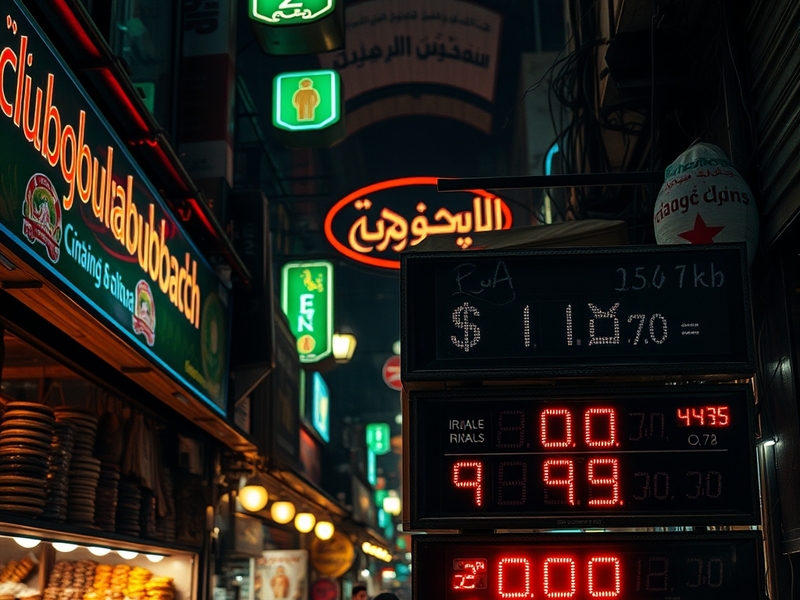
The rial’s volatility tells a stark story. In 2018, one U.S. dollar could buy around 42,000 rials. By 2020, that rate had skyrocketed to over 230,000 rials per dollar. While temporary measures—such as tighter capital controls and increased gold purchases—provided short-term relief, inflation remained a persistent threat. Consumer prices rose by nearly 40% in 2019 alone, eroding purchasing power and deepening economic inequality. Families on fixed incomes found themselves squeezed, while those with access to foreign currencies or assets abroad navigated the crisis with far greater ease.
A Shadow Economy: The Rise of Informal Markets
With formal channels of trade and finance constricted, Iran’s informal economy has flourished. Known locally as the “black market” or “gray economy,” these networks operate beyond the reach of regulatory oversight and sanctions enforcement. Goods ranging from medicine to electronics often enter the country through smuggling routes in the Persian Gulf or across land borders with Iraq and Afghanistan. While this trade keeps shelves stocked in major cities, it also fuels corruption and undermines domestic industries that cannot compete with unregulated imports.
Tehran’s bazaars, long considered the heart of Iran’s commercial life, have adapted to this new reality. Shopkeepers in the Grand Bazaar, one of the oldest marketplaces in the world, recount how suppliers now quote prices in euros or dollars rather than rials. Transactions frequently involve cryptocurrencies or barter arrangements, reflecting a broader shift toward non-traditional financial tools. The government has attempted to regulate these practices through digital payment platforms like Mabna, but enforcement remains inconsistent.
This shadow economy is not without its risks. Counterfeit goods flood the market, from pharmaceuticals that fail to meet safety standards to electronics that overheat or malfunction. For consumers, the allure of lower prices is often outweighed by the potential health and safety hazards. Meanwhile, the government grapples with lost tax revenue, which further limits its ability to address social welfare needs.
Youth and Exodus: The Human Cost of Economic Stagnation
Perhaps the most damaging long-term effect of Iran’s economic struggles is the exodus of its young and educated workforce. With unemployment for Iranians aged 15–29 hovering above 25%, many see emigration as their only viable path to stability. Cities like Isfahan, Shiraz, and Tehran, once bustling with university graduates, now face brain drain as engineers, doctors, and IT professionals relocate to Canada, Germany, or the Gulf states. The phenomenon has reached such proportions that Iran’s population growth rate has slowed to its lowest level in decades.
The government has introduced incentives to retain talent, such as the “National Elites Foundation,” which offers grants and loans to researchers and entrepreneurs. Yet these programs struggle to compete with the allure of higher salaries and better living conditions abroad. The result is a generational gap, with older Iranians who weathered the Iran-Iraq War now watching as their children seek opportunities elsewhere.
This demographic shift carries cultural implications as well. Persian language and traditions are carried across borders, creating diaspora communities that maintain strong ties to their homeland. However, the loss of human capital weakens Iran’s potential for innovation and growth, leaving the economy trapped in a cycle of stagnation and dependence on external factors.
Regional Alliances and Adaptation: Iran’s Economic Survival Strategies
Faced with isolation from Western markets, Iran has turned to alternative economic partnerships, particularly with neighboring countries and regional blocs. The most significant of these is the Eurasian Economic Union (EAEU), which includes Russia, Kazakhstan, and other former Soviet states. Through this alliance, Iran has secured trade agreements that bypass Western financial systems, using currencies like the Russian ruble and Kazakhstani tenge in bilateral transactions.
Another key partner is China, with which Iran signed a 25-year cooperation agreement in 2021. The deal, valued at $400 billion, includes investments in infrastructure, energy, and telecommunications. While critics argue that China’s involvement often prioritizes its own strategic interests, the partnership has provided Iran with much-needed financial lifelines. Chinese companies now dominate sectors like telecommunications, with Huawei and ZTE playing central roles in Iran’s 5G rollout.
Iran has also strengthened ties with countries like Syria, Iraq, and Venezuela, all of which face similar sanctions regimes. These alliances, while politically motivated, have created a network of trade that operates outside the traditional global financial system. The use of barter agreements and local currencies further insulates these economies from the dollar-dominated trade networks.
Yet these strategies come with drawbacks. Over-reliance on a few key partners increases Iran’s vulnerability to political pressure. For instance, when China negotiated a separate trade deal with Saudi Arabia in 2023, some analysts speculated that Beijing might reduce its commitments to Iran. Additionally, the quality of Chinese and Russian investments often falls short of Western standards, leaving Iran with outdated infrastructure and environmental concerns.
A Fragile Future: Can Iran Break the Cycle?
The path forward for Iran’s economy remains uncertain. While sanctions have forced innovation and resilience, they have also entrenched inefficiencies and inequalities. The government’s attempts to liberalize parts of the economy—such as allowing limited foreign investment in the auto and petrochemical sectors—have yielded mixed results. Public skepticism runs high, with many Iranians viewing such reforms as half-measures that fail to address the root causes of economic distress.
International diplomacy offers a glimmer of hope. Negotiations to revive the 2015 nuclear deal, known as the Joint Comprehensive Plan of Action (JCPOA), have resumed periodically, though progress remains stalled. A potential lifting of sanctions could unlock billions in frozen assets and restore Iran’s oil exports to pre-2018 levels. However, geopolitical tensions—particularly between Iran and the United States—continue to derail these efforts.
For Iran’s economy to truly recover, structural reforms will be essential. Diversifying revenue streams beyond oil, strengthening the financial sector, and fostering a transparent business environment are critical steps. Yet these changes require political will and social stability, both of which remain in short supply. Until then, Iran’s economy will continue to navigate the choppy waters of global politics, its fate intertwined with the decisions of foreign powers and the resilience of its people.