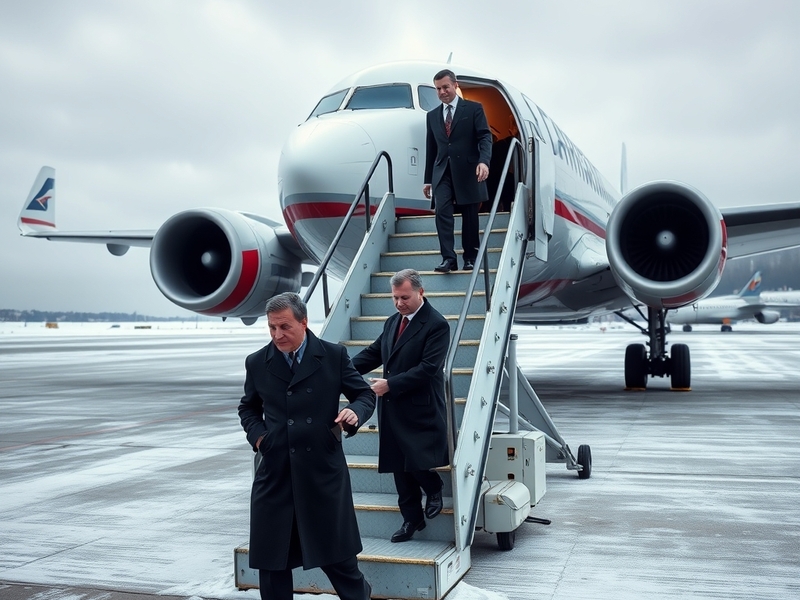
John Ratcliffe’s recent trip to Moscow has reignited scrutiny over U.S.-Russia relations, particularly in the context of intelligence sharing and geopolitical maneuvering. The former Director of National Intelligence (DNI) and U.S. Representative from Texas arrived in the Russian capital on a tightly controlled itinerary, prompting questions about the timing and purpose of his visit. While Ratcliffe has not publicly detailed his agenda, his presence in Moscow aligns with a period of heightened tensions between Washington and the Kremlin, especially following Russia’s ongoing war in Ukraine and allegations of election interference.
Diplomatic or Disruptive? The Purpose Behind Ratcliffe’s Moscow Visit
Ratcliffe’s trip comes at a delicate juncture for U.S.-Russia relations. The former DNI, known for his hawkish stance on Moscow, has not held an official government role since 2021. His visit—reportedly arranged through private channels—suggests a possible backchannel effort to assess Russia’s intentions, particularly regarding Ukraine and cybersecurity threats. However, the lack of transparency has fueled speculation. Some analysts argue that Ratcliffe may be positioning himself as an intermediary, leveraging his intelligence background to facilitate discreet dialogue. Others warn that his presence could be perceived as legitimizing the Kremlin’s narrative, especially if he engages with Russian officials without preconditions.
The timing of the trip is equally noteworthy. It follows a series of high-profile Russian military movements near Ukraine’s borders and escalating rhetoric from Moscow about NATO expansion. Ratcliffe’s itinerary reportedly includes meetings with former intelligence officials and think tank representatives, though no direct talks with current Kremlin leadership have been confirmed. This raises questions about whether his visit is more about gathering intelligence than fostering diplomacy. As one former U.S. diplomat noted, “If Ratcliffe is there to listen rather than negotiate, it could serve a useful purpose—but only if the information is shared appropriately with U.S. policymakers.”
From DNI to Private Citizen: Ratcliffe’s Evolving Role in U.S.-Russia Relations
John Ratcliffe’s career has been defined by his hardline stance on Russia. As DNI under President Trump, he frequently clashed with lawmakers over intelligence assessments linking Russia to election interference. His tenure was marked by efforts to downplay intelligence community findings, including the CIA’s conclusion that Russia interfered in the 2016 U.S. election. Critics accused him of politicizing intelligence, while supporters praised his skepticism of establishment narratives. Now, as a private citizen, Ratcliffe’s Moscow trip complicates his legacy. Is he engaging in backchannel diplomacy, or is he overstepping his non-official role?
Former colleagues and adversaries alike have weighed in on Ratcliffe’s motivations. Some suggest his visit aligns with a broader trend of former U.S. officials seeking to influence foreign policy post-government. Others argue that his presence in Moscow could embolden Russian propaganda, particularly if he echoes Kremlin talking points in public forums. A senior fellow at the Politics desk at Dave’s Locker emphasized, “Ratcliffe’s access to classified briefings gives him unique insight, but his lack of official capacity means his influence is limited—and potentially risky.”
Geopolitical Ripples: How Ratcliffe’s Trip Fits Into the Bigger Picture
The implications of Ratcliffe’s visit extend beyond U.S.-Russia relations. His trip occurs amid a broader effort by Moscow to divide Western allies, particularly by exploiting divisions over Ukraine aid and sanctions. Ratcliffe’s interactions—real or perceived—could provide the Kremlin with ammunition to argue that the U.S. is open to dialogue, even as Washington maintains its support for Kyiv. This dynamic plays into Russia’s strategy of portraying itself as a reasonable actor willing to negotiate, despite its aggressive actions on the ground.
For the U.S., Ratcliffe’s Moscow trip underscores the challenges of managing intelligence and diplomacy in an era of fractured alliances. The Biden administration has largely shut the door on direct engagement with Moscow, focusing instead on isolating Russia diplomatically and economically. In this context, Ratcliffe’s visit could be seen as an attempt to test the waters for future engagement—or as a misstep that undermines U.S. strategy. A former CIA Russia analyst told Dave’s Locker, “Unofficial contacts can sometimes yield valuable insights, but they must be tightly controlled. Ratcliffe’s trip risks sending mixed signals at a time when clarity is critical.”
The trip also highlights the role of former officials in shaping foreign policy narratives. In an era where retired generals, diplomats, and intelligence chiefs often become influential voices in media and think tanks, their actions carry weight. Ratcliffe’s Moscow visit serves as a case study in how private citizens can influence geopolitics, for better or worse. Whether his trip yields tangible results remains to be seen, but its symbolic importance is undeniable.
What’s Next? Assessing the Fallout and Potential Outcomes
The most immediate question surrounding Ratcliffe’s trip is whether it will lead to any concrete outcomes. Thus far, there have been no reports of breakthroughs or agreements emerging from his meetings. However, the visit itself may have already achieved its intended purpose: to signal to Moscow that influential voices in the U.S. are still willing to engage, even indirectly. For the Kremlin, such signals can be valuable in shaping international perceptions and testing the resolve of Western policymakers.
Looking ahead, several scenarios could unfold:
- Constructive Backchannel: Ratcliffe’s insights could be shared with U.S. intelligence or diplomatic channels, providing a clearer picture of Russia’s intentions. If this leads to more informed policymaking, his trip may be viewed as a net positive.
- Diplomatic Distraction: If the Kremlin uses Ratcliffe’s visit to justify its narratives—such as claiming the U.S. is open to negotiations—it could complicate Western unity on Ukraine. This would be a significant downside.
- Overshadowed by Politics: Given Ratcliffe’s partisan background, his trip may become entangled in domestic U.S. politics, further polarizing debates over Russia policy.
Regardless of the outcome, Ratcliffe’s Moscow visit has already contributed to the broader conversation about how unofficial engagement fits into modern diplomacy. In an era where traditional channels are often blocked, backchannel efforts—when conducted transparently and strategically—can play a role in crisis management. However, the risks of miscommunication and misinterpretation are high, particularly when former officials operate without official mandates.
For now, the world watches to see whether Ratcliffe’s trip leads to any tangible shifts in U.S.-Russia dynamics—or if it remains a footnote in the ongoing saga of great power competition.