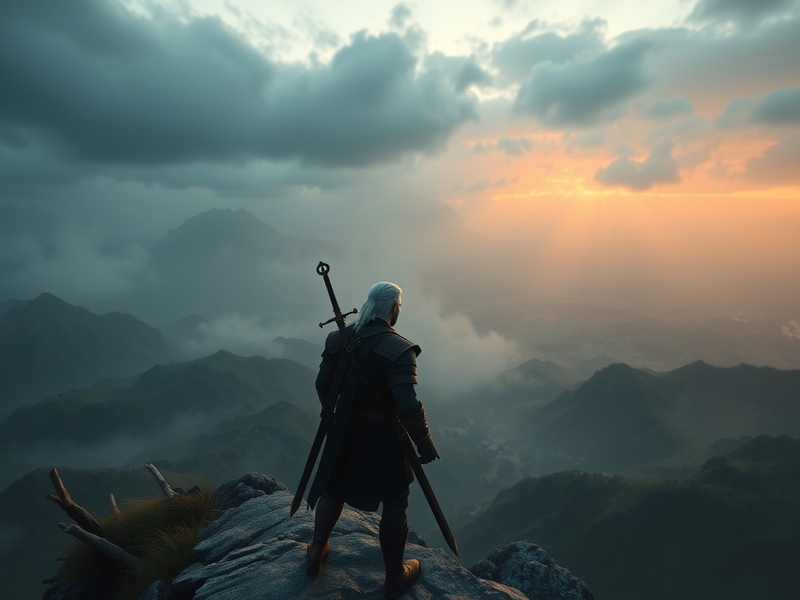
The wait is finally over. CD Projekt Red has delivered The Witcher 3: Wild Hunt – Complete Edition in a fresh remastered package, and it arrives at a pivotal moment for gaming culture. Nearly a decade after its 2015 debut, Geralt of Rivia’s epic saga remains a touchstone for narrative-driven RPGs, but this remaster isn’t just about nostalgia—it’s a technical and artistic reimagining that expands accessibility without diluting the soul of the original.
With enhanced visuals, improved performance across platforms, and a fully rebuilt Next-Gen Update, The Witcher 3 Remastered isn’t merely a polished version of an old favorite. It’s a bridge between past and present, a reminder of how far open-world storytelling has evolved—and how far some games still have to go. From its hauntingly beautiful landscapes to its morally complex storytelling, this remaster invites both veterans and newcomers to step into a world where every choice echoes across continents.
From Novels to Game: A Legacy Built on Depth
The Witcher franchise began not as a game, but as a series of dark fantasy novels by Polish author Andrzej Sapkowski in the 1980s and 90s. Those books, steeped in Slavic folklore and moral ambiguity, introduced the world to Geralt, a monster hunter navigating a continent torn by war, magic, and human folly. When CD Projekt Red adapted The Witcher 3 in 2015, they didn’t just translate a story—they transformed a literary universe into an interactive experience where players lived, fought, and decided the fate of kingdoms.
This remaster honors that legacy by preserving the core narrative while refining the delivery. The voice acting remains stellar—especially in key roles like Geralt’s gravelly growl, Triss Merigold’s warmth, and Ciri’s youthful defiance. The facial animations are smoother, the lip-syncing tighter, and the environmental details—like the flickering lanterns in Novigrad or the mist rolling over the Skellige shores—feel more immersive than ever. Players familiar with the original will notice subtle enhancements in lighting, draw distances, and texture fidelity, particularly on high-end consoles and PCs.
The game’s influence on global gaming culture can’t be overstated. In Japan, where fantasy RPGs have deep roots, The Witcher 3 found a passionate audience through its anime-style cutscenes and strategic combat. In the West, it became a benchmark for narrative depth in open-world games, inspiring titles like Elden Ring and Starfield. Even in regions with less established RPG markets, such as parts of Southeast Asia and Latin America, the game’s localization into multiple languages helped democratize access to high-quality storytelling in gaming.
What’s New in the Remaster: Beyond the Pretty Graphics
The visual upgrades are the most immediately noticeable changes, but The Witcher 3 Remastered delivers more than just eye candy. The Next-Gen Update includes:
- Ray Tracing Support: Enhanced lighting and reflections that bring the world to life, especially in urban areas like Oxenfurt and the flooded ruins of the White Wolf’s lair.
- 60 FPS Mode: A smoother experience on PlayStation 5 and Xbox Series X|S, making dodging attacks and traversing vast landscapes feel more responsive.
- HDR and 4K Resolution: On PC, the game supports up to 8K with DLSS/FSR upscaling, ensuring sharp visuals even on high-refresh-rate monitors.
- Performance Options: Players can toggle between performance and fidelity modes, catering to both competitive and cinematic playstyles.
But the real improvements lie beneath the surface. The developers have addressed long-standing technical issues, including stuttering in large open areas and occasional texture pop-ins. The save system has been refined, reducing the risk of losing progress during transitions. Controller support is now more intuitive, and the UI has been slightly streamlined for better readability on smaller screens.
One underrated enhancement is the inclusion of all three major expansions—Hearts of Stone, Blood and Wine, and The Witcher 3: Game of the Year Edition—in a single package. This consolidation makes it easier for new players to dive into the full experience without hunting down DLCs separately. It also reflects a growing trend in gaming: the move toward holistic, complete editions that respect the player’s time and investment.
The Global Impact: How Geralt Conquered the World
The Witcher 3 isn’t just a game; it’s a cultural export. In Poland, where the franchise originated, it became a point of national pride—a modern fantasy epic created by a homegrown studio that could stand alongside international giants. The game’s success helped propel CD Projekt Red into the global spotlight, challenging the dominance of Western developers in narrative-driven RPGs.
In South Korea, the game’s strategic combat and detailed world design resonated with a player base that values depth and replayability. Streamers and esports athletes alike embraced The Witcher 3, with some tournaments featuring modded versions of the game for competitive play. Meanwhile, in Brazil and Mexico, fan communities grew rapidly, with localizations into Spanish and Portuguese making the game accessible to millions.
The game’s influence extends beyond gaming. The 2019 Netflix adaptation, The Witcher, starring Henry Cavill, introduced the franchise to a massive new audience. While the show took creative liberties, it sparked renewed interest in the games, particularly among younger players. This cross-media synergy reflects a broader trend in entertainment: the blurring of lines between video games, film, and television.
Yet, the game’s legacy isn’t without controversy. Some players criticize the remaster for not being a full “definitive edition,” as it lacks certain modern features like a photo mode or deeper accessibility options. Others argue that the original game’s bugs and limitations are part of its charm, and that the remaster, while polished, strips away some of that raw authenticity. These debates highlight a tension in gaming: the balance between preservation and innovation.
Why This Remaster Matters Now
In an era where games are increasingly judged by their live-service models and microtransactions, The Witcher 3 Remastered stands as a testament to the power of a complete, self-contained experience. It’s a reminder that a great game doesn’t need constant updates or expansions to remain relevant. It just needs to be good—and The Witcher 3 is very good.
The remaster also arrives at a time when open-world games are facing scrutiny for bloated design and repetitive mechanics. The Witcher 3 succeeds because it prioritizes storytelling, world-building, and player agency over mindless grinding. Whether you’re guiding Geralt through the political intrigue of Velen, battling the Wild Hunt on the shores of Skellige, or uncovering the secrets of the Bloody Baron’s family, every quest feels meaningful.
For newcomers, this is the perfect entry point into Geralt’s world. For veterans, it’s a chance to revisit a masterpiece with fresh eyes. And for the gaming industry, it’s a lesson in how to revise history without erasing it.
As we look ahead to the next generation of RPGs, The Witcher 3 Remastered serves as both a high point and a benchmark. It proves that a game can be old and new at the same time—a relic of the past that feels vital in the present. Whether you’re a fan of fantasy, storytelling, or just great games, this remaster deserves a place on your shelf.