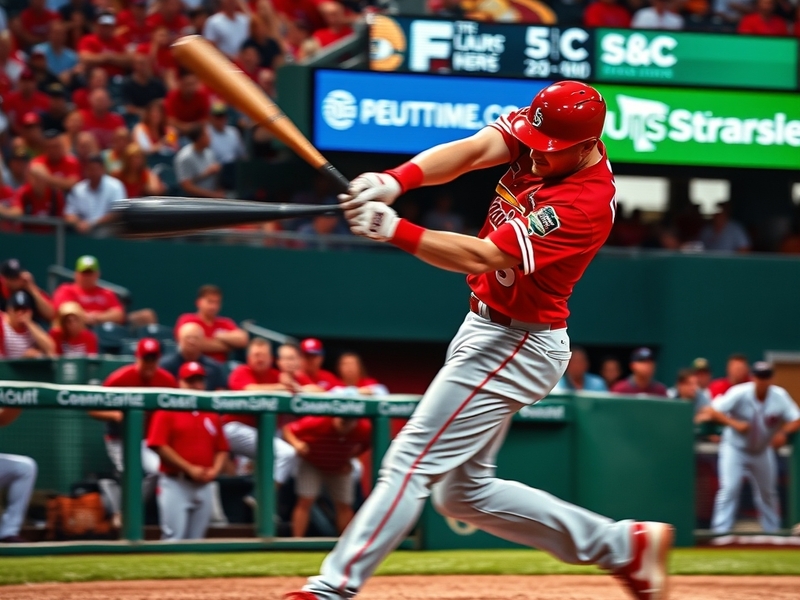
Lars Nootbaar arrived in the majors as a little-known outfielder with a reputation for raw athleticism and a strong arm. Few could have predicted how quickly he would become a cornerstone of the St. Louis Cardinals’ rebuild. Drafted in the eighth round in 2018 out of the University of Southern California, Nootbaar spent years refining his plate discipline and defensive versatility before breaking out in 2021. His journey from a mid-round project to a 30-plus home run season in 2023 illustrates the modern path to MLB success—not through top-tier draft pedigree, but through relentless development and adaptability.
At 6-foot-3 and 215 pounds, Nootbaar brings a rare combination of power and speed that fits the Cardinals’ emerging identity. His ability to play all three outfield positions with competence adds depth to a roster still searching for its next core identity. More than just a platoon bat, Nootbaar has become a symbol of the organization’s patient, data-informed approach. In an era where high-profile free agents and blockbuster trades dominate headlines, his rise is a reminder that development pipelines still matter.
From Draft Sleeper to Breakout Star
Nootbaar’s path to the majors was anything but linear. After a strong junior year at USC—where he hit .331 with 12 homers and 14 steals—he was selected 228th overall. Most scouts viewed him as a toolsy fourth-outfielder type with upside. His minor league trajectory reflected typical progression: solid but unspectacular numbers, punctuated by flashes of power and defensive brilliance.
What changed? A shift in approach. Under Cardinals farm director Gary LaRocque, Nootbaar reworked his swing mechanics to emphasize lower-half rotation and pitch recognition. The results were immediate. In 2021, he slashed .288/.373/.526 in Triple-A, earning a September call-up. By 2022, he became a regular, posting a 120 wRC+ and flashing 20-20 potential. Then came 2023: a full-season breakout with 32 home runs, 10 stolen bases, and a Gold Glove-caliber outfield arm.
His offensive profile—above-average power, decent contact rates, and a disciplined approach—mirrors the modern “three-true-outcomes” hitter. Yet Nootbaar avoids the strikeout plague plaguing many power hitters. In 2023, he struck out in just 20% of plate appearances, well below league average for a 30-homer player. That balance makes him a nightmare for pitchers to game-plan.
Defensive Versatility: A Utility Outfielder in the Modern MLB
Nootbaar’s defensive contributions often go underappreciated, but they’re central to his value. He has logged innings in left, center, and right field—rare for a player of his offensive profile. His arm strength is elite, ranking in the 95th percentile among outfielders in 2023, with a 91 mph average throw from the outfield. That translates to easy outs on the bases and deterrence against aggressive baserunners.
His range is above average but not Gold Glove-caliber, which means he thrives as a complementary defender rather than a premium one. Still, his ability to shift seamlessly between positions gives manager Oliver Marmol tactical flexibility. In a division featuring elite outfielders like Ronald Acuña Jr. and Bryan Reynolds, versatility is a luxury—one the Cardinals are leveraging.
Defensive metrics like OAA (Outs Above Average) and DRS (Defensive Runs Saved) paint a nuanced picture. Nootbaar grades out as a net positive in right field, neutral in center, and slightly below average in left. Yet his intangibles—communication, route efficiency, and baseball IQ—elevate his overall impact. This is the kind of player analytics departments love: a multi-positional contributor who doesn’t hurt the team in any one area.
Broader Implications: The Rise of the “Late-Bloom” Athlete
Nootbaar’s story reflects a growing trend in MLB: the late-blooming athlete. With draft budgets tightening and international spending capped, teams are investing in development over raw talent. Players like Nootbaar, Jake Bauers, and Tyler O’Neill represent a new archetype—athletes who peak at 25 or 26, not 22. This shift has financial implications, too. Late-round picks who develop into core players provide cost-controlled production, crucial in an era of rising payrolls and luxury tax thresholds.
For the Cardinals, Nootbaar is more than a player—he’s a model. St. Louis has long been criticized for its conservative drafting and slow development pipeline. But Nootbaar’s ascent, alongside players like Nolan Gorman and Jordan Walker, suggests a cultural shift under new president of baseball operations John Mozeliak. The front office is balancing short-term wins with long-term sustainability, a delicate act that Nootbaar embodies.
His success also raises questions about the broader MLB landscape. As analytics dominate decision-making, is the league undervaluing raw athleticism in favor of “proven” profiles? Nootbaar’s journey suggests that tools still matter—when paired with the right developmental environment. The Cardinals’ player development complex in Jupiter, Florida, has become a proving ground for this philosophy. Nootbaar’s development was accelerated by high-level coaching, biomechanical analysis, and a focus on individualized training.
Looking ahead, Nootbaar’s 2024 season will be pivotal. A repeat of his 2023 performance would solidify him as a franchise cornerstone. A regression could raise concerns about sustainability—especially given his lack of plate discipline before 2021. But for now, he’s a beacon of hope in a system still searching for consistency.
What’s Next for Lars Nootbaar?
Nootbaar’s contract status adds another layer to his story. He’s arbitration-eligible for the first time in 2025, with Super Two status a possibility. If he replicates his 2023 season, he could command a long-term deal worth $50–70 million. That would be a bargain for a player with his combination of power, defense, and positional flexibility.
Teams are increasingly prioritizing players who can contribute in multiple areas. Nootbaar fits that mold perfectly. His ability to play center field in a pinch, throw out runners, and hit for power makes him a prototype for the modern outfielder. As the Cardinals aim to return to contention, Nootbaar’s role will only grow.
For fans, his journey is a reminder that baseball isn’t always about the first-round flier or the splashy free-agent signing. Sometimes, it’s about the eighth-round pick who outworks everyone. That’s a narrative worth following.
To see how Nootbaar fits into the Cardinals’ broader rebuilding efforts, explore our MLB coverage. For deeper analysis on rising stars in baseball, check out our Analysis section.
- Drafted in the 8th round (228th overall) in 2018 out of USC, defying high-round expectations.
- 2023 breakout season: 32 HR, 10 SB, 120 wRC+, 20% strikeout rate—elite for a power hitter.
- Defensive versatility: Played all three outfield positions with above-average arm strength (95th percentile).
- Developmental model: Emphasizes biomechanical analysis and individualized coaching over raw pedigree.
- 2025 arbitration status: Could command $50–70M on long-term deal if he repeats 2023 production.
Lars Nootbaar’s rise is more than a feel-good story. It’s a blueprint for how modern MLB teams can build competitive rosters without breaking the bank. His blend of power, defense, and adaptability makes him a player for today—and a cornerstone for tomorrow.