From Spain to Utah: How León’s Global Identity Shaped Their Clash with Real Salt Lake
When Club León traveled to Utah to face Real Salt Lake in the CONCACAF Champions Cup, they carried more than just their Mexican heritage onto the field. The matchup represented a collision of football philosophies, cultural narratives, and global fanbases—each club rooted in distinct histories yet navigating the same modern pressures of identity, migration, and sporting ambition. León, a club with deep ties to working-class culture in Guanajuato, and Salt Lake, a franchise born in a region where football was once an afterthought, found themselves on a continental stage that highlighted how football transcends borders.
This wasn’t just another CONCACAF fixture. It was a moment where two clubs—one with over 100 years of tradition and another barely out of its teens—converged in a globalized sport ecosystem. León’s journey from Liga MX to the CCL reflected Mexico’s enduring influence in North American football, while Salt Lake’s rise mirrored the growth of the sport in non-traditional U.S. markets. Their meeting in Sandy, Utah, became more than a game; it became a snapshot of football’s evolving geography.
The Roots of Two Clubs: Culture, Migration, and Identity
Club León was founded in 1944, not in a capital city, but in a mining and industrial hub. Its early identity was forged in the factories and neighborhoods of Guanajuato, where workers found unity in the team. The club’s nickname, “La Fiera” (The Beast), wasn’t just about playing style—it reflected a spirit of resilience tied to the working class. León became a symbol of upward mobility through football, a theme that resonates deeply in Mexican society.
Real Salt Lake, by contrast, emerged in 2004 as part of MLS’s expansion into smaller markets. Salt Lake City, with its strong Mormon heritage and conservative roots, was an unlikely cradle for a professional football club. Yet, the team’s arrival coincided with a broader shift in American soccer culture—one that embraced diversity and global influences. RSL’s identity has always been intertwined with its community, from its fan-driven “Curva” supporters’ section to its embrace of Hispanic and international talent.
The contrast in origins speaks to a larger narrative in North American football. While León carries the weight of Mexican football history—home to legends like Hugo Sánchez and a culture where football is life—RSL represents the American experiment: a league built on ambition, expansion, and the idea that football could grow anywhere. Their meeting in the CCL was less about geography and more about the shared journey of clubs trying to carve out their place in a crowded global stage.
A Global Stage for Local Stories
The CONCACAF Champions Cup has increasingly become a stage for clubs that don’t fit the traditional power structures of European football. In 2024, the tournament’s rebranding and expansion meant that clubs from smaller leagues—like León and RSL—could compete for continental glory. This shift reflects a broader trend in football: the erosion of the old hierarchy, where clubs from outside the traditional powerhouses can rise on merit and fan passion.
León’s path to the CCL was paved by domestic success. Their Clausura 2024 title in Liga MX showcased a team built on tactical discipline and youth development. Meanwhile, RSL’s route was through the U.S. Open Cup and MLS Cup Playoffs, proving that even in a league dominated by franchises with deeper pockets, grit and community support could still matter.
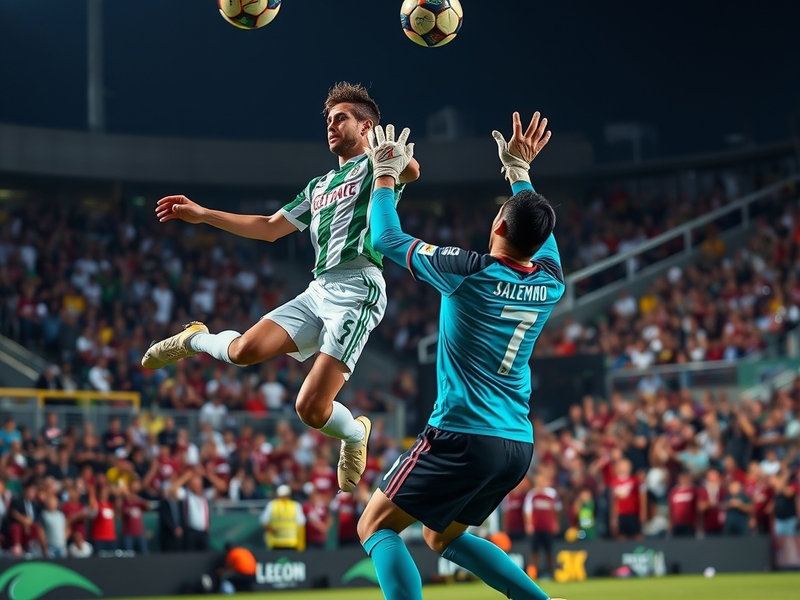
The match itself was a tactical chess match. León, under manager Nicolás Larcamón, deployed a high-pressing 4-3-3 system, pressing opponents into mistakes. RSL, managed by Pablo Mastroeni, relied on a compact 4-2-3-1, looking to absorb pressure and exploit counterattacks. What made the game fascinating wasn’t just the tactics, but the cultural exchange happening on the pitch. León’s starting XI featured several players with roots in Mexico City and other states, while RSL’s lineup included Americans, Canadians, and South Americans—each bringing a different footballing DNA to the field.
What emerged was a game that felt less like a clash of styles and more like a conversation. The players weren’t just competing for points; they were representing their communities, their clubs’ histories, and the evolving identity of North American football. In that sense, the match transcended sport—it became a cultural exchange.
Fanbases on the Move: The Globalization of Football Support
The fan experience in Sandy, Utah, reflected the broader globalization of football culture. While RSL’s fanbase is predominantly local, León brought a significant Mexican-American contingent—part of a diaspora that stretches from Texas to California. These fans traveled hundreds of miles, some driving from neighboring states, to support their team in a foreign stadium. Their presence highlighted how football fandom now operates across borders, with supporters following clubs regardless of geography.
For many Mexican-American fans, supporting León is a way to stay connected to their heritage. The club’s traditional colors—green and red—mirror the Mexican flag, and its anthem, “León, León, campeón,” is a rallying cry that transcends language. The chants, the drums, and the sea of green in a predominantly white stadium created a mini-Mexico in Utah. It was a reminder that football isn’t just a game; it’s a cultural bridge.
RSL’s fanbase, though smaller in number, brought a different kind of energy. Known for their loyalty and creativity, the “Curva” supporters section is a model of fan engagement in MLS. Their chants, banners, and rituals reflected the club’s deep ties to Salt Lake City’s communities. The juxtaposition of the two fanbases—one rooted in tradition and migration, the other in local pride and growth—was a microcosm of North American football’s diversity.
The global perspective of this matchup extended beyond the players and fans. Broadcast worldwide through CONCACAF’s expanded media network, the game reached audiences in Mexico, the U.S., Canada, and beyond. Social media amplified the conversation, with fans debating tactics, cultural significance, and even the pronunciation of “Salt Lake” (hint: it’s “Salt Loke,” not “Salt Layk”). The digital footprint of the match underscored football’s role as a unifying force in an increasingly fragmented world.
Beyond the Pitch: What the Matchup Means for North American Football
The León vs. RSL clash was more than a single game—it was a statement. In an era where football is increasingly dominated by financial power and global brands, this matchup proved that clubs with strong identities and community roots can still compete at the highest levels. It also highlighted the importance of CONCACAF’s growing influence in reshaping the narrative of continental football.
For León, the game was an opportunity to showcase Mexican football’s depth. The club’s success in the CCL could inspire other Liga MX teams to invest in youth academies and tactical development, ensuring that Mexico remains a powerhouse in CONCACAF. For RSL, the match was a chance to prove that the MLS model—built on fan engagement and local investment—can produce teams capable of competing with the continent’s best.
Looking ahead, the broader implications of this matchup are clear. As CONCACAF continues to expand its competitions, clubs from smaller leagues will have more opportunities to shine. The success of teams like León and RSL could encourage other franchises to double down on community-driven models, proving that football isn’t just about money—it’s about identity, passion, and connection.
The León vs. RSL matchup was a reminder that football is more than a sport. It’s a cultural force, a bridge between communities, and a stage for stories that transcend borders. In Sandy, Utah, two clubs—one steeped in tradition, the other in ambition—found common ground in the shared love of the game. And in doing so, they wrote a new chapter in North American football’s evolving narrative.
For fans of both clubs, the match was a celebration of what makes football special. It wasn’t just about winning or losing. It was about the journey—the roots, the passion, and the people who make the game matter. And in a world where football is often reduced to statistics and sponsorships, that’s a story worth telling.