The Russian invasion of Ukraine, which began in February 2022, has reshaped global geopolitics, redefined military strategy, and influenced cultural narratives worldwide. What started as a large-scale assault on a sovereign nation has evolved into a prolonged conflict with far-reaching consequences beyond Eastern Europe. The war has not only redrawn borders on maps but also shifted alliances, disrupted supply chains, and sparked debates about sovereignty, humanitarian responsibility, and the role of international institutions.
At its core, the conflict is rooted in historical tensions, territorial disputes, and competing visions of national identity. Ukraine’s desire to align closer with Western institutions like NATO and the European Union clashed directly with Russia’s insistence on maintaining influence over its former Soviet sphere. The annexation of Crimea in 2014 and the recognition of separatist regions in Donbas set the stage for a full-scale invasion, framed by Russian President Vladimir Putin as a “denazification” and “demilitarization” campaign. Yet, observed from a distance, the war reveals deeper fractures in global order, exposing vulnerabilities in international law and the limitations of diplomacy when power outweighs principle.
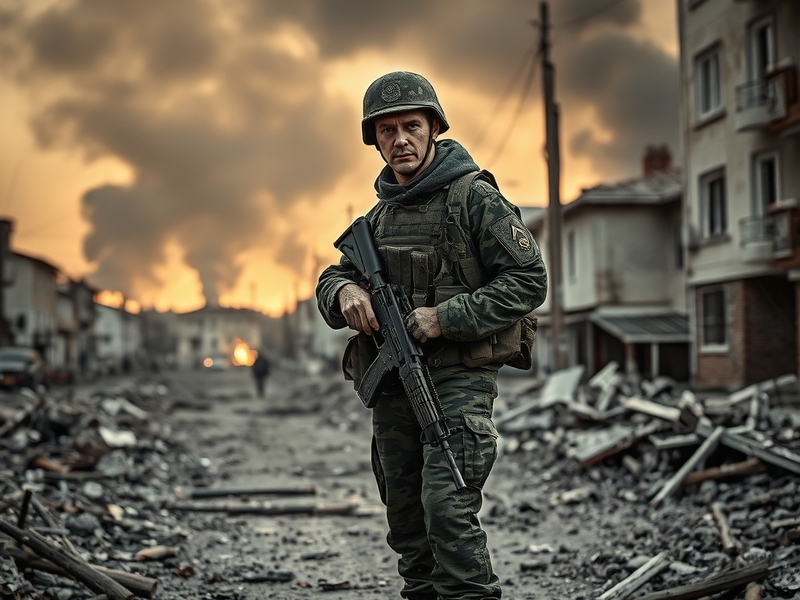
More than two years into the invasion, the human toll remains staggering. Millions of Ukrainians have been displaced, with over six million refugees seeking shelter across Europe. Cities like Mariupol and Bakhmut became symbols of resilience, reduced to rubble yet never fully subdued. The destruction of cultural landmarks—including the devastation of the Kakhovka Dam and the bombing of the Ivankiv Historical and Local History Museum—has not only erased physical heritage but also erased collective memory. These acts underscore a deliberate strategy to erase Ukrainian identity, a tactic seen in other conflicts where culture becomes a target.
The Global Response: Sanctions, Support, and Shifting Alliances
The international response to the invasion has been unprecedented in scope and coordination. Western nations, led by the United States and European Union, imposed sweeping economic sanctions targeting Russia’s central bank, oligarchs, and key industries. These measures aimed to cripple Russia’s war economy, though their effectiveness has been uneven. While the ruble initially collapsed, Russia adapted through trade with non-Western partners, particularly China, India, and Iran, creating new economic pathways that bypass traditional markets.
Military aid has flowed into Ukraine at an unprecedented scale. Over $100 billion in security assistance from the U.S. alone has included advanced air defense systems, HIMARS rocket launchers, and long-range missiles. European nations, though initially hesitant, have contributed tanks, artillery, and training programs. Yet, the flow of weapons has sparked debates about escalation risks and the potential for direct NATO involvement. The conflict has forced nations to confront uncomfortable truths about their own defense capabilities and reliance on Russian energy—a dependency that, in some cases, funded the very war now being fought.
The war has also exposed the fragility of global institutions. The United Nations, designed to prevent such aggression, has been paralyzed by Russia’s veto power in the Security Council. The International Criminal Court’s issuance of an arrest warrant for Putin in March 2023 marked a symbolic step, but enforcement remains elusive. Meanwhile, countries like Turkey and Saudi Arabia have positioned themselves as mediators, leveraging their neutral status to broker limited ceasefire agreements. This multipolar mediation reflects a broader shift: the decline of Western hegemony in conflict resolution and the rise of regional powers shaping outcomes.
Cultural Echoes: Art, Media, and the War’s Resonance Worldwide
The war has triggered a cultural awakening across Europe and beyond. Museums, including the Louvre and the British Museum, have removed Russian art and artifacts from display or restricted loans to Russian institutions. Symphonies have canceled performances of Tchaikovsky and Rachmaninoff, sparking debates about separating art from politics. Meanwhile, Ukrainian artists have used the conflict as both a canvas and a weapon—documenting destruction through photography, poetry, and music that circulates virally on social media.
Cinema has played a crucial role in shaping global perception. Documentaries like 20 Days in Mariupol, which won an Oscar in 2024, brought unfiltered war footage to international audiences, stripping away political rhetoric to reveal raw human suffering. The film’s impact was amplified by its release on streaming platforms, where it reached millions within days. Similarly, Ukrainian filmmaker Sergei Loznitsa’s Babi Yar. Context reexamined the 1941 Nazi massacre through archival footage, drawing parallels between historical and contemporary violence.
Literature has also responded. In Poland, a wave of wartime poetry emerged, echoing the voices of 1939. In the U.S., authors like Gary Shteyngart and Marlen Haushofer revisited themes of displacement and resilience in novels published post-2022. Even fashion has been influenced—runways in Milan and Paris featured collections inspired by military silhouettes and Ukrainian vyshyvanka embroidery, turning symbols of war into statements of solidarity.
Social media has transformed the war into a 24-hour news cycle, with TikTok videos of air raid sirens and Telegram channels broadcasting frontline updates in real time. This digital immediacy has democratized information but also accelerated misinformation. Deepfake videos of Zelensky calling for surrender or Putin declaring victory have circulated widely, forcing platforms to adapt their moderation policies in real time. The war has become not just a military conflict but a cognitive one—where perception is as critical as territory.
Economic Aftershocks: Energy, Food, and the New World Order
The economic fallout from the war has rippled across continents. Russia’s decision to cut gas supplies to Europe in 2022 triggered an energy crisis, pushing prices to historic highs and forcing governments to revive coal plants and ration heating. Countries like Germany accelerated their transition to renewables, but the shift came at a cost—industrial output slowed, inflation surged, and households faced crippling bills. The crisis exposed Europe’s vulnerability, prompting calls to reduce dependence on Russian energy once and for all.
Food security became another global concern. Ukraine, often called the “breadbasket of Europe,” supplies 10% of the world’s wheat exports. Blockades of Black Sea ports in 2022 led to shortages in Africa and the Middle East, threatening food security in nations like Egypt and Lebanon. The Black Sea Grain Initiative, brokered by Turkey and the UN, temporarily alleviated the crisis, but Russia’s withdrawal in 2023 reignited fears of famine. The war has shown how localized conflicts can trigger global hunger, reshaping agricultural policies from Brussels to Jakarta.
Supply chains, already strained by the pandemic, faced new disruptions. Semiconductor shortages worsened as Ukraine supplied critical neon gas and palladium, forcing tech giants to rethink sourcing strategies. Automakers in Germany and Japan scaled back production, and electronics prices rose. Meanwhile, cryptocurrency markets saw increased activity in Russian-backed stablecoins, highlighting how digital assets are being used to circumvent sanctions. The war has accelerated the decoupling of global economies, pushing nations toward regional alliances and self-sufficiency.
Looking ahead, the war’s legacy will likely shape economic policies for decades. Nations are investing in critical mineral mining to reduce reliance on Russian and Chinese sources. The European Green Deal, once seen as aspirational, has gained urgency as energy independence becomes a national security priority. Yet, the transition is uneven—some countries are phasing out fossil fuels faster than others, creating new dependencies on African lithium or South American copper. The conflict has become a catalyst for economic fragmentation, where globalization is being replaced by strategic regionalism.
A Path Forward: Diplomacy in a Polarized World
As the war enters its third year, the path to peace remains obscured by mutual distrust and divergent objectives. Ukraine’s demands for full territorial restoration clash with Russia’s insistence on maintaining control over captured regions. Diplomatic efforts have stalled repeatedly, with proposals ranging from frozen conflicts to neutral status for Ukraine. Yet, each failed negotiation deepens the stalemate, making compromise increasingly difficult to envision.
Civil society continues to play a crucial role. Grassroots organizations in Poland, Germany, and the U.S. have provided medical supplies, shelter, and legal aid to refugees. Ukrainian municipalities, even under bombardment, maintain cultural institutions and schools, preserving national identity against all odds. These efforts highlight a paradox of modern warfare: while states wage battles with drones and missiles, the real resistance often comes from local communities armed with nothing but determination.
The war has also forced a reckoning with historical amnesia. Many in the West were slow to recognize the scale of Russian aggression, dismissing early warnings as Cold War nostalgia. The conflict has reminded the world that imperial ambitions never truly fade—they merely rebrand. It has also revealed the limits of deterrence theory when faced with a leader willing to gamble everything on a single roll of the dice.
The road ahead is uncertain. Ukraine’s 2024 counteroffensive, though limited in territorial gains, demonstrated resilience and adaptability. Meanwhile, Russia has shifted to a war economy, with factories churning out artillery and drones at unprecedented rates. The human cost continues to mount, with both sides suffering staggering losses and families on both sides left grieving in silence.
One thing is clear: the war has redrawn the map—not just of Ukraine, but of global power. It has exposed the fragility of international norms and the resilience of those who refuse to surrender. Whether this conflict becomes a turning point in history or another forgotten war in the annals of time depends on the choices made today. What remains undeniable is that the echoes of this war will reverberate for generations, shaping foreign policy, cultural expression, and economic strategy in ways we are only beginning to understand.