The Shadow of Srebrenica: Ratko Mladić’s Legacy in Europe’s Darkest Chapters
Ratko Mladić, the former Bosnian Serb military leader, remains one of the most polarizing figures in modern European history. His name evokes memories of war, ethnic cleansing, and the systematic persecution that marked the breakup of Yugoslavia in the 1990s. To some, he is a defender of Serb nationalism; to others, he is a war criminal whose actions led to the deaths of thousands. The contrast in perception reflects the deep divisions that still linger across the Balkans and beyond.
Mladić’s military career spanned decades, but it was during the Bosnian War (1992–1995) that he became a central—and ultimately infamous—figure. As the commander of the Army of Republika Srpska, he played a pivotal role in the siege of Sarajevo and the genocide at Srebrenica. The latter, in July 1995, resulted in the massacre of over 8,000 Bosniak Muslim men and boys, marking the worst atrocity on European soil since World War II. The International Criminal Tribunal for the former Yugoslavia (ICTY) later convicted Mladić on charges of genocide, war crimes, and crimes against humanity, sentencing him to life in prison in 2017.
The trial and verdict underscored the legal and moral reckoning with the crimes of the Yugoslav Wars. Yet, for many in the Balkans, the scars of that era persist. Nationalist rhetoric still echoes in political speeches, and the legacy of figures like Mladić continues to shape regional tensions. Understanding his role requires examining not just the facts of his actions but also the broader context of identity, conflict, and memory in Europe.
A Career Forged in Conflict: From Tito’s Yugoslavia to War Criminal
Born in 1942 in eastern Bosnia, Mladić grew up in a Yugoslavia still fresh from the trauma of World War II. The country, under Josip Broz Tito’s leadership, maintained a fragile unity among its diverse ethnic groups—Serbs, Croats, Bosniaks, and others. Mladić joined the Yugoslav People’s Army (JNA) in the 1960s, rising through the ranks during a period of relative stability. However, the death of Tito in 1980 and the subsequent rise of nationalist movements in the late 1980s set the stage for Yugoslavia’s unraveling.
By 1991, as Slovenia and Croatia declared independence, Mladić aligned himself with the Serbian cause. His loyalty to Slobodan Milošević and the Serb nationalist agenda became evident as Yugoslavia’s federal structure collapsed. Mladić was not just a military officer; he was a symbol of defiance against Bosnia’s independence. When Bosnia declared sovereignty in 1992, Serb forces, backed by Serbia, launched a campaign to carve out their own territory, leading to widespread violence and displacement.
The siege of Sarajevo, which lasted nearly four years, became a defining symbol of the war’s brutality. Mladić’s forces subjected the city to relentless shelling and sniper fire, targeting civilians and infrastructure alike. The siege claimed an estimated 10,000 lives and left the city in ruins. For many observers, the campaign was not just a military strategy but a deliberate effort to terrorize Bosniak populations into submission. Meanwhile, the international community’s delayed and inconsistent response highlighted the challenges of intervening in complex ethnic conflicts.
The Srebrenica Genocide: A Stain on Europe’s Conscience
The fall of Srebrenica in July 1995 stands as the darkest moment of Mladić’s career—and one of the most shameful episodes in post-war European history. The town, declared a “safe area” by the United Nations, was under the protection of Dutch peacekeepers. Yet, when Bosnian Serb forces, led by Mladić, overran the enclave, the UN’s presence proved ineffective. Mladić’s forces separated men and boys from women and children, systematically executing thousands. The remains of many victims were later discovered in mass graves, some of which had been relocated in an attempt to hide the evidence.
The genocide at Srebrenica was not an isolated act but part of a broader campaign of ethnic cleansing across Bosnia. The ICTY’s verdict against Mladić emphasized his direct role in orchestrating the killings, as well as his efforts to obstruct humanitarian aid and intimidate international observers. The tribunal’s findings were clear: Mladić’s actions met the legal definition of genocide. Yet, in Serbia and among some Bosnian Serbs, he is still revered as a hero who fought to preserve Serb autonomy.
The divergent narratives surrounding Srebrenica reveal the enduring power of propaganda and historical revisionism. In Bosnia, July 11 is marked as a day of mourning, with annual commemorations drawing survivors and international leaders. In contrast, some Serb politicians and media outlets continue to downplay the scale of the atrocities or deny their genocidal nature. This clash of memories complicates efforts at reconciliation and fuels ongoing tensions in the region.
For the families of the victims, justice has been a long time coming. Many survivors have spent decades searching for the remains of their loved ones, only to find fragmented bones and personal effects in secondary mass graves. The process of exhumation and identification, carried out by forensic teams and NGOs, has been painstaking but essential in preserving the historical record. The ICTY’s work, though flawed in the eyes of some, provided a measure of accountability that had been absent for decades.
From Fugitive to Prisoner: The Long Shadow of Justice
After the war, Mladić evaded capture for nearly 16 years, living freely in Serbia under the protection of nationalist networks. His ability to remain at large for so long exposed the weaknesses of international justice systems and the complicity of some local authorities. It was not until 2011 that Serbian authorities arrested him, following intense pressure from the European Union and the ICTY. The arrest was a turning point, signaling Serbia’s tentative steps toward confronting its wartime past.
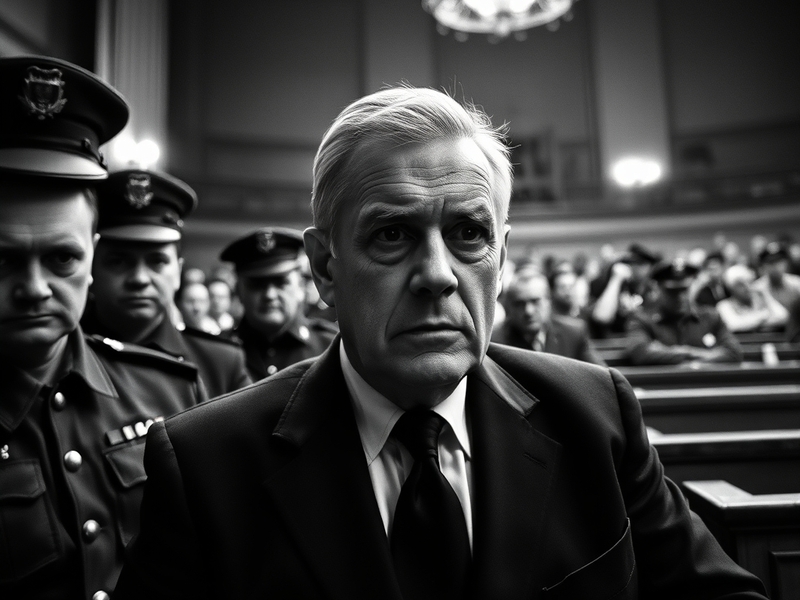
Mladić’s trial, which began in 2011 and concluded in 2017, was one of the most closely watched legal proceedings in modern history. Prosecutors presented a mountain of evidence, including intercepted communications, witness testimonies, and forensic reports. The defense, meanwhile, sought to portray Mladić as a misunderstood military leader fighting for his people’s survival. Yet, the judges ultimately sided with the prosecution, delivering a verdict that reaffirmed the gravity of his crimes.
The life sentence handed down to Mladić in November 2017 was met with relief by victims’ families and human rights organizations. For many, it represented a belated form of justice, though one that could never fully compensate for the loss of life. Mladić’s death in 2021, while in custody, closed a chapter but did little to heal the divisions his actions had deepened. His legacy endures in the political rhetoric of nationalist parties across the Balkans, where figures continue to invoke his name as a symbol of resistance.
The international response to Mladić’s crimes also raised questions about the effectiveness of global justice mechanisms. The ICTY, though groundbreaking in its scope, faced criticism for its slow pace and perceived bias. Some argued that the tribunal’s focus on Serb perpetrators overlooked crimes committed by other factions. Others pointed to the lack of prosecutions for NATO forces or Western governments, whose inaction during the war remains a contentious issue. The debate over Mladić’s legacy is, in many ways, a debate over how the world chooses to remember—and forget—the atrocities of the 20th century.
Lessons from the Past: Confronting Nationalism and Memory
The story of Ratko Mladić is more than a tale of war and justice; it is a cautionary example of how nationalism, when left unchecked, can spiral into violence. The Yugoslav Wars were not inevitable but the result of deliberate political choices, fueled by historical grievances and external interventions. Mladić’s rise to power was made possible by a climate of fear and division, where ethnic identity was weaponized to justify aggression. His case underscores the dangers of dehumanizing political opponents and the ease with which societies can be manipulated into conflict.
Europe’s response to Mladić’s crimes also highlights the challenges of transitional justice. While the ICTY set a precedent for holding individuals accountable, it could not erase the trauma of the survivors or bridge the gaps between communities. Reconciliation in the Balkans remains an unfinished project, hindered by political leaders who exploit historical narratives for electoral gain. The EU’s efforts to stabilize the region have included demands for cooperation with war crimes tribunals, yet progress has been uneven. Countries like Serbia have made strides in acknowledging some aspects of their wartime past, but denialism persists.
For younger generations in the Balkans, the lessons of the 1990s are both urgent and distant. Many have grown up in a post-war reality, where the scars of conflict are visible in divided cities and segregated schools. Initiatives aimed at fostering dialogue and cross-community projects offer hope, but they often struggle against the inertia of nationalist politics. The legacy of Mladić, therefore, is not confined to the past; it is a living presence that shapes the present and future of the region.
Globally, Mladić’s case serves as a reminder of the importance of upholding international law and human rights. The principle that no leader is above accountability—no matter how powerful—is a cornerstone of the rules-based order. Yet, the world has seen too many instances where this principle has been ignored, from Syria to Myanmar. The fight against impunity is ongoing, and Mladić’s conviction stands as one of its most significant victories. It is a testament to the perseverance of survivors, activists, and legal advocates who refuse to let history be rewritten.
The story of Ratko Mladić is a dark one, but it is also a story of resilience. It is a reminder that justice, though delayed, can prevail. It is a call to remember the victims and to ensure that their suffering is never forgotten. And it is a warning about the dangers of nationalism and the fragility of peace. As Europe continues to grapple with its past, Mladić’s legacy remains a stark lesson in the cost of division—and the enduring power of memory.