When Roller Coasters Meet Brain Surgery: The Six Flags Incident That Rewrote Park Safety
In a rare but chilling incident last summer, a roller coaster accident at Six Flags Great Adventure left a visitor with serious head injuries—an ordeal that required emergency brain surgery and raised urgent questions about ride safety protocols. The victim, a 25-year-old man, was riding the Jersey Devil Coaster when his restraint system allegedly failed, resulting in a violent collision with the coaster’s structure. What followed was not just a medical emergency but a legal and operational nightmare that has since prompted industry-wide reevaluation.
The accident unfolded on July 22, 2023, during the park’s peak season. Witnesses described hearing a loud bang as the coaster reached its highest point. Video footage later showed a rider’s head striking a support beam following what appeared to be a restraint malfunction. Emergency responders performed field surgery on-site before transporting the man to a nearby trauma center, where doctors successfully stabilized him. His recovery timeline remains uncertain, but the incident has become a cautionary tale about the limits of mechanical safety in high-speed thrill rides.
The Science Behind the Surgery
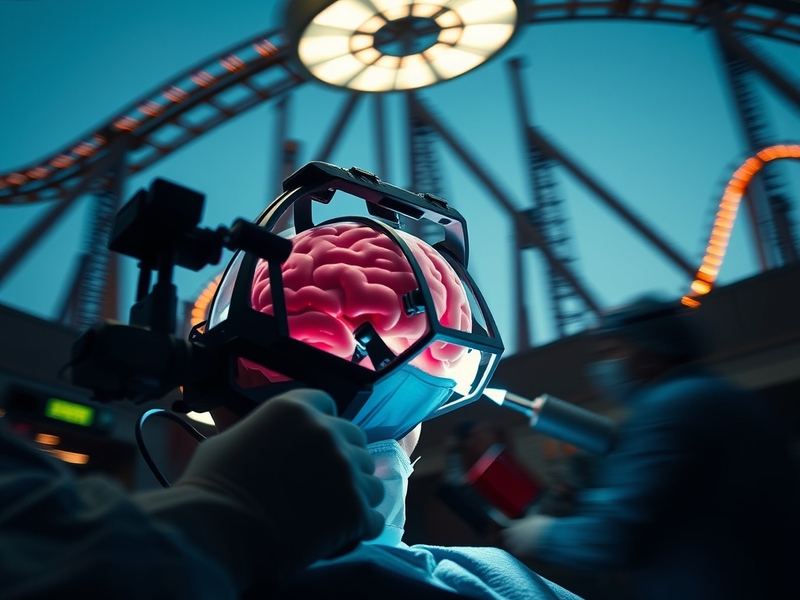
Emergency brain surgery on a roller coaster victim is not just dramatic—it’s technically complex. Neurosurgeons at Robert Wood Johnson University Hospital in New Jersey performed a decompressive craniectomy, a procedure that involves removing part of the skull to relieve pressure on the brain caused by swelling or bleeding. Such operations are typically reserved for severe traumatic brain injuries (TBIs) and require precision under extreme time constraints.
“The forces involved in a roller coaster collision can generate G-forces equivalent to a car crash at 50 miles per hour,” said Dr. Lisa Chen, a trauma surgeon unaffiliated with the case. “When the head strikes a solid structure, the brain can ricochet inside the skull, causing contusions, hemorrhages, or diffuse axonal injury—all of which demand immediate intervention.” The patient’s survival underscores the critical role of rapid trauma response in recreational settings, but it also highlights the physical vulnerabilities even modern safety systems can’t always prevent.
Park Safety: Where Engineering Meets Human Error
Six Flags Great Adventure has long marketed the Jersey Devil Coaster as one of the safest in the industry, with redundant restraints and real-time monitoring. Yet this accident exposed critical gaps. Investigations by the New Jersey Division of Consumer Affairs revealed that while the ride’s lap bar and over-the-shoulder harness were properly engaged, a misalignment in the restraint lock mechanism may have allowed partial disengagement during the ride’s most violent inversion. The park has since implemented enhanced sensor checks and third-party audits for all high-thrill rides.
The incident is not isolated. According to the U.S. Consumer Product Safety Commission (CPSC), amusement ride-related injuries sent over 4,000 people to emergency rooms in 2022, with head and neck trauma accounting for nearly 30% of cases. While fatal incidents are rare, non-fatal injuries involving brain trauma often lead to long-term cognitive and emotional consequences. This has intensified calls for mandatory ride-specific injury databases and standardized emergency response training at amusement parks nationwide.
Legal and Financial Fallout: A Park Under Scrutiny
The victim has filed a lawsuit against Six Flags, alleging negligence in ride design, inspection, and staff training. Legal experts anticipate a protracted battle over liability, especially given the park’s history of prior safety violations. Court documents reveal that the Jersey Devil Coaster had passed state inspections just weeks before the accident, yet internal maintenance logs showed intermittent issues with restraint calibration dating back to 2021.
Financially, the incident has cost Six Flags millions in legal fees, public relations damage control, and reputational harm. Stock prices dipped slightly in the weeks following the accident, though analysts note the company’s diversified portfolio mitigates long-term impact. Still, the case has emboldened advocacy groups like the Amusement Park Safety Organization, which is pushing for federal oversight akin to aviation or automotive safety standards.
Broader Implications: Are Amusement Parks Doing Enough?
This incident forces a broader conversation: are amusement parks prioritizing thrills over safety? While most parks adhere to strict state regulations, enforcement varies widely. Some states, like California and Florida, conduct unannounced inspections, while others rely on self-reported data from operators. The lack of a unified federal standard creates a patchwork system where safety can depend more on location than engineering.
Technology may offer a solution. Emerging ride systems now incorporate AI-driven sensors that detect rider movements in real time and adjust speed or halt operations if anomalies are detected. Some parks have also adopted augmented reality (AR) training for staff, simulating emergency scenarios like restraint failures or medical crises. These innovations could redefine safety culture in the industry—but only if widely adopted.
Meanwhile, the Jersey Devil Coaster remains closed indefinitely. Six Flags has installed temporary lap bar restraints on lower-intensity rides and increased the frequency of manual inspections. Park officials declined to comment on whether the coaster will reopen, stating only that “guest safety remains our top priority.”
What Riders Should Know Before Taking the Plunge
Roller coasters remain one of America’s most popular forms of entertainment, but the thrill comes with inherent risks. Before you strap in, consider these key safety points:
- Check the ride’s safety record: Look for inspection reports or injury data on state consumer protection websites.
- Observe the restraint system: Ensure it fits snugly and engages automatically without manual assistance.
- Follow height and health restrictions: Many rides have minimum height requirements and warn against riders with heart conditions or neck injuries.
- Report any issues immediately: If a restraint feels loose or a ride seems unsafe, notify staff before boarding.
- Trust your instincts: If something feels off, step off the ride. Parks are legally required to accommodate reasonable concerns.
While the odds of a catastrophic injury remain low, this incident proves that even the most advanced systems can fail. Vigilance—and awareness—remain the best defenses.
A Call for Unified Action
The Six Flags accident was a wake-up call disguised as a headline. It exposed not just a mechanical flaw, but systemic shortcomings in how we regulate and perceive recreational safety. As amusement parks race to integrate AI and real-time monitoring, the question lingers: will progress keep pace with public trust?
For now, the roller coaster industry stands at a crossroads. One path leads to greater transparency and technological integration. The other risks repeating past mistakes in a future headline. The choice is clear—and the stakes could not be higher.