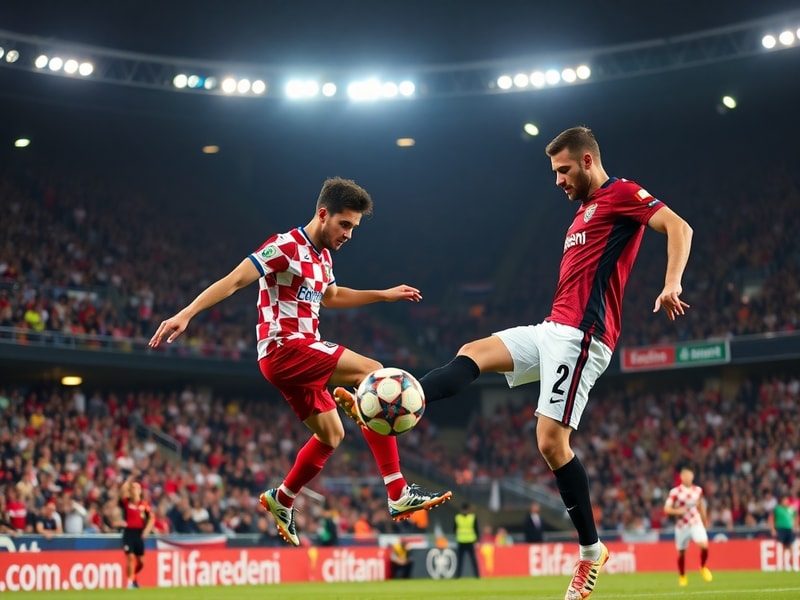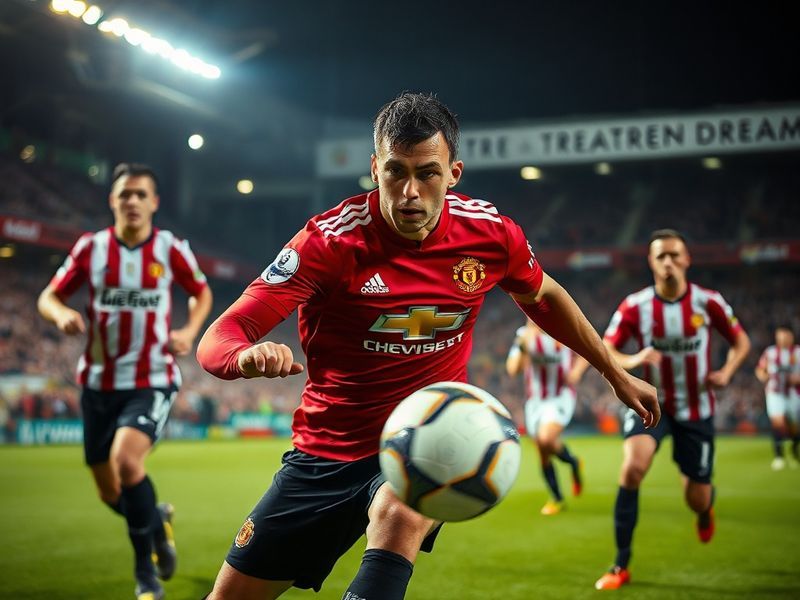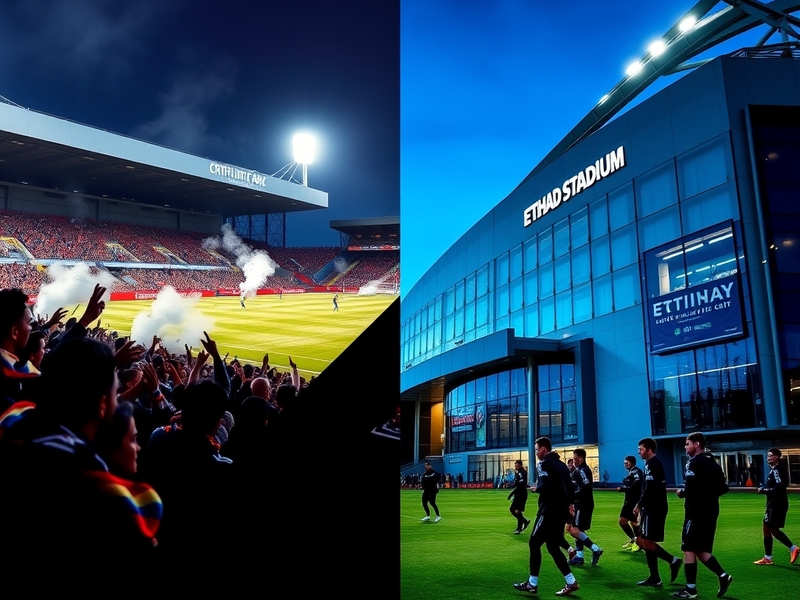
When Manchester City face Crystal Palace at the Etihad Stadium on a cold Tuesday evening in February, the match becomes more than just another fixture in the Premier League calendar. It’s a collision of philosophies, a clash between two clubs with vastly different trajectories. On one side stands Manchester City, the modern footballing juggernaut bankrolled by Abu Dhabi’s oil wealth, led by Pep Guardiola and stacked with global superstars. On the other is Crystal Palace, the south London club built on stubborn resilience, community grit, and the uncompromising vision of Roy Hodgson—then in his mid-70s—who once again found himself marshalling a team far bigger than its budget.
The contrast is stark, yet the rivalry is real. Palace have become the Premier League’s most consistent overachievers, repeatedly defying expectations by surviving relegation battles while developing talent on a shoestring. City, meanwhile, have redefined what it means to dominate a domestic league, collecting trophies like a conveyor belt and setting new standards for technical excellence. When these two sides meet, the tactical battle isn’t just about points—it’s about identity, ambition, and the future of English football.
The evolution of Manchester City: From also-rans to global powerhouse
Manchester City’s rise from also-ran to serial champions is one of the most remarkable transformations in modern sport. For decades, the club was defined by near-misses: FA Cup triumphs in 1969 and 2011, but a league title drought stretching back to 1968. That changed in 2008 when Sheikh Mansour bin Zayed Al Nahyan’s Abu Dhabi United Group took over, injecting not just capital but ambition, infrastructure, and a clear blueprint for success.
The appointment of Roberto Mancini in 2009 marked the first step. Though his reign ended in frustration, it planted seeds that would later bear fruit under Manuel Pellegrini and, crucially, Pep Guardiola. When City won their first Premier League title in 44 years in 2012—snatching it with Sergio Agüero’s last-gasp strike against QPR—they announced themselves as serious contenders. But the real revolution came under Guardiola, who arrived in 2016 with a reputation for redefining football’s tactical frontiers.
Under Guardiola, City didn’t just win—they played a brand of football that felt like a masterclass in possession, positional play, and pressing. They won 100 points in 2017–18, a record that still stands. They became the first English club to reach a Champions League final under his guidance in 2021. And in 2023, they completed a historic Treble, lifting the Premier League, FA Cup, and Champions League in the same season. Their stadium, once a symbol of underachievement, now hosts sell-out crowds and world-class facilities.
Yet this dominance has come with controversy. The club has faced scrutiny over alleged financial irregularities, including the 115 alleged breaches of financial rules that led to a points deduction in 2023—later overturned on appeal. Critics argue that City’s success is built on more than just sporting merit. Supporters counter that the club has simply played the game better, leveraging smart recruitment, elite coaching, and cutting-edge analytics. Whatever the truth, City’s model has forced every rival to rethink what’s possible in English football.
Crystal Palace: The art of survival and the power of identity
While Manchester City have rewritten the rulebook, Crystal Palace have clung to an older, more human philosophy: survival through unity, pragmatism, and heart. Founded in 1905, Palace have spent most of their history in the top two tiers of English football, but never as consistent title contenders. Instead, they’ve carved a reputation as the league’s ultimate underdog—resilient, resourceful, and stubbornly proud.
Palace’s story is one of near-misses and last-day escapes. They’ve been relegated from the Premier League seven times, only to bounce back immediately each time—most recently in 2017 under Sam Allardyce and again in 2019 under Hodgson. Their survival is rarely about flair or star power. It’s about organisation, set-pieces, and a refusal to panic. Hodgson, who managed Palace into his late 70s, became a symbol of this ethos. His teams were often criticised for being dull, but they were never dull to watch from the perspective of a fan watching from the stands at Selhurst Park.
The club’s identity is deeply rooted in its community. Selhurst Park, one of England’s oldest grounds, remains a fortress built on noise and loyalty. Palace fans are known for their passion, humour, and unshakable belief—even when the club is bottom of the table in December. The rise of Wilfried Zaha, a local lad who became a global star while refusing multiple transfer bids, only strengthened that bond. Palace’s recent history is also one of smart recruitment in the lower leagues and the development of young talent—players like Eberechi Eze and Michael Olise who fit the club’s style and ethos.
Financially, Palace operate on a fraction of City’s budget. In the 2022–23 season, their wage bill was around £100 million—less than a tenth of what Manchester City spent. Yet they consistently overperform. In 2022–23, they finished 11th, comfortably mid-table. In 2023–24, they pushed for a Europa League spot under new manager Oliver Glasner, showing that their model can still compete.
Palace’s success is not about trophies or global branding. It’s about proving that a club can thrive without billionaire owners, without a state-of-the-art training complex, and without a squad of superstars. It’s about football as a communal experience—something increasingly rare in an era dominated by financial might.
Tactical contrasts and psychological battles
When City and Palace meet, the tactical battle is less about innovation and more about extremes. Guardiola’s team dominates possession, controls tempo, and stretches play with intricate passing sequences. Palace, under Hodgson or Glasner, typically set up in a compact 4-4-2 or 4-3-3, prioritising defensive solidity and quick transitions on the break.
This creates a fascinating dynamic. City’s full-backs—often João Cancelo or Kyle Walker—are encouraged to push high up the pitch, offering width and overloads. Palace’s wingers, however, are tasked with tracking back to stifle those overlaps, turning defence into attack in an instant. The midfield battle becomes a chess match: Rodri’s ability to shield the defence and dictate play is tested by Palace’s midfielders, who must balance aggression with discipline.
Psychologically, the clash is equally compelling. City enter as favourites, expected to control the game. But Palace have a habit of frustrating elite sides. In a 2022 FA Cup quarter-final, they held Manchester United to a goalless draw at Old Trafford before winning on penalties. In the league, they’ve beaten City at the Etihad in 2017 and held them to draws in recent seasons, often through disciplined defending and set-piece prowess.
Palace’s players know they can’t out-possess City. So they don’t try. Instead, they focus on winning the second balls, exploiting spaces in transition, and capitalising on set-pieces—where they consistently score more goals than their possession stats would suggest. City, meanwhile, must adapt to a physical, direct opponent that refuses to surrender space. It’s a test of adaptability, something Guardiola’s side has mastered over the years—but not always against the league’s most resilient underdogs.
Broader implications: What this rivalry says about the future of English football
The City vs Palace dynamic isn’t just a football match. It’s a microcosm of the forces reshaping English football. On one side, you have the globalised, data-driven, commercially astute model—where success is measured in trophies, revenue, and global fanbase. On the other, you have the traditional, community-focused, underdog model—where success is measured in survival, local pride, and the joy of defying the odds.
This clash has implications for the Premier League’s competitive balance. While City and other elite clubs like Arsenal and Liverpool push the boundaries of performance, clubs like Palace, Brentford, and Brighton prove that success can still be achieved without vast wealth. The introduction of the Premier League’s Profit and Sustainability Rules (PSR) in 2013 was meant to level the playing field. But in practice, it has forced clubs to become more efficient rather than less dominant. Palace, for instance, have managed to stay compliant while still spending wisely—a testament to smart financial management.
There’s also a cultural dimension. City’s rise has coincided with the globalisation of the Premier League. Their squad features players from Brazil, Spain, Argentina, Belgium, and beyond. Their style is influenced by European football, particularly the tiki-taka of Barcelona and the positional play of Bayern Munich. Palace, by contrast, have a more local flavour. Their fanbase is diverse but rooted in south London. Their best players often come through the academy or lower leagues. Their style is pragmatic, often described as “English” in its directness and physicality.
But perhaps the most important question is this: Can the underdog model survive in an era of escalating costs and financial fair play? Palace’s recent struggles—including a dip in form under new ownership and changing managerial styles—suggest that even resilience has limits. The club was sold to American investors in 2015, and while the new owners have invested in infrastructure and commercial growth, they’ve also faced criticism for prioritising profit over ambition. The challenge now is to balance growth with the club’s identity.
For supporters of clubs like Palace, the dream is to one day challenge for Europe, to build a squad that can compete with the elite while staying true to its roots. For City, the challenge is to maintain their standards without alienating the football purists who see the club as a symbol of everything that’s wrong with modern football. The rivalry between these two clubs, then, is more than a contest on the pitch. It’s a debate about what football should be—and who it should serve.
Key takeaways from the City vs Palace rivalry
- Philosophical divide: City represent global ambition and technical excellence; Palace embody resilience and community identity.
- Financial disparity: City’s budget dwarfs Palace’s, yet both clubs achieve success in different ways.
- Tactical contrast: Guardiola’s possession-based football vs Palace’s pragmatic, set-piece-heavy approach.
- Psychological edge: Palace have repeatedly frustrated City, proving that underdogs can disrupt even the most dominant teams.
- Broader impact: The rivalry highlights the tension between financial power and traditional values in modern football.
As the Premier League continues to evolve, the City vs Palace fixture remains a reminder that football is not just about who spends the most or signs the biggest stars. It’s about heart, strategy, and the unbreakable bond between a club and its community. Whether it’s a midweek league match or an FA Cup tie, these clashes offer something rare in modern football: a genuine sense of stakes, identity, and narrative. And in an era where football often feels like a corporate spectacle, that’s worth celebrating.