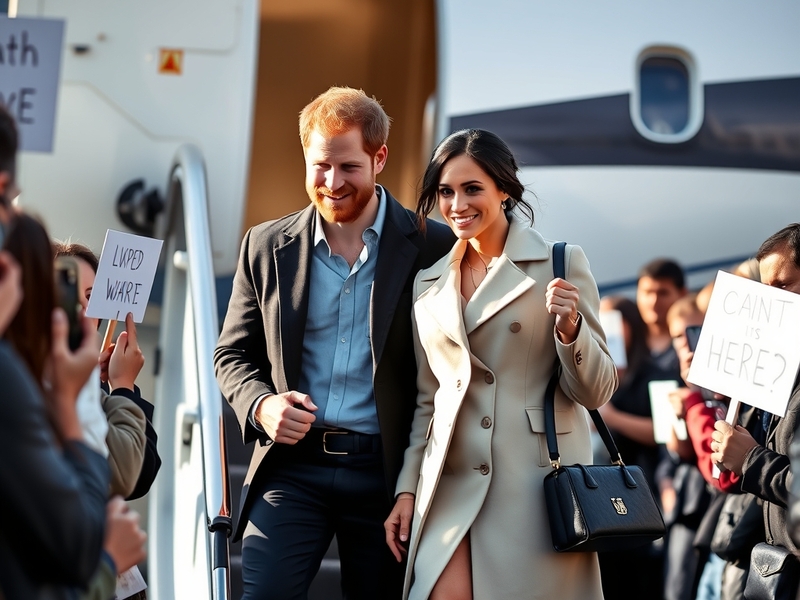
Prince Harry and Meghan Markle’s return to the United Kingdom this spring wasn’t just a personal homecoming—it was a carefully choreographed moment that carried the weight of global attention, decades of royal tradition, and the unrelenting scrutiny of the modern media landscape. Their trip, spanning late April through early June, marked their most extensive visit since stepping back as senior royals in 2020. From London to Scotland, Wales to Northern Ireland, the couple navigated a delicate balance between public engagement, private reflection, and the enduring fascination of millions worldwide.
The journey began in London, where they were greeted by crowds outside Buckingham Palace and Kensington Palace. While not official royal engagements, their presence at events like the Trooping the Colour ceremony and a surprise appearance at a charity polo match in Windsor signaled a softening in their relationship with the monarchy—at least in the court of public opinion. Harry’s father, King Charles III, was notably absent from public photos with the couple, underscoring the complexities that remain beneath the surface of their reconciliation.
Public Reception and Media Frenzy
Across the UK, reactions were mixed but dominated by curiosity and cautious optimism. In cities like Edinburgh and Cardiff, thousands lined the streets to catch a glimpse of the Duke and Duchess of Sussex, their smiles visible but their body language guarded. Local press coverage oscillated between admiration for their advocacy work—particularly on mental health and children’s welfare—and skepticism about their motives. Social media platforms erupted with debates over whether their visit was a genuine step toward healing or a calculated PR move to rebuild their global brand.
The couple’s tour was not without controversy. A planned visit to a London school was met with protests from a small but vocal group accusing them of hypocrisy regarding their treatment of the press. Meanwhile, British tabloids continued their relentless coverage, dissecting everything from Meghan’s fashion choices to Harry’s choice of footwear during engagements. The tension between public adoration and media intrusion was palpable, a reminder of the forces that once drove the couple to seek distance from royal life.
A Focus on Purpose and Legacy
Unlike earlier royal tours—often defined by ceremonial duty—Harry and Meghan’s itinerary reflected a deliberate focus on impact. In Scotland, they visited a mental health retreat supported by their foundation, Archewell, and met with young people benefiting from their youth leadership programs. In Wales, they spent time with families navigating grief, a cause close to Meghan’s heart following the loss of her mother. These stops were less about spectacle and more about substance, aligning with the couple’s stated mission to use their platform for meaningful change.
Their visit also coincided with the launch of their new Netflix documentary series, offering an unprecedented behind-the-scenes look at their lives in Montecito, California. While critics questioned the timing—amidst their UK tour—the project served as a narrative counterbalance to years of tabloid speculation. It allowed the couple to present their own story on their terms, emphasizing family, philanthropy, and personal growth over palace intrigue.
Global Echoes of a Royal Return
The couple’s presence in the UK was felt far beyond its borders. International media outlets closely followed their every move, with outlets from Tokyo to Toronto analyzing body language, wardrobe, and even the subtle shifts in tone during interviews. Their global fan base, often dubbed “Sussex Squads” online, celebrated their return as a victory for authenticity in an era of curated royal imagery. Meanwhile, critics argued that their influence, though diminished in the UK, remained formidable in the United States and beyond, where they continue to shape conversations around modern monarchy and celebrity culture.
Their trip also intersected with broader cultural conversations. As the UK grapples with questions of identity post-Brexit and amid debates over colonial legacies, Harry and Meghan’s biracial identities and American roots add another layer to the national dialogue. Their visit prompted reflections on what it means to be British today—especially for younger generations who see them as symbols of progress within institutions long resistant to change.
What Comes Next?
As the final leg of their tour concluded in Northern Ireland, where they visited a peace-building project, the question lingers: Was this return a turning point or merely a pause in a longer journey? The royal family has shown signs of cautious reintegration, with the King acknowledging the Sussexes’ contributions in his Christmas message last year. Yet the path to full reconciliation remains uncertain.
What is clear is that Harry and Meghan’s UK return was never just about geography. It was a statement—of resilience, of purpose, and of a new kind of royal engagement in the 21st century. Whether it leads to lasting rapprochement or remains a fleeting chapter may depend less on their actions and more on the evolving expectations of a world that watches, judges, and remembers.
The Cultural Significance of Royal Returns
Historically, royal returns to the UK after periods of absence have often been charged with symbolism. Queen Elizabeth II’s post-war return in 1947 marked a nation’s hope after austerity. Princess Diana’s solo visits in the 1980s and 1990s reshaped public perceptions of the monarchy’s emotional accessibility. Harry and Meghan’s tour fits into this tradition but also diverges from it—rooted not in national crisis or celebration, but in personal and institutional transformation.
What makes this moment particularly resonant is the role of digital media. Unlike past royal tours, which unfolded through carefully controlled broadcasts and press releases, this visit was amplified—and sometimes distorted—by social platforms. Videos of their interactions went viral within minutes. Memes and critiques proliferated across TikTok and Twitter, turning every handshake and speech into digital artifacts subject to global interpretation. This shift underscores a broader truth: in the 21st century, even royal returns are co-authored by the public.
Lessons from the Media Storm
The couple’s visit laid bare the ongoing tension between privacy and publicity that defines modern royalty. While the British press has shown some restraint in recent years—partly due to legal pressures and changing public attitudes—the tabloid culture persists. Harry and Meghan’s engagement with mainstream media during the trip, including interviews with the BBC and ITV, suggests a strategic pivot: control the narrative through selective access rather than avoidance.
This approach reflects a broader trend among public figures seeking to reclaim their image. From Oprah Winfrey to Prince Harry himself, the power of controlled storytelling has become a vital tool in countering misinformation and building trust. Yet it remains a high-wire act—one misstep, one misquoted line, and the cycle of scrutiny begins anew.
What the Future Holds
The most compelling question now is whether this visit will lead to more formal integration into royal duties—or whether it signals the final chapter of a complicated relationship between the Sussexes and the institution they left. The monarchy’s survival depends on its ability to evolve, and Harry and Meghan represent both a challenge and an opportunity in that evolution.
One thing is certain: their return has reminded the world that the British royal family, for all its grandeur and tradition, is still a family—one that argues, reconciles, and occasionally makes headlines over breakfast. And in an age where authenticity is currency, that human dimension may be their greatest strength—or their most enduring vulnerability.