Global Tensions Rise as Iran Escalates Military Strikes
The latest escalation in the Middle East has drawn international concern as Iran launched a series of targeted strikes against what it described as “terrorist threats” and “hostile positions.” The operations, which began in the early hours of Sunday, mark one of the most significant military actions taken by Tehran in recent years. While Iranian officials framed the strikes as a defensive measure, regional allies and global powers have responded with measured caution, highlighting the fragile balance of power in the region.
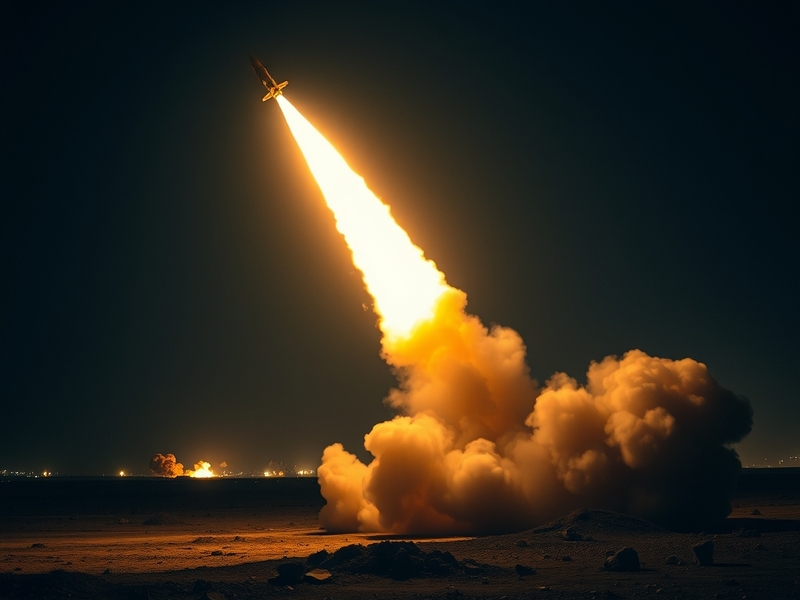
According to state-run Iranian media, the strikes targeted installations associated with the Islamic State in eastern Syria and Kurdish militant groups in northern Iraq. The Iranian Revolutionary Guard Corps (IRGC) confirmed the deployment of ballistic missiles and drones, emphasizing their precision in avoiding civilian casualties. However, independent analysts have raised questions about the long-term implications of such actions, particularly as they risk drawing neighboring countries into a broader conflict.
The timing of the strikes coincides with heightened diplomatic tensions between Iran and Western nations, particularly the United States and its allies in the Gulf Cooperation Council. In recent months, maritime disputes in the Strait of Hormuz have intensified, while cyberattacks and proxy conflicts have further strained relations. Observers note that Iran’s actions may be an attempt to assert dominance in the region amid internal economic pressures and ongoing protests.
Regional Reactions: A Divided Response
The international community’s reaction has been swift but fragmented. The United States, through a statement from the White House, reiterated its commitment to “defending allies and countering destabilizing behavior” in the Middle East. Meanwhile, Russia and China have adopted a more cautious tone, calling for restraint and dialogue. European Union officials expressed concern over the potential for further escalation, urging all parties to avoid actions that could spiral into a larger confrontation.
Within the Middle East, responses have varied significantly. Saudi Arabia, a long-standing rival of Iran, condemned the strikes while emphasizing the need for regional stability. Iraq, which has been caught in the crossfire of multiple conflicts, called for calm and urged all parties to respect its sovereignty. Turkey, meanwhile, reiterated its position as a mediator, offering to facilitate discussions between the involved parties.
Analysts point to a growing sense of unease among Arab Gulf states, many of which have increasingly relied on security partnerships with the U.S. to counter Iranian influence. The strikes have reignited debates about the effectiveness of deterrence strategies and the role of regional alliances in maintaining peace. Some analysts suggest that Iran’s actions may be a calculated move to test the resolve of its adversaries and probe for weaknesses in their defenses.
Key Players and Their Stakes
The geopolitical chessboard in the Middle East is more complex than ever, with each actor holding distinct interests and motivations. Below is a breakdown of the primary stakeholders and their stakes in the current crisis:
- Iran: Seeks to reinforce its regional influence while addressing internal challenges, including economic instability and domestic unrest.
- United States: Aims to maintain its strategic presence in the Middle East while balancing support for allies like Israel and Saudi Arabia with efforts to avoid direct conflict.
- Israel: Views Iran’s military actions as a direct threat, particularly given the proximity of strike zones to its borders. The Israeli government has warned of a “zero-tolerance” policy toward any perceived aggression.
- Saudi Arabia: Faces a delicate balancing act, seeking to counter Iranian influence without provoking further destabilization in the region.
- Russia and China: Both nations have deepened ties with Iran in recent years, leveraging the country’s strategic location and resources to advance their own geopolitical agendas.
The interplay of these interests underscores the delicate nature of the current crisis. While some actors may seek to de-escalate tensions, others may view the strikes as an opportunity to advance their own agendas, further complicating efforts to restore stability.
Cultural and Economic Reverberations
The immediate impact of the strikes extends beyond the battlefield, affecting everything from global oil markets to cultural exchanges in the region. Oil prices have seen a sharp uptick, with Brent crude briefly surpassing $90 per barrel as traders anticipate potential disruptions to supply chains. The volatility has sent ripples through economies already grappling with post-pandemic recovery and inflationary pressures.
Culturally, the escalation has reignited debates about the portrayal of Iran in Western media. Over the past decade, Iranian cinema, music, and literature have gained international acclaim, challenging stereotypes and fostering cross-cultural understanding. However, the current crisis threatens to overshadow these achievements, reinforcing narratives of conflict and division. Iranian artists and intellectuals have expressed frustration over the media’s tendency to reduce their country to geopolitical tensions, emphasizing the richness of its cultural heritage.
The economic fallout is not limited to oil markets. Tourism, a vital industry for many Middle Eastern countries, has already begun to suffer as travelers reconsider plans amid safety concerns. In Iran, which has seen a gradual recovery in tourism following the lifting of sanctions, the strikes could reverse recent gains. The country’s historic sites and vibrant cultural festivals may once again become casualties of political strife.
What Comes Next? Scenarios and Uncertainties
As the dust settles on the initial strikes, the question on everyone’s mind is: what happens now? The possibilities range from diplomatic breakthroughs to full-blown regional conflict, with numerous shades of gray in between. One potential scenario involves backchannel negotiations facilitated by neutral parties, such as Oman or Switzerland, which have historically played a role in easing tensions between Iran and the West.
Another possibility is a tit-for-tat cycle of retaliation, where each strike provokes a response that escalates the conflict further. Such a scenario could drag in other regional actors, including Hezbollah in Lebanon or Houthi rebels in Yemen, turning localized conflicts into a broader conflagration. Military analysts warn that even limited strikes carry the risk of unintended consequences, particularly in areas with dense civilian populations or where multiple armed groups operate.
For now, the international community remains on high alert. The United Nations Security Council has scheduled an emergency session, while the International Atomic Energy Agency (IAEA) has expressed concerns over the potential impact on nuclear inspections in Iran. Meanwhile, civil society groups across the Middle East are calling for calm, emphasizing the human cost of prolonged conflict.
One thing is clear: the path forward will require more than just military posturing. Sustainable solutions must address the root causes of instability, including economic inequality, political repression, and foreign interference. Without meaningful dialogue, the region risks becoming trapped in a cycle of violence that benefits no one in the long run.
As the world watches, the stakes could not be higher. The choices made in the coming weeks will shape not only the future of the Middle East but also the broader global order. Whether through diplomacy, deterrence, or sheer luck, averting disaster will demand unprecedented levels of cooperation and restraint.