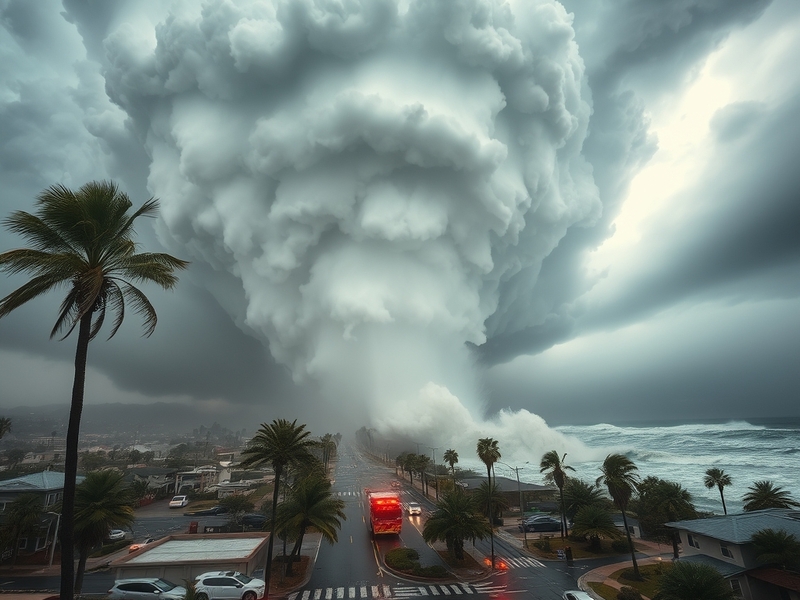
The term “Hurricane California” sounds like a contradiction in terms. California’s Mediterranean climate, characterized by mild, wet winters and warm, dry summers, typically shields the state from the tropical cyclones that batter the Atlantic and Gulf Coasts. Yet, as climate patterns shift and extreme weather events become more frequent, the possibility of a hurricane making landfall in California is no longer dismissed as pure fiction.
Scientists and emergency planners are increasingly focused on this scenario, not because it’s imminent, but because the stakes are too high to ignore. The last recorded tropical cyclone to hit California was Hurricane Kathleen in 1976, which brought heavy rain and flooding but minimal structural damage. Before that, in 1858, a hurricane brushed the southern coast near San Diego. These isolated events, however, offer little comfort when considering what a modern, more intense storm could do to a densely populated state with aging infrastructure and a fragile ecosystem.
The conversation around “Hurricane California” is less about predicting the next big storm and more about preparing for a future where such storms could become a reality. This shift in thinking reflects broader concerns about climate change, urban resilience, and the adaptability of infrastructure in the face of nature’s growing unpredictability.
Why a Hurricane in California Is Unlikely—But Not Impossible
Tropical cyclones thrive on warm ocean water, typically temperatures of 80°F (27°C) or higher. The waters off California’s coast, fed by the cold California Current, rarely reach those temperatures. This natural barrier has historically protected the state from hurricanes. However, climate change is altering ocean temperatures, and scientists warn that the Pacific could see more frequent periods of unusually warm water, creating potential pathways for storms.
A 2018 study published in the American Meteorological Society’s journal found that climate models project a 10-20% increase in the likelihood of tropical cyclones forming in the eastern Pacific by the end of the century. While these storms are unlikely to reach California as full-fledged hurricanes, they could still bring devastating rainfall, storm surges, and flooding—effects that would mimic those of a tropical system.
Another factor is the jet stream. Hurricanes in the Atlantic are often steered away from the U.S. East Coast by the jet stream, which can push storms out to sea. In California, the jet stream typically flows from west to east, away from the coast, which further reduces the risk of a direct hit. However, if the jet stream weakens or shifts due to climate change, it could theoretically allow a storm to curve back toward the state.
Emergency planners also point to the 2015 Hurricane Patricia, the most intense tropical cyclone ever recorded in the Western Hemisphere, which weakened significantly before making landfall in Mexico. This illustrates how even the strongest storms can lose intensity quickly when encountering cooler waters or wind shear. Yet, Patricia also demonstrated how quickly weather patterns can change, leaving little time for preparation if a similar storm were to approach California.
The historical record provides some perspective. Since 1900, only two tropical cyclones have made direct landfall in California: a tropical storm in 1939 and Hurricane Kathleen in 1976. Both caused significant flooding but relatively little damage compared to storms in other regions. Still, these events serve as a reminder that California is not entirely immune to tropical weather systems.
The Potential Impact of a Hurricane in California
If a hurricane or tropical storm were to make landfall in California today, the consequences could be severe. The state’s infrastructure, much of which was built decades ago, is not designed to withstand the kind of rainfall, wind, or storm surges that a tropical system could bring. Urban areas like Los Angeles, San Diego, and Santa Barbara are particularly vulnerable due to their proximity to the coast and high population density.
One of the most immediate threats would be flooding. California’s dry climate means that even moderate rainfall can overwhelm drainage systems, leading to flash floods and landslides. A tropical storm could dump several inches of rain in a short period, overwhelming rivers, creeks, and storm drains. The 2023 atmospheric river events, which brought record-breaking rainfall to the state, already demonstrated how vulnerable California’s infrastructure is to extreme weather.
Wind damage is another concern. While a hurricane hitting California would likely be downgraded to a tropical storm by the time it made landfall, sustained winds of 50-70 mph could still topple trees, damage buildings, and knock out power for millions. The 2019 power outages in California, which left hundreds of thousands without electricity for days due to extreme heat and wildfires, offer a glimpse of what even a weakened storm could do to the grid.
Storm surges, though typically less severe in California than in the Gulf or Atlantic Coasts, could still cause significant damage. The low-lying areas of Orange County, for example, are particularly susceptible to flooding from storm surges. A 2017 study by the U.S. Geological Survey found that a Category 1 hurricane could produce storm surges of up to 5 feet in some parts of Southern California, enough to inundate coastal roads and properties.
Beyond the immediate physical damage, a hurricane in California could have far-reaching economic and social consequences. The state is the world’s fifth-largest economy, and disruptions to ports, airports, and highways could ripple across global supply chains. Agriculture, a $50 billion industry in California, would also be at risk, particularly in regions like the Central Valley, where flooding could destroy crops and contaminate soil.
Public health would be another major concern. Floodwaters could spread contaminants, leading to outbreaks of waterborne diseases. Power outages could leave vulnerable populations without access to medical care or refrigeration for food and medicine. The mental health toll of such an event, particularly in a state already grappling with homelessness and housing insecurity, could be profound.
The following are some of the key risks associated with a hurricane or tropical storm making landfall in California:
- Flooding: Intense rainfall could overwhelm drainage systems, leading to flash floods and landslides, particularly in urban and mountainous areas.
- Wind Damage: While weakened, a tropical storm could still produce sustained winds strong enough to topple trees, damage buildings, and knock out power.
- Storm Surges: Coastal areas could experience flooding from storm surges, particularly in low-lying regions like Orange County and the San Francisco Bay Area.
- Economic Disruptions: Ports, airports, and highways could be shut down, disrupting supply chains and impacting California’s role as a global economic hub.
- Public Health Risks: Floodwaters could spread contaminants, leading to disease outbreaks, while power outages could exacerbate existing health crises.
Preparing for the Unthinkable
Despite the low probability of a hurricane hitting California, experts argue that the state cannot afford to be complacent. The increasing frequency of extreme weather events, combined with the long-term impacts of climate change, means that preparation is not just prudent—it’s essential. California has already taken steps to address some of these risks, but there is still much work to be done.
One area of focus is improving early warning systems. The National Weather Service (NWS) has invested in advanced modeling and forecasting tools to better predict the paths and intensities of tropical cyclones. These systems provide more lead time for emergency responders to evacuate residents, prepare shelters, and deploy resources. However, public awareness remains a challenge. Many Californians are unfamiliar with the risks posed by tropical storms, having never experienced one firsthand. Educating communities about evacuation routes, emergency kits, and flood risks is critical to reducing casualties and damage.
Infrastructure upgrades are another priority. California’s aging dams, levees, and drainage systems are in dire need of modernization. The near-failure of the Oroville Dam in 2017, which prompted the evacuation of nearly 200,000 people, highlighted the vulnerabilities of the state’s water infrastructure. Investing in stronger, more resilient systems could mitigate the worst effects of a tropical storm. Additionally, building codes in coastal areas could be updated to require structures that can withstand higher winds and storm surges.
Land-use planning is also a key consideration. Development in flood-prone areas, such as riverbeds and coastal plains, increases the risk of damage and displacement during extreme weather events. California has taken steps to limit construction in these zones, but loopholes and outdated zoning laws still allow for risky development. Stricter regulations, combined with incentives for relocation or flood-proofing, could reduce exposure to future storms.
The state’s emergency response plans are another area of concern. While California has robust wildfire and earthquake response protocols, its plans for tropical storms are less developed. The 2020 wildfires, which burned millions of acres and left thousands displaced, stretched emergency resources to their limits. A major hurricane could overwhelm the state’s capacity to respond, particularly if it coincides with other disasters. Coordinating between local, state, and federal agencies, as well as partnering with private sector entities, will be crucial to ensuring an effective response.
Finally, there is the question of climate change itself. While no single event can be attributed to global warming, the trend is clear: warmer oceans, more intense storms, and shifting weather patterns are all expected to continue. California’s experience with droughts, wildfires, and heatwaves offers a preview of what the future may hold. Addressing the root causes of climate change—through policies that reduce greenhouse gas emissions and promote sustainable development—is not just an environmental imperative but an economic and public health one as well.
What the Future Holds
The conversation around “Hurricane California” is not about fear-mongering; it’s about preparedness. While the odds of a direct hit remain low, the potential consequences are too severe to ignore. Climate change is reshaping the risks that states like California face, and adapting to these changes will require a combination of scientific innovation, policy reform, and public engagement.
For now, the focus remains on building resilience. California’s experience with wildfires, droughts, and earthquakes has already forced the state to rethink its approach to disaster preparedness. A tropical storm, while unlikely, is just another variable in an increasingly complex equation. By investing in early warning systems, upgrading infrastructure, and educating the public, California can reduce the risks posed by extreme weather—whether it comes in the form of a hurricane or another manifestation of a changing climate.
The lessons learned from other states that have faced devastating storms—such as Florida’s experience with Hurricane Ian in 2022 or Louisiana’s struggles with Hurricane Katrina in 2005—serve as a reminder that preparation saves lives. California may never experience a full-blown hurricane, but the state must be ready for whatever the future holds. After all, the goal of emergency planning is not to predict the next disaster but to ensure that when it comes, the state is ready to weather the storm.
For more on climate-related disasters and their broader impacts, visit our News section. To explore how extreme weather is reshaping infrastructure discussions, check out our Analysis category.