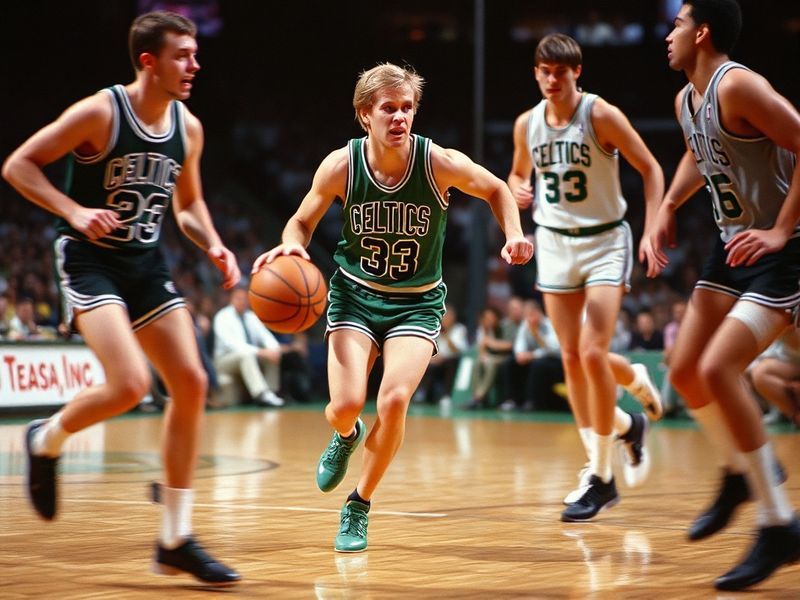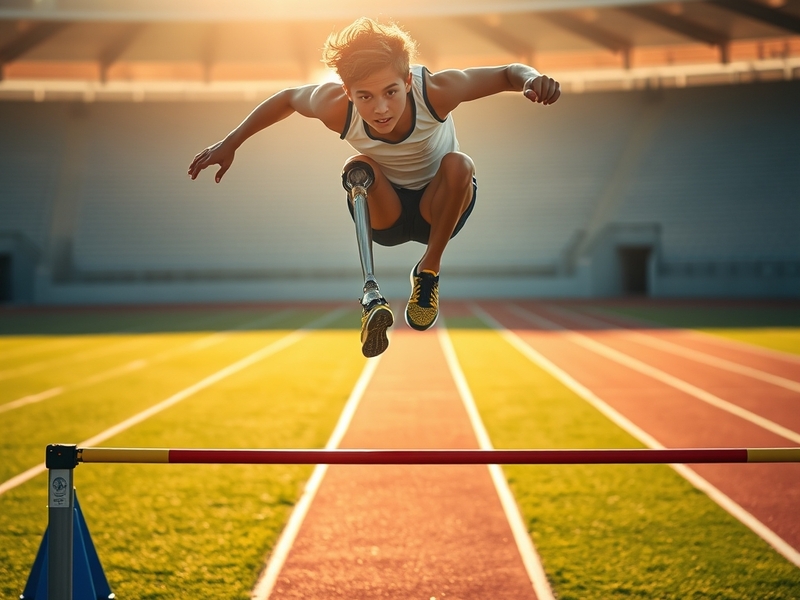
Ezra Frech isn’t just another name in the world of adaptive sports. At 16 years old, he has already rewritten what’s possible in track and field, basketball, and even Paralympic competition. Born with a rare condition called proximal femoral focal deficiency, which led to the amputation of his left leg below the knee, Frech turned his physical challenges into fuel for excellence. His story is one of relentless determination, technical innovation in prosthetics, and an unshakable belief that limitations are just starting points.
From Early Struggles to Paralympic Breakthroughs
Frech’s journey began not on the track, but in the quiet persistence of childhood. Growing up in Los Angeles, he faced the daily reality of mobility aids and surgeries. Yet by age eight, he was already sprinting on a running blade, a prosthetic designed for athletics. That same year, he broke a national record in the 100-meter dash for his age and classification. By 2019, at just 13, he became the youngest American to qualify for the World Para Athletics Championships, where he medaled in the long jump and 100 meters.
His breakthrough wasn’t just physical. It was psychological. Frech redefined what “adaptive” means in sport—not as a limitation, but as a different kind of advantage. His ability to generate explosive power off one leg defied biomechanical norms. Coaches and engineers began studying his gait and stride, not just for prosthetics design, but for insights into human movement efficiency.
Innovation in Prosthetics: A Two-Way Street
Frech’s success is inseparable from the evolution of running-specific prosthetics (RSPs). Unlike standard prosthetic legs, RSPs are engineered to store and release energy, mimicking the Achilles tendon. His early blades were heavy and rigid; today’s models are featherlight carbon-fiber composites with adjustable stiffness. Frech has worked directly with manufacturers like Össur and Ottobock, providing real-time feedback on comfort, responsiveness, and aerodynamics.
The collaboration has gone both ways. Frech’s data—gathered through motion-capture sessions and wearable sensors—has helped engineers refine blade geometry. For instance, his preference for a slightly shorter blade in sprinting led to a new category of “low-profile” RSPs that reduce ground contact time. These innovations have trickled down to recreational athletes and even non-amputee runners seeking performance gains.
Frech also advocates for broader access. He’s partnered with organizations like Dave’s Locker Sports to fund equipment grants for young adaptive athletes. “It’s not about having the best tech,” he says. “It’s about having the right tech at the right time.”
The Mental Game: Resilience Beyond the Body
While his physical feats grab headlines, Frech’s mental discipline is equally impressive. He trains up to six hours a day, balancing track, basketball, and strength conditioning. His approach blends sports psychology with a focus on incremental progress. “I don’t think about winning,” he says. “I think about mastering the process—the starts, the transitions, the recovery. If I do that better than yesterday, the results follow.”
This philosophy extends to his public presence. Frech uses social media not just for highlights, but to normalize disability in sports. His viral videos of him dunking basketballs or out-sprinting peers without prosthetics have amassed millions of views. Yet he’s careful to frame his achievements as part of a team—coaches, prosthetists, family. “I’m not a solo act,” he says. “I’m a product of everyone who believed in me before I believed in myself.”
Looking Ahead: The Next Chapter
Frech’s sights are set on the 2024 Paris Paralympics and beyond. He’s already eyeing the long jump world record, currently held by Brazil’s Ricardo Gomes. But his ambitions stretch beyond medals. He’s exploring college recruitment, with interest from powerhouse programs like UCLA and University of Arizona, which have adaptive sports initiatives. There’s also talk of a documentary series following his journey—part sports chronicle, part medical innovation saga.
Equally important is his role as a mentor. Frech visits schools and adaptive sports camps, often with his father, a former Paralympian himself. His message is simple: “Disability doesn’t define you. Your response to it does.” He’s even launched a nonprofit, The Frech Foundation, to support adaptive athletes with funding and mentorship.
As for the future of adaptive sports? Frech sees technology accelerating faster than ever. “We’re moving from carbon fiber to smart prosthetics with AI feedback,” he notes. “Imagine a blade that adjusts stiffness mid-stride based on surface or fatigue. That’s not sci-fi—that’s five years away.”
Ezra Frech’s story is still being written, one stride at a time. But one thing is clear: he isn’t just running toward the future. He’s redefining it.