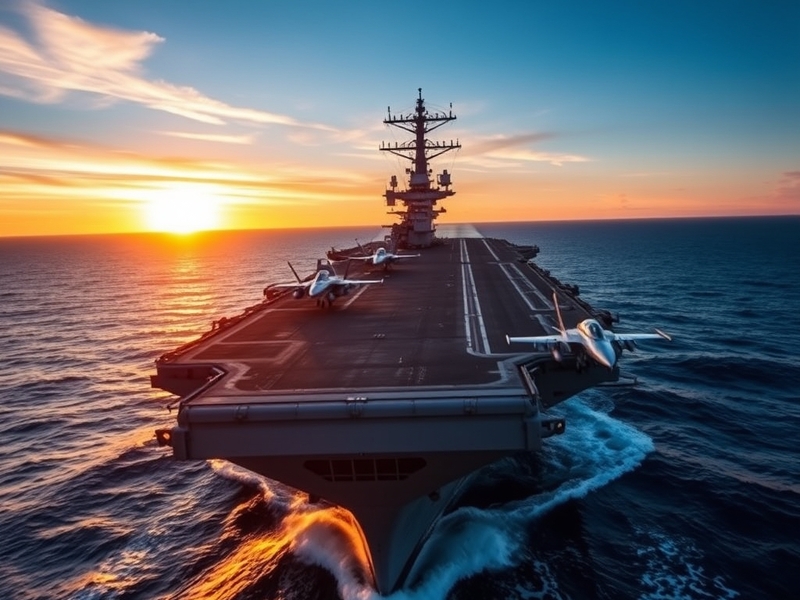
Overview of the USS Abraham Lincoln
The USS Abraham Lincoln (CVN-72) is a Nimitz-class aircraft carrier of the United States Navy, named after the 16th President of the United States, Abraham Lincoln. Commissioned in 1989, this floating fortress plays a vital role in the Navy’s mission to project power and ensure maritime security across the globe. With a displacement of over 100,000 tons and a length of 1,092 feet, it is one of the largest warships ever built.
Operational History
The USS Abraham Lincoln has a storied operational history, participating in various military engagements and humanitarian missions. Its first major deployment was during Operation Desert Shield and Desert Storm in the early 1990s, where it showcased its capabilities in combat and logistics. Since then, it has been involved in numerous conflicts, including:
- Operation Enduring Freedom
- Operation Iraqi Freedom
- Anti-piracy operations off the coast of Somalia
- Humanitarian assistance missions following natural disasters
Throughout its service, the carrier has not only acted as a combat vessel but also as a platform for diplomacy, often participating in joint exercises with allied nations and serving as a base for humanitarian missions.
Technological Advancements
The USS Abraham Lincoln is equipped with cutting-edge technology, which enhances its operational capabilities. It features the latest radar systems, advanced weapons systems, and a nuclear propulsion system that allows it to operate for extended periods without refueling. Key technological highlights include:
- Catapult System: The carrier uses a steam-powered catapult system to launch aircraft at high speeds.
- Advanced Radar: Aegis Combat System for tracking and engaging multiple targets.
- Aircraft Capacity: Can carry up to 90 aircraft, including fighter jets, helicopters, and reconnaissance planes.
These advancements make the USS Abraham Lincoln a formidable asset, capable of executing a wide range of military operations and responding to global crises effectively.
Cultural Significance
The USS Abraham Lincoln is not just a military asset; it symbolizes American naval power and technological prowess. Its presence in international waters often serves as a deterrent against potential aggressors and reassures allies of U.S. commitment to global security. The carrier has also been featured in various films, documentaries, and literature, contributing to its status in popular culture.
Moreover, the ship’s name carries a legacy of leadership and resilience, drawing parallels to President Lincoln’s own historical significance. Events aboard the carrier, such as the announcement of the end of major combat operations in Iraq by President George W. Bush in 2003, have cemented its place in modern history.
Conclusion
The USS Abraham Lincoln stands as a testament to the United States Navy’s commitment to maintaining peace and stability worldwide. Its operational history, technological advancements, and cultural significance illustrate the multifaceted role that aircraft carriers play in modern military strategy. As global challenges evolve, the Lincoln will likely continue to adapt and serve, embodying the principles of strength and readiness that define the U.S. Navy.