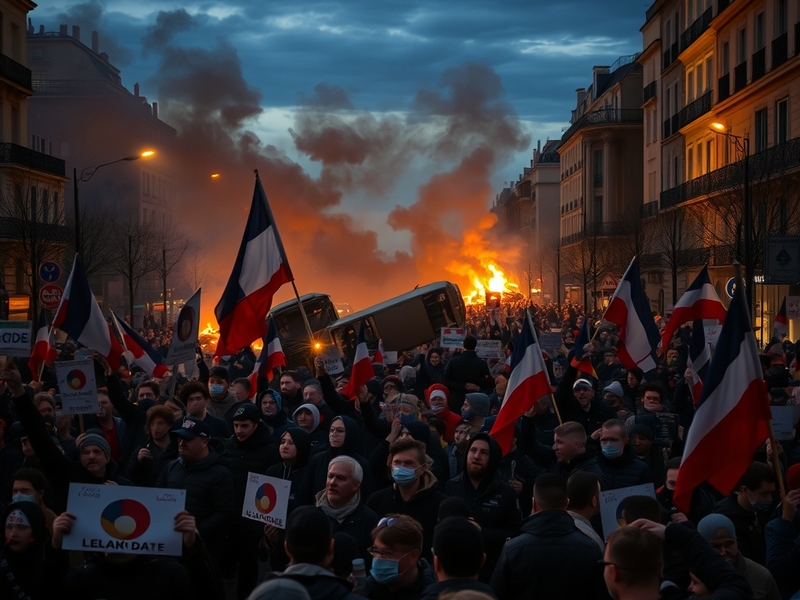
Understanding the Riots in France: A Historical Perspective
The recent riots in France have sparked widespread attention and concern, not only within the nation but also globally. These events are rooted in a complex interplay of social, economic, and political factors. To truly grasp the significance of the unrest, it is essential to consider France’s tumultuous history with protests and civil disobedience.
France has a rich tradition of revolution and resistance. From the French Revolution of 1789 to the student protests of May 1968, the French populace has often taken to the streets to voice their discontent. The current riots echo this historical legacy, as citizens express frustration over issues such as police brutality, economic inequality, and systemic racism.
What Sparked the Recent Unrest?
The catalyst for the riots was the tragic death of a young man during a police stop, which ignited long-standing grievances among marginalized communities. This incident served as a flashpoint, leading to widespread protests that quickly escalated into violent confrontations with law enforcement.
Several factors contributed to the intensity of the riots:
- Economic Disparities: Many neighborhoods affected by the riots are characterized by high unemployment rates and limited access to resources.
- Police Relations: Tensions between law enforcement and minority communities have been a persistent issue, exacerbated by allegations of racial profiling and excessive use of force.
- Political Climate: The current government’s policies have often been perceived as neglectful towards the needs of disenfranchised groups.
The Global Context of Social Unrest
The events in France are part of a broader pattern of civil unrest seen around the world. Countries like the United States, Brazil, and Lebanon have also experienced significant protests in recent years, often driven by similar themes of inequality and injustice. The global nature of these movements highlights a shared desire for change among marginalized communities.
In France, the riots have drawn parallels to movements such as Black Lives Matter in the U.S. and the anti-austerity protests in Greece. The interconnectedness of these movements suggests a universal struggle against systemic issues that transcend borders.
Consequences and Future Implications
The aftermath of the riots is likely to have lasting implications for French society. The government has announced plans for reforms aimed at addressing some of the underlying issues that fueled the unrest. However, the effectiveness of these measures remains to be seen.
Public opinion is divided. Some citizens support the rioters’ cause, viewing their actions as a necessary response to oppression. Others condemn the violence, arguing that it undermines the legitimacy of the protests. This division will likely influence future political discourse and policy decisions.
In conclusion, the riots in France are not merely isolated incidents but rather a reflection of deeper societal issues. The historical context, coupled with the global landscape of social movements, underscores the urgency for meaningful dialogue and reform. As France grapples with these challenges, the world watches closely, aware that the outcomes may resonate far beyond its borders.