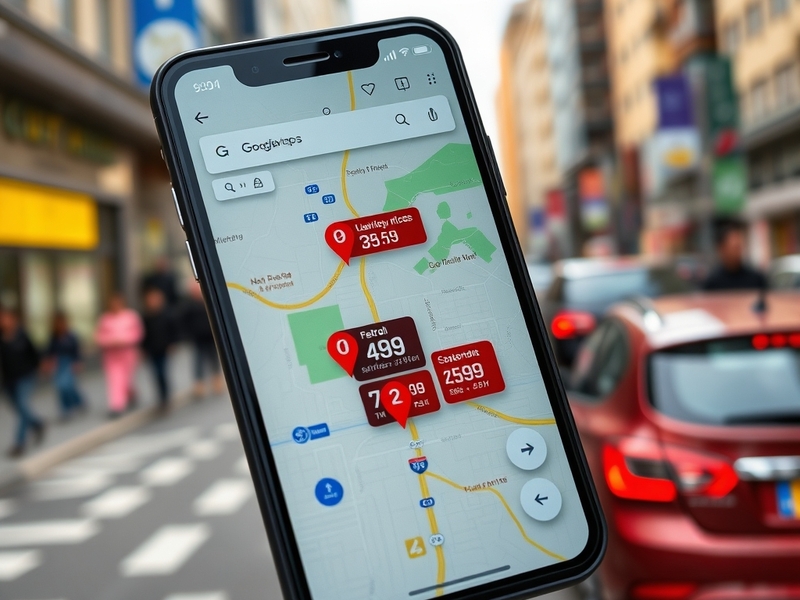
The Role of Google Maps in Tracking Petrol Prices
In recent years, Google Maps has evolved beyond a mere navigation tool to become a crucial resource for drivers seeking the best petrol prices. This feature is particularly significant as fuel costs continue to fluctuate globally, impacting consumers’ budgets and driving habits. By integrating petrol price tracking into its platform, Google Maps empowers users to make informed decisions about where to fill up their tanks.
Understanding the Feature
Google Maps uses a combination of user-generated data and partnerships with petrol stations to provide real-time pricing information. This feature allows users to search for nearby petrol stations and compare prices, making it easier to find the most affordable options. Additionally, users can view historical pricing trends, which can help them predict when prices might rise or fall.
To access this feature, users simply need to enter “petrol prices” or “gas prices” into the Google Maps search bar. The app will display a list of nearby stations along with their current prices. This intuitive functionality is designed to save time and money for drivers, especially in areas where fuel prices can vary significantly from one station to another.
Global Perspectives on Fuel Pricing
Fuel prices are influenced by a multitude of factors, including crude oil prices, local taxes, and geopolitical events. In some regions, such as Europe, petrol prices can be significantly higher due to higher taxes on fuel. Conversely, countries like the United States often have lower prices due to a combination of domestic oil production and lower taxes.
In developing nations, the situation can be even more complex. Many governments subsidize fuel to keep prices low for consumers, which can lead to financial strain on national budgets. In these contexts, tools like Google Maps can provide critical information to help consumers navigate their options effectively.
Benefits of Using Google Maps for Petrol Prices
The advantages of utilizing Google Maps for tracking petrol prices are numerous:
- Time-Saving: Users can quickly find the nearest petrol stations without driving around aimlessly.
- Cost Efficiency: By comparing prices, drivers can save money, especially on long trips.
- Real-Time Updates: Access to the latest prices ensures that users are not caught off guard by sudden changes.
- User Reviews: Many petrol stations have user reviews, helping consumers choose stations based on service quality.
Challenges and Limitations
Despite its many benefits, the Google Maps petrol price feature is not without its challenges. Data accuracy is often dependent on user input, which can lead to discrepancies. Additionally, not all petrol stations may be represented, particularly in rural areas where data may be less frequently updated.
Furthermore, as fuel prices continue to rise in many regions due to inflation and supply chain issues, the reliance on such apps may increase. This could lead to a greater demand for accurate and timely information, pushing Google and other platforms to enhance their services continually.
Conclusion
Google Maps has positioned itself as an essential tool for drivers seeking to manage fuel costs effectively. By providing real-time petrol price information, it helps users make informed decisions that can lead to significant savings. As fuel prices remain a pressing issue globally, the importance of such technology will only continue to grow.
For those looking to stay updated on related topics, check out our Technology section for the latest advancements in navigation and mapping tools or our Automotive category for insights on fuel efficiency and vehicle trends.