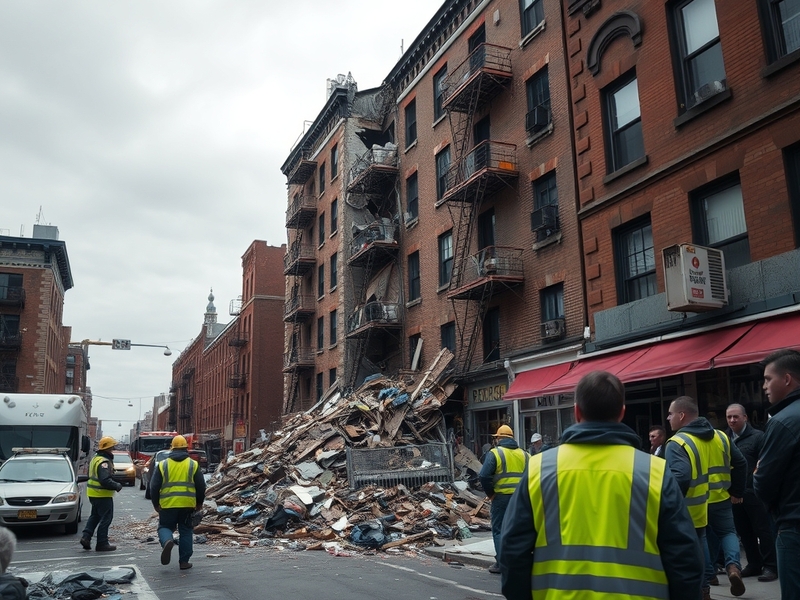
Overview of the Brooklyn Building Collapse
On a sunny afternoon in Brooklyn, a residential building unexpectedly collapsed, sending shockwaves through the community. The incident occurred in a densely populated area, raising immediate concerns about safety regulations and building integrity. Eyewitnesses described a scene of chaos as debris rained down, and emergency responders rushed to the site to assess the situation.
Details of the Incident
The collapse happened around 3 PM, with reports indicating that a structural failure led to the building’s downfall. First responders arrived within minutes, working tirelessly to rescue anyone trapped beneath the rubble. Thankfully, most residents had evacuated the building earlier in the day, but several individuals were still unaccounted for in the immediate aftermath.
Officials have initiated an investigation to determine the cause of the collapse. Preliminary assessments suggest that ongoing construction work may have compromised the building’s structural integrity. Witnesses reported hearing loud cracking noises just moments before the building fell, adding to the urgency of the situation.
Community Response and Support
The local community has rallied in support of those affected by the tragedy. Relief centers have been set up, providing food, shelter, and counseling services for displaced residents. Community leaders have emphasized the importance of coming together during this difficult time.
In addition to immediate relief efforts, several organizations have begun fundraising campaigns to support the victims. The outpouring of support has been heartwarming, with volunteers stepping up to help in any way they can. Key actions include:
- Setting up donation drives for clothing and essential supplies.
- Organizing community meetings to discuss safety measures and support systems.
- Establishing a hotline for families seeking information about their loved ones.
Implications for Building Safety Regulations
This incident has reignited discussions about building safety regulations in urban areas. Experts argue that stricter enforcement of codes is necessary to prevent future tragedies. The New York City Department of Buildings has faced scrutiny over its inspection processes, raising concerns about whether enough is being done to ensure the safety of older structures.
As the investigation unfolds, city officials are being urged to conduct thorough reviews of similar buildings in the vicinity. A comprehensive assessment could help identify potential hazards and mitigate risks for residents. Key recommendations include:
- Regular structural integrity assessments for older buildings.
- Enhanced training for inspectors to identify potential weaknesses.
- Implementation of stricter penalties for non-compliance with building codes.
Looking Ahead
The Brooklyn building collapse serves as a tragic reminder of the importance of building safety and community resilience. As investigations continue, the focus will inevitably shift to ensuring that similar incidents do not occur in the future. While the immediate needs of those affected are being addressed, long-term solutions must also be prioritized.
In the coming weeks, the community will likely engage in discussions about the future of urban development and safety regulations. It is crucial for residents to remain informed and involved in these conversations, as their voices play a vital role in shaping a safer environment.
For more updates on building safety and community initiatives, visit our News and Analysis sections.