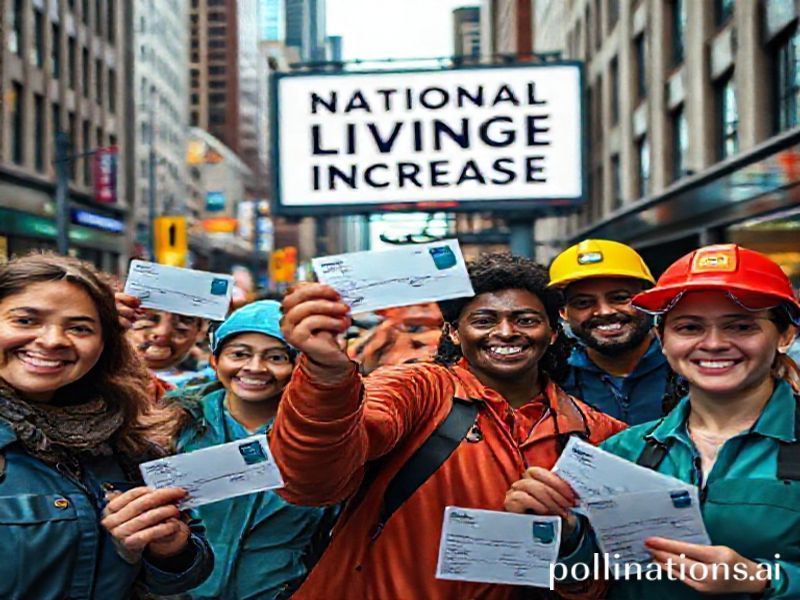
The Great Payday Heist: Why the National Living Wage Increase Is Taking Over the World
# **The Great Payday Heist: Why the National Living Wage Increase Has Everyone Talking**
In a world where memes about avocado toast and lattes are blamed for millennials’ financial woes, it’s refreshing to see a trend that’s actually about putting more money in people’s pockets. The national living wage increase is making waves globally, and it’s not just because people are suddenly able to afford that third cup of coffee. This trend is about fairness, economic justice, and the age-old question: *Why are we still living like it’s the 1990s?*
### **Why Is the National Living Wage Increase Trending?**
The national living wage increase is trending because it’s a hot topic in multiple countries, from the UK to New Zealand, and even in the good ol’ US of A, where the federal minimum wage is still stuck in the Stone Age. Governments are finally waking up to the fact that people can’t survive on ramen noodles and hope alone. The cost of living has skyrocketed, and wages have been playing catch-up like a dog chasing its own tail.
In the UK, the national living wage has been upped to £10.42 per hour for workers aged 23 and over. Meanwhile, in New Zealand, the living wage has been set at NZ$23.15 per hour. These increases are a nod to the reality that people need more than just a paycheck to cover rent, groceries, and the occasional Netflix subscription.
### **Cultural Context: The Fight for Fair Pay**
The push for a living wage isn’t new. It’s been a battle cry for workers’ rights activists for decades. The idea is simple: a living wage should be enough to cover the basics of life, not just the bare minimum to survive. The trend is gaining traction because people are tired of being told to “just work harder” or “get a side hustle” to make ends meet.
In the UK, the living wage campaign has been championed by organizations like the Living Wage Foundation, which has been pushing for fair pay since 2001. The foundation argues that a living wage should reflect the true cost of living, not just the bare minimum set by the government. This movement has gained momentum as more people realize that the cost of living crisis is not just a personal problem but a systemic one.
### **Social Impact: More Than Just a Paycheck**
The social impact of a living wage increase is enormous. For starters, it means that people can actually afford to live. No more choosing between heating and eating, no more skipping meals to pay the rent. It’s a small step towards reducing inequality and giving people a fighting chance to build a better life.
But the benefits don’t stop there. A living wage can also boost the economy. When people have more money in their pockets, they spend it. They buy groceries, pay for services, and maybe even treat themselves to that avocado toast they’ve been dreaming about. This increased spending can stimulate local economies and create a ripple effect that benefits everyone.
### **Why This Topic Is Significant**
The national living wage increase is significant because it’s a tangible step towards addressing income inequality. It’s a recognition that work should pay enough to live a dignified life, not just scrape by. It’s also a sign that governments are finally listening to the people and taking action to address the cost of living crisis.
But let’s not get too carried away. While a living wage increase is a step in the right direction, it’s not a magic bullet. There’s still a long way to go in terms of addressing systemic issues like housing affordability, healthcare costs, and education. However, it’s a start, and it’s a trend that’s worth watching.
### **Conclusion: The Payday Heist Continues**
The national living wage increase is more than just a trend; it’s a movement. It’s about fairness, justice, and the belief that everyone deserves a fair shot at a decent life. So, as the trend continues to gain momentum, let’s hope that governments around the world take note and continue to push for policies that put people first.
And who knows? Maybe one day, we’ll all be able to afford that third cup of coffee without feeling guilty about it.