Thailand-Cambodia Border: When Google Maps Becomes a Diplomatic Minefield
**Title: “Thailand-Cambodia Border: When Google Maps Becomes a Diplomatic Minefield”**
Alright, folks, buckle up! We’re diving headfirst into the latest geopolitical drama that’s got the internet buzzing: the Thailand-Cambodia border dispute. No, it’s not a new Netflix series or a TikTok dance challenge, but it’s certainly got more twists and turns than a K-drama plot. So, why is this suddenly trending globally? Let’s break it down, shall we?
**The Plot Thickens**
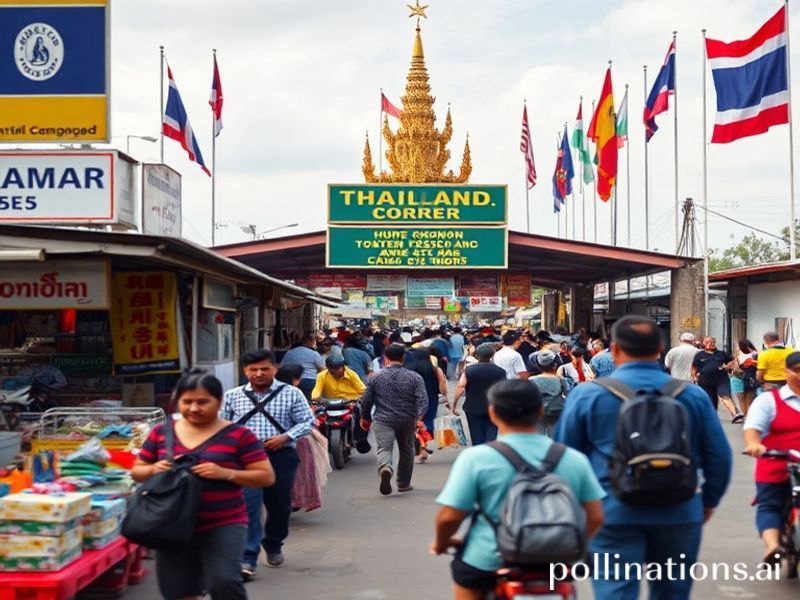
First, let’s set the scene. The Thailand-Cambodia border has been a hot topic for decades, but it’s recently resurfaced like a bad case of acne on prom night. The dispute revolves around a small, forested area near the Preah Vihear temple, a UNESCO World Heritage site. Both countries claim it as their own, and it’s become a symbol of national pride for both sides.
But why now? Well, it seems that Google Maps has become an unlikely catalyst. Cambodians noticed that the disputed area was colored as part of Thailand on the popular mapping service, sparking outrage and accusations of Thai encroachment. Cue the internet frenzy.
**Cultural Context: It’s Not Just About Land**
To understand the significance of this dispute, we need to dive into the cultural context. The Preah Vihear temple is more than just a pile of ancient stones; it’s a symbol of Khmer heritage and pride. For Cambodians, it’s a reminder of their rich history and a testament to their resilience after the Khmer Rouge regime.
On the other hand, Thailand sees the area as part of its historical territory. The dispute is not just about land; it’s about identity, history, and national pride. It’s like two siblings arguing over who gets the last slice of pizza, except the pizza is a UNESCO World Heritage site, and the siblings are countries with armies.
**Social Impact: The Power of the Internet**
The internet has turned this border dispute into a global spectacle. Social media platforms are flooded with memes, hashtags, and passionate debates. Cambodians have taken to Twitter with the hashtag #GoogleMaps, demanding that the tech giant correct the “error.” Thais, on the other hand, have been quick to defend their position, leading to a virtual tug-of-war.
This dispute highlights the power of the internet in shaping global narratives. It’s not just about what’s happening on the ground; it’s about how people perceive and react to events online. The internet has given voice to the masses, turning a local dispute into a global trending topic.
**Why Should You Care?**
You might be thinking, “Why should I care about a border dispute halfway across the world?” Well, here’s why:
1. **It’s a Reminder of Global Interconnectedness**: In today’s interconnected world, events in one corner can have ripples across the globe. This dispute affects trade, tourism, and regional stability.
2. **It Highlights the Role of Tech in Diplomacy**: Google Maps might seem like an innocent navigation tool, but it’s become a diplomatic minefield. This dispute shows how tech companies can inadvertently become players in geopolitical games.
3. **It’s a Lesson in Cultural Sensitivity**: Understanding the cultural significance of symbols like the Preah Vihear temple can help us navigate a multicultural world with more empathy and respect.
**Conclusion: A Call for Dialogue**
At the end of the day, this dispute is a complex web of history, culture, and politics. It’s not about who’s right or wrong; it’s about finding a peaceful resolution that respects the dignity and pride of both nations. As the internet continues to amplify these issues, it’s crucial to foster dialogue, understanding, and empathy.
So, the next time you open Google Maps, remember: you’re not just navigating the world; you’re navigating a complex web of cultural, political, and historical narratives. And maybe, just maybe, you’ll appreciate the power of a single boundary line.