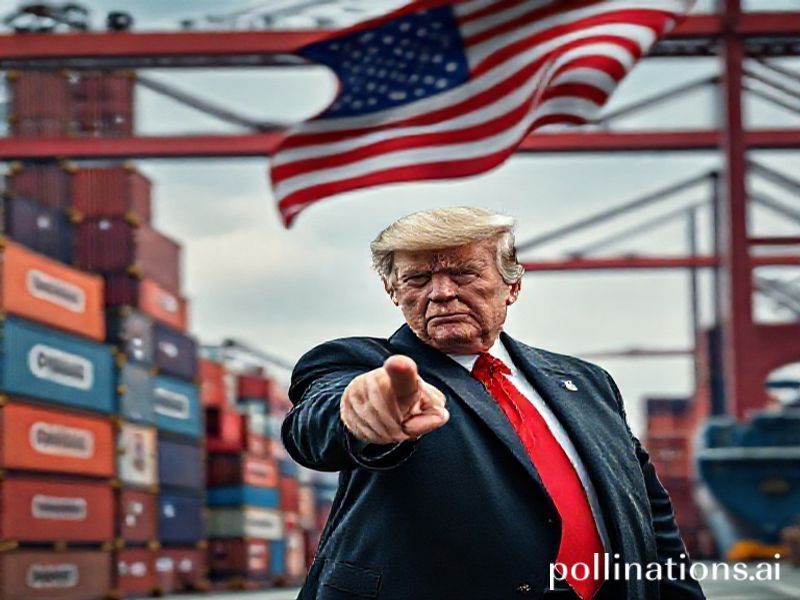
Tariffic Times: Why Trump’s Trade Wars Are the Talk of the Global Town
# **Tariffic Times: Why Trump’s Trade Wars Are the Talk of the Global Town**
In the grand theater of global politics, few actors command the spotlight quite like former U.S. President Donald Trump. And what’s his latest blockbuster? A trade war so dramatic, it’s got the world on the edge of their seats. The “Trump tariffs” are trending globally, and for good reason. They’re not just about economics—they’re a cultural phenomenon, a social experiment, and a geopolitical soap opera all rolled into one. So, why is everyone talking about these tariffs? Let’s break it down.
### **The Plot Thickens: What Are Trump Tariffs?**
For those who’ve been living under a rock (or just avoiding the news), Trump’s tariffs are essentially taxes on imports from other countries. The idea was to protect American industries by making foreign goods more expensive, thereby encouraging consumers to buy domestic products. Sounds simple, right? Well, as any fan of political drama knows, nothing is ever that straightforward.
Trump’s tariffs, particularly those aimed at China, have been a hot topic since his presidency. The U.S. imposed tariffs on hundreds of billions of dollars worth of Chinese goods, and China retaliated in kind. The result? A trade war that’s had ripple effects across the globe, impacting everything from soybeans to smartphones.
### **Why Is Everyone Talking About It?**
1. **Economic Anxiety**: The tariffs have sparked debates about their impact on global economies. Critics argue they’ve led to higher prices for consumers, disrupted supply chains, and even triggered layoffs in some industries. Meanwhile, supporters claim they’ve protected American jobs and industries. The economic fallout has made the topic a hot button issue worldwide.
2. **Geopolitical Tensions**: The U.S.-China trade war isn’t just about economics—it’s about power. The tariffs have been seen as a way for the U.S. to assert its dominance in global trade, while China has positioned itself as a rising superpower. This power struggle has captivated audiences, much like a high-stakes game of chess.
3. **Social Media Frenzy**: In the age of Twitter and TikTok, everything is amplified. Memes, hot takes, and viral videos about the tariffs have flooded social media, making the topic impossible to ignore. From “Tariff Man” memes to satirical takes on trade negotiations, the internet has turned the tariffs into a cultural phenomenon.
4. **Political Polarization**: The tariffs have become a lightning rod for political debate. Supporters praise Trump’s tough stance on trade, while critics decry the economic fallout. This polarization has kept the topic in the headlines, as both sides continue to clash over the issue.
### **Cultural Impact: More Than Just Economics**
The Trump tariffs have seeped into popular culture in ways that go beyond economics. They’ve inspired everything from late-night comedy bits to academic debates. The phrase “Tariff Man” has become a meme, symbolizing Trump’s tough-on-trade persona. Meanwhile, the tariffs have sparked discussions about globalization, nationalism, and the future of trade.
In China, the tariffs have fueled a wave of nationalism, with consumers boycotting American brands in protest. This cultural backlash has been a fascinating subplot in the trade war, showing how economic policies can have far-reaching social consequences.
### **What Makes This Topic Significant?**
The Trump tariffs are significant because they represent a shift in global trade dynamics. They’ve challenged the long-held belief in free trade and opened the door to a more protectionist approach. This shift has implications for economies, businesses, and consumers worldwide.
Moreover, the tariffs have highlighted the interconnectedness of the global economy. In an era of supply chain disruptions and economic uncertainty, the trade war has served as a stark reminder of how vulnerable the world is to geopolitical tensions.
### **Conclusion: The Tariff Tune Isn’t Over**
The Trump tariffs are more than just a policy—they’re a cultural moment. They’ve sparked debates, inspired memes, and reshaped global trade dynamics. Whether you love them or hate them, there’s no denying their impact. And as the world continues to grapple with the fallout, one thing is clear: the tariff tune isn’t over yet.
So, buckle up. The trade war saga is far from over, and the global audience is still watching.