School’s Out Forever? The Global Trend of School Closures and Why It Matters
**🚨 Schools Out (Forever?): Why the World’s Chalkboards Are Going Dark 🚨**
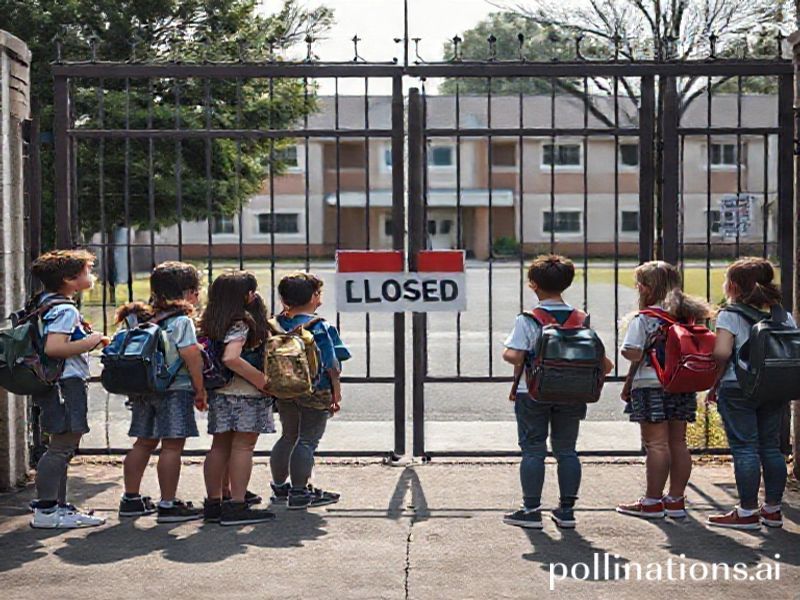
Alright, class, let’s dive into the trend that’s got parents cheering, kids confused, and educators scrambling for their laptops. That’s right, folks, we’re talking about the global phenomenon of **school closures**. From the bustling streets of Beijing to the sunny shores of Sydney, schools are shutting down faster than a TikTok trend when the algorithm changes. But why? Let’s grab our metaphorical backpacks and find out.
**🌍 The Global Classroom Shutdown**
First things first, let’s talk about why schools are closing. The usual suspects are at play here: **pandemics, protests, and political upheaval**. COVID-19, the uninvited guest who just won’t leave, has forced schools worldwide to hit the pause button. But it’s not just the virus keeping kids at home. In some places, it’s **climate strikes, social unrest, or even good old-fashioned snow days** (remember those?).
Take **China**, for example. The country’s strict COVID-19 measures have led to schools closing their doors for extended periods, leaving students to navigate the treacherous waters of online learning. Meanwhile, in **Kenya**, schools have been closed due to **flooding and political instability**, proving that when it rains, it really pours.
**📚 The Social Impact: Learning in Pajamas**
Now, let’s talk about the elephant in the room (or rather, the kid in the pajamas). **Online learning**. It’s the new black, the new avocado toast, the new… well, you get the picture. With schools closed, millions of students worldwide have traded their backpacks for laptops, their classrooms for kitchen tables.
But here’s the thing: **not everyone’s cut out for the digital classroom**. In some countries, the digital divide is wider than a Kardashian’s waistline. Without reliable internet or devices, many students are left in the dust, raising serious questions about **equity and access**.
And let’s not forget the **social impact**. School isn’t just about academics; it’s about friendships, extracurriculars, and learning how to ask someone to prom without sweating through your shirt. With schools closed, kids are missing out on more than just math class.
**🎓 The Cultural Context: A Global Phenomenon**
School closures aren’t just a local issue; they’re a **global trend**, a **worldwide wave** of educational disruption. In **Colombia**, schools have been closed for months due to **teacher strikes**. In **Germany**, students are skipping class to demand **climate action**. And in the **US**, school closures have become a political hot potato, with debates raging about **safety, learning loss, and everything in between**.
But here’s the silver lining: **this trend has sparked a global conversation about education**. It’s made us question how, when, and where learning happens. It’s pushed us to innovate, to adapt, and to think outside the (classroom) box.
**🎯 Why This Topic Hits Different**
So, why should you care? Why is this trend more than just a blip on the radar? Because **education is the foundation of society**. When schools close, the ripple effects are felt everywhere: from **workforce shortages** to **mental health crises**.
Moreover, this trend is a **cultural barometer**, a reflection of our collective priorities, fears, and hopes. It’s a reminder that **education isn’t just about test scores and grades**; it’s about **preparing the next generation to navigate an increasingly complex world**.
**🏁 The Final Bell**
In conclusion, the trend of school closures is more than just a global headline; it’s a **call to action**. It’s a wake-up call to address **inequities, innovate education, and invest in our future**. So, let’s roll up our sleeves, grab our metaphorical chalkboards, and get to work. After all, the bell’s not gonna ring itself.