Potholes and Protests: Why Road Conditions Are the Hottest Global Trend (And How to Fix Them)
**Potholes, Protests, and Potholes: Why Road Conditions Are the Pits (Literally)**
Buckle up, folks, because we’re about to take a bumpy ride through the global phenomenon that’s got everyone talking: road conditions. That’s right, potholes, crumbling asphalt, and traffic jams have become the unlikely stars of the internet, sparking memes, protests, and even international diplomacy. So, why is everyone suddenly obsessed with the state of our roads? Let’s dive in.
**The Global Gridlock**
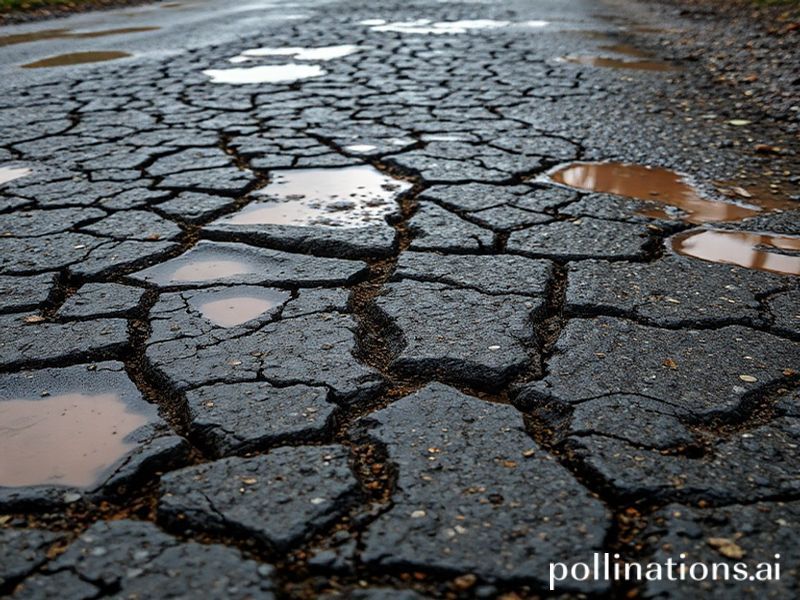
From the United States to India, from the UK to Uganda, road conditions have become a hot topic. In the US, the American Society of Civil Engineers gave US infrastructure a dismal C- grade, with roads scoring a barely passing D. Across the pond, the UK’s roads are so potholed that a whopping 1.3 million potholes were reported in just one year. Meanwhile, in India, the roads are so congested that the average speed in Delhi is a glacial 13 km/h (8 mph).
**Why Now?**
So, why is this issue suddenly trending? For starters, it’s the perfect storm of factors. The pandemic has left governments with empty coffers and full to-do lists, while the rise of remote work and online shopping has increased delivery traffic, exacerbating wear and tear. Plus, with everyone stuck at home, we’ve had more time to notice—and complain about—the state of our roads.
But the real kicker is the internet. Social media has given us a platform to vent, share, and laugh about our collective road rage. Memes about potholes have gone viral, turning a mundane infrastructure issue into a global inside joke. And let’s not forget the power of hashtags. From #FixThePotholes to #RoadRage, these tags have turned road conditions into a trending topic.
**Cultural Context**
Road conditions aren’t just about infrastructure; they’re a reflection of our societies. In many countries, poor roads are a symbol of government neglect and corruption. In others, they’re a sign of rapid urbanization and overpopulation. And let’s not forget the environmental impact—bad roads mean more emissions from idling cars and trucks.
But it’s not all doom and gloom. In some places, road conditions have become a source of pride and identity. Take India’s infamous “Delhi Belly,” for example. While the term originally referred to a stomach bug, it’s now used to describe the city’s chaotic traffic and potholed roads. It’s a badge of honor, a testament to the city’s vibrancy and energy.
**Social Impact**
Poor road conditions have real-world consequences. They cause accidents, increase travel time, and hurt local businesses. In the US, poor roads cost drivers $1,000 a year in vehicle repairs and operating costs. In the UK, potholes cause an estimated 1,500 accidents a year. And in developing countries, bad roads can be a matter of life and death, preventing emergency services from reaching those in need.
But there’s a silver lining. The global conversation about road conditions has sparked action. From grassroots campaigns to government initiatives, people are fighting back. In the UK, the #FixThePotholes campaign has gained traction, while in the US, the Biden administration has proposed a $2 trillion infrastructure plan.
**The Road Ahead**
So, what’s next for our roads? It’s hard to say. But one thing’s for sure: we can’t afford to ignore this issue any longer. As the global population grows and urbanization accelerates, our roads will only become more important—and more strained.
In the meantime, we can laugh, share, and vent. Because at the end of the day, road conditions are more than just a trending topic. They’re a reflection of who we are, where we’re going, and the bumps along the way.
—