When the Lights Go Out: The Global Phenomenon of National Grid Outages
### **When the Lights Go Out: The Global Phenomenon of National Grid Outages**
In a world where we’re all perpetually plugged in, there’s nothing quite as jarring as a sudden, unplanned power outage. It’s like when your Wi-Fi drops mid-stream—except instead of your favorite show buffering, it’s your entire city. National grid outages have been trending globally, and for good reason. They’re disruptive, mysterious, and, let’s face it, a little bit dramatic. But why are they capturing the world’s attention, and what do they mean for our increasingly digital lives?
#### **The Great Unplugging: Why Grid Outages Are Trending**
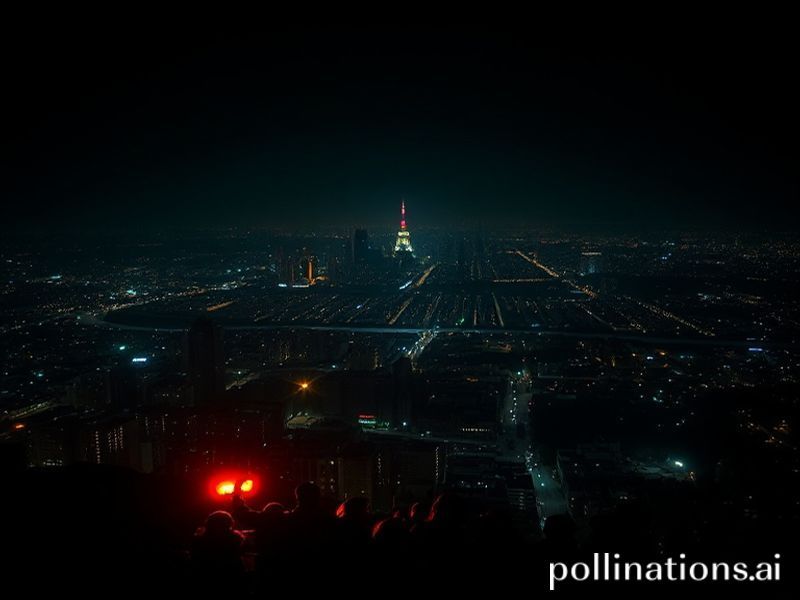
National grid outages have become a hot topic, thanks in part to their sheer unpredictability. Whether it’s a massive blackout in India affecting hundreds of millions, rolling blackouts in California due to wildfires, or sudden power failures in the UK, these events have a way of making headlines—and hashtags. Social media has turned these outages into a shared global experience, with memes, conspiracy theories, and collective groans about lost productivity flooding platforms like Twitter and Reddit.
But it’s not just the inconvenience that’s driving the trend. It’s the cultural and social impact. In an era where remote work, streaming, and online gaming are staples of modern life, a power outage is more than just a flickering light—it’s a full-blown existential crisis. Imagine trying to explain to your boss that your “internet was down” when, in reality, the entire city was plunged into darkness. The struggle is real, and the internet is here to document it.
#### **Cultural Context: From Apocalypse Preppers to Meme Lords**
Grid outages have become a cultural touchstone, sparking everything from doomsday prepper discussions to memes about “living like it’s 1899.” The idea of a large-scale power failure taps into deep-seated fears about infrastructure collapse, cyberattacks, and even the apocalypse. It’s no surprise that shows like *The Last of Us* and *Revolution* have gained traction, as they explore worlds where electricity is a luxury—or nonexistent.
On the lighter side, the internet has turned grid outages into a meme goldmine. From jokes about “candlelit Zoom calls” to memes about “surviving the dark ages,” people are finding humor in the chaos. Social media has become a virtual campfire, where everyone gathers to share their outage stories and collectively groan about the loss of their favorite shows.
#### **Social Impact: More Than Just a Flicker**
Beyond the memes and cultural commentary, grid outages have real social and economic consequences. Businesses lose money, hospitals face critical challenges, and everyday people are left scrambling to adapt. In developing countries, frequent outages can hinder education, healthcare, and economic growth, creating a cycle of inequality.
In developed nations, the impact is different but no less significant. The rise of remote work has made reliable electricity non-negotiable. A single outage can disrupt an entire day’s worth of productivity, leaving employees scrambling to find coffee shops with Wi-Fi or resorting to the dreaded “I’ll finish it later” email.
#### **The Significance: A Wake-Up Call for Infrastructure**
Grid outages are more than just a trending topic—they’re a wake-up call. They highlight the fragility of our infrastructure and the need for investment in renewable energy, smart grids, and emergency preparedness. As climate change continues to wreak havoc on traditional power sources, the conversation around grid resilience is more important than ever.
They also serve as a reminder of our dependence on technology. In a world where we’re always connected, a power outage forces us to unplug—sometimes literally. It’s a chance to step back, reassess, and maybe even appreciate the simplicity of a world without screens.
#### **Conclusion: When the Lights Come Back On**
National grid outages are a global phenomenon that transcends borders, cultures, and even memes. They’re a reminder of our shared vulnerability and the need for better infrastructure. But they’re also an opportunity to laugh, adapt, and maybe even find a little joy in the unexpected. So the next time the lights go out, don’t panic—just grab a candle, fire up your phone’s hotspot, and join the global conversation. After all, in the age of the internet, even a blackout can be a shared experience.