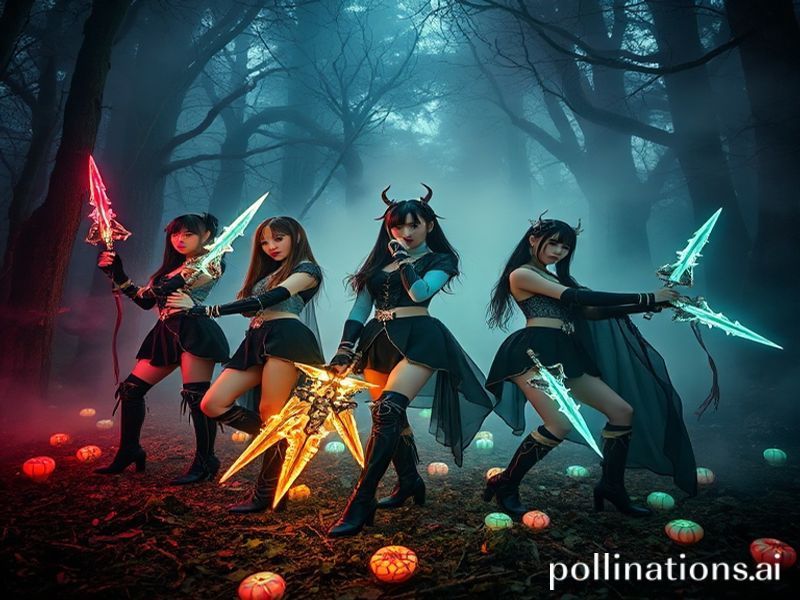
K-Pop Demon Hunters: Why the Internet Can’t Get Enough of This Viral Trend
# **K-Pop Demon Hunters: The Viral Fusion of Music and Mythology**
In the ever-evolving landscape of internet trends, one phenomenon has managed to captivate global audiences with a unique blend of music, mythology, and memes: K-pop demon hunters. Yes, you read that right. We’re talking about K-pop idols who, in the eyes of the internet, have taken on the role of supernatural slayers, battling demons, ghosts, and otherworldly entities with nothing but their killer choreography and even more killer vocals. But why is this trend blowing up, and what does it say about the cultural impact of K-pop?
### **The Rise of K-Pop Demon Hunters**
The trend started with a simple meme: fans editing K-pop idols into scenes from popular fantasy and horror media, like *Supernatural*, *The Witcher*, or *Demon Slayer*. The idea was simple—imagine your favorite K-pop star as a demon hunter, wielding a sword or a magical staff with the same intensity they bring to the stage. The results were hilarious, creative, and, most importantly, shareable.
But why K-pop? The genre has always had a strong visual and narrative component, with concepts often drawing from fantasy, sci-fi, and even horror. Groups like BTS, BLACKPINK, and TWICE have built their brands on elaborate storytelling and striking visuals, making them perfect candidates for this kind of meme. Plus, the internet loves a good crossover, and K-pop demon hunters deliver just that—a mashup of two seemingly unrelated worlds that somehow work perfectly together.
### **Cultural Context: K-Pop Meets Mythology**
K-pop has long been a global cultural force, but its influence extends beyond music. The genre has a rich history of incorporating elements from various cultures, including mythology and folklore. From BTS’s *Dynamite* music video, which features a demonic twist, to EXO’s *Tempo* concept, which draws from ancient mythology, K-pop has always had a foot in the supernatural.
The demon hunter trend taps into this cultural richness, blending the fantastical elements of K-pop with the universal appeal of mythological storytelling. It’s a testament to how K-pop has become a global language, transcending borders and languages to create a shared cultural experience.
### **Social Impact: More Than Just a Meme**
At first glance, the K-pop demon hunter trend might seem like just another internet fad. But dig a little deeper, and you’ll find that it’s about more than just laughs. It’s a celebration of creativity, fan culture, and the power of imagination.
Fans have taken the trend to new heights, creating entire narratives around their favorite idols as demon hunters. Some have even edited full music videos, complete with special effects and dramatic soundtracks. This level of dedication speaks to the deep connection fans have with K-pop idols, turning them into more than just musicians—they’re characters in a shared story.
Moreover, the trend has given fans a way to express their love for K-pop in a new and exciting way. In a world where K-pop is often criticized for being too commercial or formulaic, the demon hunter meme is a reminder that fans are the ones who truly drive the culture forward. They’re the ones who take the music and turn it into something bigger, something that resonates with them on a personal level.
### **Why It Matters**
So, why should we care about K-pop demon hunters? Because it’s a perfect example of how internet culture can take something familiar and turn it into something entirely new. It’s a testament to the power of fandom, creativity, and the universal appeal of storytelling.
But most importantly, it’s a reminder that K-pop is more than just music. It’s a cultural phenomenon that continues to evolve, adapt, and inspire. And if that means imagining your favorite idols as demon-slaying heroes, then so be it. After all, in the world of the internet, anything is possible.
—