Health Equity: The Global Trend That’s More Viral Than the Latest TikTok Dance
# **Health Equity: The Global Trend That’s More Viral Than the Latest TikTok Dance**
In a world where we can stream movies, order groceries, and even find love with a few clicks, it’s easy to assume that access to basic needs—like healthcare—should be just as seamless. Yet, health equity remains a hot topic globally, sparking conversations from Twitter threads to UN summits. But why is it trending now, and why should you care? Let’s break it down.
### **What is Health Equity, and Why is Everyone Talking About It?**
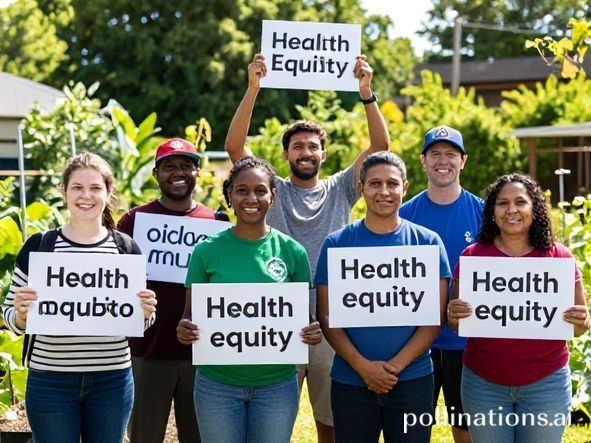
Health equity isn’t just a buzzword—it’s the idea that everyone, regardless of race, gender, income, or zip code, should have a fair shot at living a healthy life. It’s about leveling the playing field so that access to healthcare isn’t determined by luck or privilege.
Recently, the COVID-19 pandemic put a spotlight on health disparities like never before. We saw how marginalized communities were hit harder, how vaccine distribution wasn’t always equitable, and how pre-existing inequities in healthcare systems were exacerbated. Suddenly, health equity wasn’t just a niche topic for public health nerds—it was a global conversation.
### **Cultural Context: From #BlackLivesMatter to #HealthForAll**
The push for health equity isn’t happening in a vacuum. Movements like #BlackLivesMatter and #MeToo have highlighted systemic inequities in society, and health equity is the next frontier. Social media has played a huge role in amplifying these conversations, turning hashtags into global calls to action.
Take, for example, the viral #HealthEquityNow campaign, which gained traction on Twitter and Instagram. It’s not just about raising awareness—it’s about demanding action. From activists to policymakers, people are realizing that health equity isn’t just a moral imperative; it’s a societal one.
### **Social Impact: Why It Matters Beyond the Headlines**
Health equity isn’t just about feeling good—it’s about tangible outcomes. When healthcare is accessible to all, societies thrive. Studies show that reducing health disparities can lead to economic growth, improved productivity, and even stronger social cohesion. In other words, it’s a win-win.
But here’s the kicker: achieving health equity requires more than just good intentions. It demands policy changes, funding, and a willingness to address uncomfortable truths about systemic inequalities. That’s why it’s trending now—because people are tired of talking and ready for action.
### **What Makes Health Equity Significant?**
In a world where misinformation spreads faster than the flu, health equity is a reminder that access to accurate information and quality care shouldn’t be a privilege. It’s a call to action for governments, corporations, and individuals to step up and ensure that no one is left behind.
And let’s be real—it’s also a trend that’s here to stay. As younger generations become more socially conscious, they’re demanding accountability from institutions and brands. Health equity isn’t just a phase; it’s a movement.
### **Conclusion: The Future of Health Equity**
So, why is health equity trending globally? Because it’s a conversation we can no longer ignore. From social media campaigns to policy debates, the push for equitable healthcare is gaining momentum. And while there’s still a long way to go, the fact that it’s trending is a sign of progress.
As we move forward, let’s remember that health equity isn’t just about fixing the system—it’s about building a better one. One where everyone has a fair shot at living a healthy, fulfilling life. And that’s a trend worth following.
—